
Avhigat Akhara
Traditional Ascetic Hermitage & Vedic Lineage
Preserving Eternal Sanatan Dharma and Divine Guru Parampara
Membership Contact Us
माँ दुर्गा / जगदम्बा / महिषासुरमर्दिनी

Maa Durga

The Supreme Protective Mother, Dissolver of Injustice & Primordial Energy
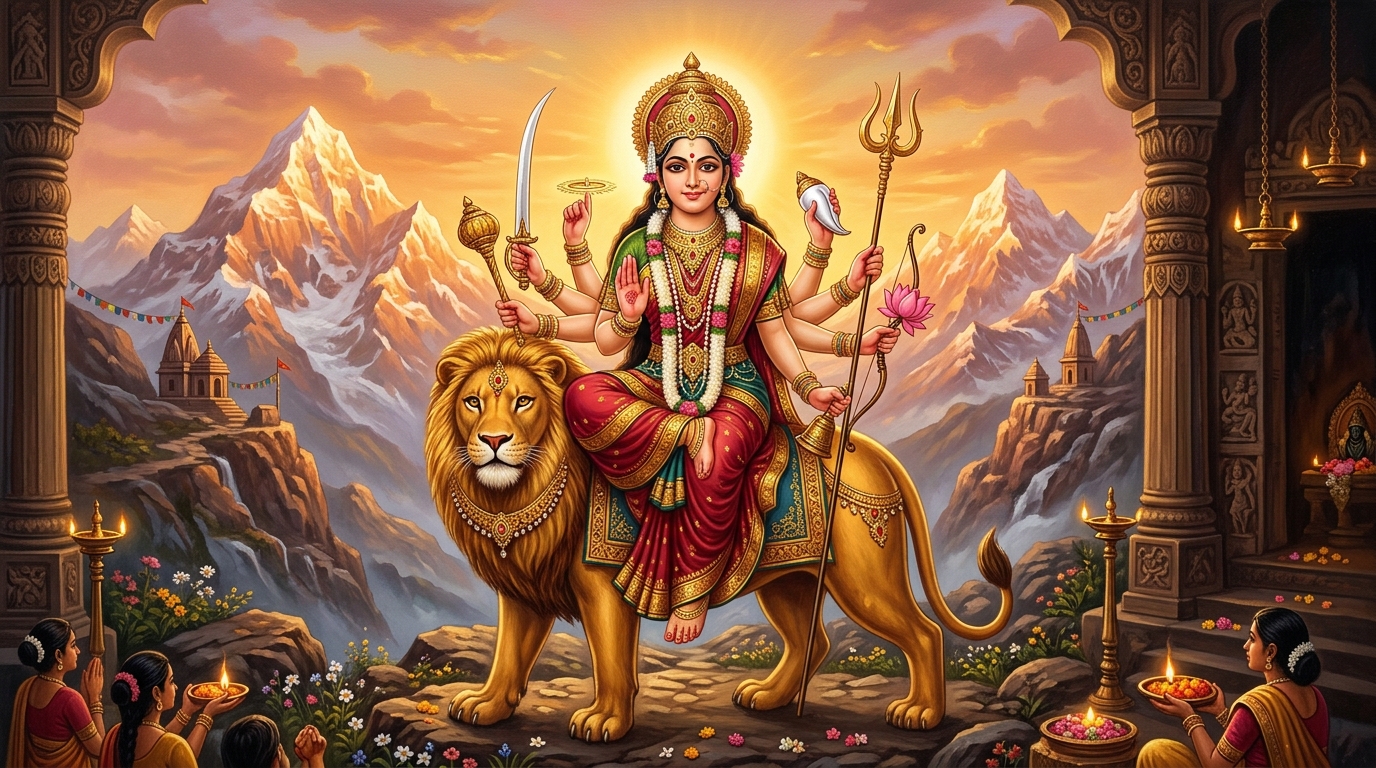
Maa Durga is celebrated as the invincible Mother who protects her children from fear, distress, and internal impurities, riding upon a golden lion with ten compassionate and powerful hands.
Revered Names & Sacred Epithets:
Durga Ambe Jagadamba Bhavani Sherawali Chandi Mahishasuramardini Navadurga
Scripturally Verified Hub 6 Approved Works Quality 98.5/100
Maa Durga seated on golden lion with ten sacred emblems in protective abhaya posture.
Artwork Source: Avhigat Akhara Sacred Archive
Sacred Identity & Context

Understanding Maa Durga in Hindu Traditions

The name 'Durga' signifies She who is difficult to conquer through falsehood, and She who safely navigates seekers across the turbulent ocean of worldly sorrow (Durgati-Nashini).

Her battles described in sacred scripture are not merely ancient narratives; they represent the inner battle of every spiritual aspirant against pride (Mahishasura), lust, greed, and delusion. In Her presence, the seeker finds both the fierce protection of a warrior and the unconditional tenderness of a mother.

Her worship teaches fearlessness, moral integrity, and deep reverence for the sacred feminine principle that permeates creation.
Scriptural & Tradition Context

In the Shakta tradition and Devi Mahatmya (Durga Saptashati), Maa Durga is Parashakti—the uncreated, sovereign dynamic power through which the cosmos is created, sustained, and liberated. She manifests from the combined radiance of all divine beings to vanquish cosmic imbalance and restore Dharma.

Sacred Emblems

Sacred Iconography & Symbolic Meaning

The divine attributes of Maa Durga hold deep allegorical wisdom:
• Golden Lion (Simha): Uncontrolled animal instincts and desires harnessed into righteous courage.
• Ten Arms: Complete protection extended across all ten directions of existence.
• Trishula: Dissolution of physical, mental, and spiritual distress.
• Conch (Shankha): The cosmic sound of truth resounding through space.
• Lotus: Remaining pure, untouched, and serene amidst worldly turmoil.
Verified Devotional Library

Approved Sacred Texts & Prayers for Maa Durga

Authoritative, canonical scriptures and prayers dedicated to Maa Durga. Each text links to its dedicated reader with authentic Devanagari verses, transliteration, and simple meanings.

Chalisa

1
Chalisa Verified

Shri Durga Chalisa

Shri Durga Chalisa
Shri Durga Chalisa is a reverent forty-verse hymn extolling Mother Durga as the primordial creative force (Adi...
0 Verses Read Text

Aarti

1

Stotra & Stotram

1

Kavach & Kavacham

1

Namavali

1

Vrat, Puja & Festivals

1
Spiritual Discipline

Related Sadhana & Spiritual Upasana

Authoritative Practice
Das Maha Vidya Sadhana
Das Maha Vidya Sadhana represents the complete sovereign matrix of ten cosmic wisdom forms assumed by the Supreme Goddess Adi Shakti. In Sanatan Shakta philosop...
Guidance: Deeper contemplative disciplines require sincere practice and Guru guidance.
Auspicious Days & Fasting

Sacred Observances, Fasts & Festivals

Annual & Monthly Sacred Days

Sharad Navratri (Ashwin), Chaitra Navratri, Magha and Ashadha Gupt Navratris, and Durga Ashtami.
Devotional Rule: Recitation of the Devi Kavacham, Durga Chalisa, and Mahishasura Mardini Stotram brings mental fortitude and calm. Seekers are reminded that worshipping the Mother requires upholding respect for women, ethical conduct, and pure vegetarian living during sacred observances.
Authenticity & Bibliography

Scriptural Sources, Review & Governance

Primary Classical Scriptural References:
  • Markandeya Purana (Devi Mahatmya / Durga Saptashati) — Gita Press Gorakhpur (Code 112) (Chapters 1–13, Pradhanika & Vaikritika Rahasya)
  • Devi Bhagavata Purana — Classical Sanskrit Recension (Skandhas 3 & 7)
  • Devi Suktam (Vak Suktam) — Rigveda Mandala 10, Sukta 125 (Hymn of Cosmic Sovereignty)
॥ Authoritative Shastric Guidance ॥

Classical Context & Seekers Questions

Authoritative answers, ritual disciplines, and scriptural citations for sincere practitioners.

Q1
Theological Nath / Shakta

What are the nine sequential manifestations of Maa Durga worshipped during Navratri?

Context Note: The nine authentic Shakti manifestations of Maa Durga.
Summary Answer

The Devikavacha in the Markandeya Purana enumerates the nine Durgas in sequence: Shailaputri, Brahmacharini, Chandraghanta, Kushmanda, Skandamata, Katyayani, Kalaratri, Mahagauri, and Siddhidatri.

The Devi Kavacha opens with the famous verse: "Prathamam Shailaputri cha Dvitiyam Brahmacharini, Tritiyam Chandraghanteti Kushmandeti Chaturthakam..." Each form marks an evolutionary stage in spiritual awakening (kundalini unfolding). Shailaputri activates the Muladhara (root chakra of stability), while Siddhidatri presides over the Sahasrara (pinnacle of transcendent bliss and accomplishment). Worshipping them in this precise sequence aligns the seeker's inner consciousness with cosmic Mother energy.
Classical Scriptural Sources
Markandeya Purana (Devi Mahatmya / Durga Saptashati) Verified

Author/Rishi: Maharshi Markandeya

Devi Kavacham • Shlokas 3-5

Gita Press, Gorakhpur, Code 118

Q2
Interpretive Nath / Shakta

What is the devotional and psychic effect of chanting the Mahishasura Mardini Stotram (Aigiri Nandini)?

Context Note: Maa Durga in her warrior aspect as the slayer of Mahishasura.
Summary Answer

Chanting the Mahishasura Mardini Stotram cuts through lethargy, mental depression, and external psychic negativity through its roaring alliteration and resonant meter, awakening invincible spiritual courage.

Attributed to Adi Shankaracharya (or traditional Shakta bards in Kerala), each verse of this 21-stanza hymn ends with the refrain: "Jaya Jaya He Mahishasuramardini Ramyakapardini Shailasute." The complex alliteration (anaprasa) activates the Vishuddha and Ajna chakras. Devotees recite it especially during Vijayadashami and Sandhi Puja to celebrate the triumph of pure sattvic consciousness over animalistic ego (represented by Mahishasura).
Classical Scriptural Sources
Shankaracharya Grantha Ratnavali Verified

Author/Rishi: Jagadguru Adi Shankaracharya

Stotra Samgraha • Complete Hymn (21 Verses)

Sringeri Sharada Peetham / Gita Press

Related Concepts: #Sadhana #Chakra
॥ श्री गुरु चरण सरोज रज ॥

One-to-One Samasya Samadhan

Confidential Guidance

Private guidance from Guru Ji and the Akhara's guides. Choose what you need help with.