
Vedic Maha Yagya — The Science of Sacred Fire Sacrifice
Purifying cosmic elements, sanctifying the atmosphere, and channeling divine grace through consecrated Vedic fire.
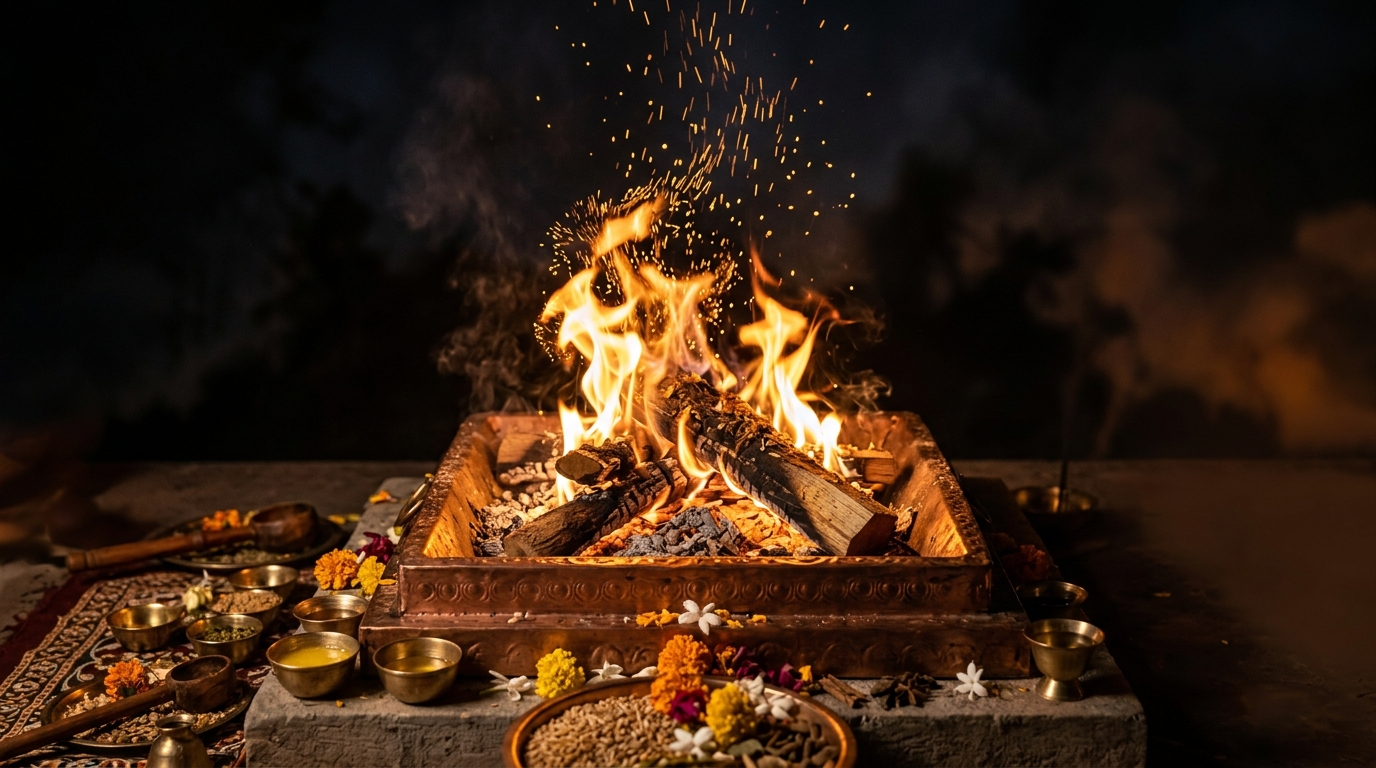
Vedic Maha Yagya is the supreme spiritual sacrifice revealed in the Vedas. By offering pure cow ghee, sacred woods (samidha), medicinal herbs (havishi), and wild grains into consecrated fire altars accompanied by unbroken Vedic chanting, the yagya purifies the surrounding atmosphere, removes negative planetary influences, and brings rain, peace, and spiritual illumination to all living beings.
Tradition, Origin & Eternal Meaning
The Vedic Foundations of the Sacred Fire Sacrifice
The very first verse of the Rigveda—the oldest scripture of human civilization—opens with a salutation to Agni, the sacred fire: "Agnim-eele purohitam yajnasya devam-ritvijam." In the wisdom of the Vedic seers, Fire is not a mere physical element; Agni is the cosmic priest, the mouth of the gods, and the divine messenger that carries the heartfelt prayers of humanity directly to the supreme realm. Whatever pure substance is offered into the holy fire with selfless devotion is broken down into subtle, fragrant vapors that travel into the clouds and nourish the earth with pure rain, healing the soil, water, and air.
Avhigat Akhara conducts grand Maha Yagyas following strict Shrauta and Smarta protocols preserved over millennia. These ceremonies are not commercial rituals; they are great collective spiritual undertakings performed for the protection of Sanatan Dharma, the alleviation of human suffering, and the awakening of higher consciousness. When dozens of trained Vedic pandits and ascetic monks sit around consecrated geometry fire altars (Kundas), chanting complex Sanskrit meters in unison, the vibrational power transforms the space into a living temple of light.
Sacred Geometry and the Construction of the Yagya Shala
A true Vedic Yagya begins weeks before the first spark is struck. The construction of the Yagya Shala (sacred pavilion) follows precise geometric measurements laid down in the Sulba Sutras:
- Selection of the Earth: The ground is thoroughly cleared, plowed, and consecrated with holy water from sacred rivers and cow dung to purify the soil from past contaminants.
- The Sacred Fire Altars (Kundas): Depending on the purpose of the Yagya, altars are carved into precise symbolic shapes:
- Chaturashra (Square): Represents grounding stability and universal well-being.
- Vritta (Circular): Represents the infinite cosmos, peace, and the soothing light of the moon.
- Yoni Kunda (Leaf/Triangle): Used for specific energy transformation and spiritual courage.
- Padma Kunda (Lotus): Represents pure devotion, spiritual wisdom, and freedom from worldly sorrow.
- Arani Mathan — Churning the Pure Fire: In traditional Akhara yagyas, matchsticks or artificial lighters are never used to ignite the main altar. The fire is generated naturally through Arani Mathan—the vigorous friction of two consecrated pieces of sacred Sami and Peepal wood. This pure, virgin flame is then carried reverently into the central altar with Vedic conch blasts.
- Pure Cow Ghee and Rare Herbs: Only 100% pure desi cow ghee (A2 bilona ghee), seasoned dry woods (Palash, Khadir, Bilva, Peepal), and medicinal herbs (including Guggul, Agar, Tagar, Camphor, and saffron) are used as oblation. When these burn at high temperatures, they release negative ions and medicinal smoke that destroy airborne bacteria and purify the breathing environment for kilometers around.
The Daily Rhythm of an Akhara Maha Yagya
A typical multi-day Yagya follows an unbroken sacred order. Before dawn, priests take their cold river bath, wear unstitched silk or cotton dhoti garments, and begin the morning Gau Puja (worship of the sacred mother cow) and Devata Avahan (invoking divine energies). Then, throughout the morning hours, thousands of oblations are poured into the crackling flames as mantras from the Yajurveda and Sama Veda are sung in melodious cadences. Devotees sit around the perimeter, their eyes closed, absorbing the warmth, the healing smoke, and the deep peace that fills the heart.
At noon, the grand Maha Purnahuti (final offering of the session) is performed with whole coconuts, sacred cloth, and supreme oblations of ghee, followed by the singing of the universal peace prayer: "Om Dyauha Shantir-Antariksham Shantih..."
The Spiritual Meaning of Sacrifice in Daily Life
Avhigat Akhara reminds every participant that the external yagya is a training ground for life. The word Yajna means selfless offering. When you place a handful of fragrant herbs into the blazing fire, you watch it burn instantly to ashes. In the same way, a spiritual seeker must willingly cast their own pride, greed, envy, and small-minded selfishness into the fire of divine knowledge. You cannot carry your burdens if you offer them completely to God. Those who join the Akhara Maha Yagya leave with a peaceful mind, renewed vitality, and a deep longing to live unselfishly for the welfare of others.
Monastic Discipline & Public Service
Key Elements & Sacred Disciplines
Havisha Shuddhi (Sacred Purity of Offerings)
Using only unadulterated desi cow ghee, non-toxic medicinal woods, and pure grains to ensure sacred atmospheric healing.
Mantra Chhanda (Precise Vedic Chanting)
Chanting ancient Sanskrit verses with exact Vedic pronunciation and pitch, generating powerful sound frequencies.
Prakriti Santulan (Environmental Harmony)
Restoring balance to the five cosmic elements (earth, water, fire, air, space) to invite rain and ecological health.
Tyaga Sankalpa (Selfless Renunciation)
Reciting "Idam Na Mama" (This is not mine, but God’s) with every offering to completely eradicate personal greed.
Discipline, Eligibility & Conduct
Who May Participate?
All participants entering the inner Yagya Shala must be freshly bathed and dressed in clean, traditional unstitched or pure cotton garments (dhoti-kurta for men, saree or traditional suit for women). Remove leather shoes, belts, and bags before entering the enclosure. Pregnant women in late stages and individuals with acute respiratory allergies should sit in the well-ventilated outer seating pavilion.
Camp Code of Conduct
Maintain serene silence or chant along with the Vedic hymns. Do not step across the marked boundaries of the fire altars (Kundas). Follow the guidance of the attending Acharyas when offering samidha or havan samagri. Never discard any used flower or puja leaf on the bare floor; place all sacred remnants in the designated copper disposal bowls.
How You Can Offer Seva
Assisting in sorting medicinal herbs, blending aromatic resins, cutting pure woods, and filling oblation thalis.
Guiding devotees to their respective fire altars, replenishing clean ghee pots, and maintaining seating discipline.
Carefully collecting sanctified ash after cooling, sifting through fine cloth, and packaging it into packets for pilgrims.
Open sacred fire altars operate at high temperatures. Maintain a safe distance of at least two feet from the altar edges. Loose dupattas, shawls, and long hair must be tied securely to prevent any accidental contact with burning embers.
