Avhigat Akhara
Traditional Ascetic Hermitage & Vedic Lineage
Preserving Eternal Sanatan Dharma and Divine Guru Parampara
Membership Contact Us
Vrat, Puja & Festivals • Lord Shiva / Sadashiva

Maha Shivaratri (The Great Night of Lord Shiva — Worship & Awakening)

Mahā Śivarātri

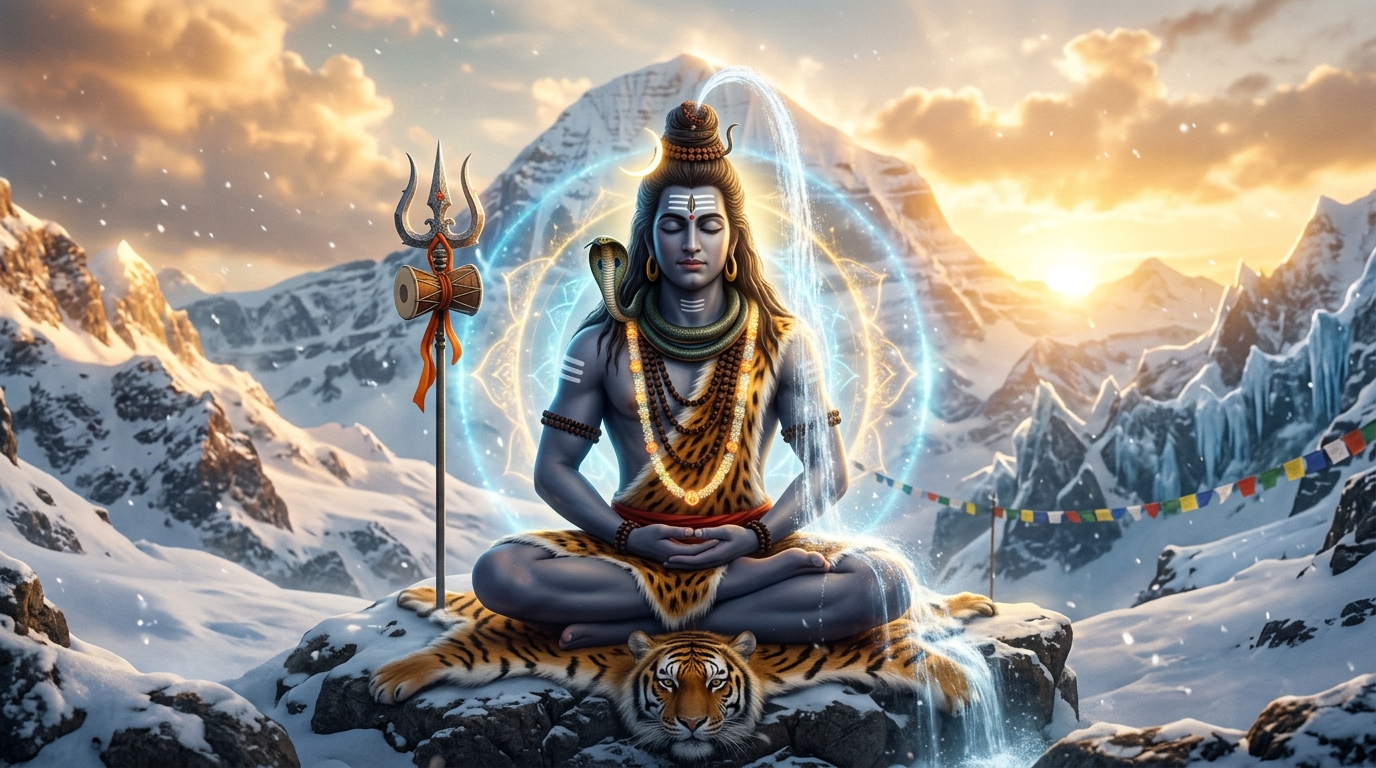
Maha Shivaratri is the most sacred night in the Shaiva calendar, venerating the primordial manifestation of Lord Shiva as the cosmic pillar of infinite light (Jyotirlinga) and celebrating the divine wedding of Shiva and Parvati. On this night, planetary alignments naturally assist the human nervous system in elevating vital energy upward.

12 mins chanting 0 Verses Awadhi Doha & Chaupai Text review in progress

About This Sacred Chalisa

Source Provenance

Maha Shivaratri is the most sacred night in the Shaiva calendar, venerating the primordial manifestation of Lord Shiva as the cosmic pillar of infinite light (Jyotirlinga) and celebrating the divine wedding of Shiva and Parvati. On this night, planetary alignments naturally assist the human nervous system in elevating vital energy upward.

Devotional Notice: This sacred Vrat, Puja, and Festival guide is presented for sincere contemplative study, selfless spiritual observance, and authentic dharmic understanding based on traditional panchang calculation and scriptural guidance. Avhigat Akhara presents authentic liturgical guides without supernatural guarantees, magical fortunes, or commercialized promises; fasting must always be voluntary and aligned with medical well-being. True spiritual fruit arises from righteous conduct (Dharma), selfless devotion (Bhakti), and inner purity.
Sacred Festival (Utsav) Shaiva Smarta Sanatana Dharma
12 min reading guide
॥ AUTHENTIC PANCHANG CALENDAR TIMING ॥

2027 Observance Date & Calculation

Verified by Akhara Secretariat Asia/Kolkata
Event Date:
06 March 2027 – 07 March 2027
Lunar Tithi & Phase:
फाल्गुन कृष्ण चतुर्दशी (Phalguna Krishna Chaturdashi)
Reference Coordinates:
Delhi, India
Methodology / Tradition:
Smarta & Shaiva (Nishita Kaal Vyapini)
Explanation of Observance Rule: Observed when Chaturdashi tithi prevails during astronomical midnight (Nishita Kaal). Fasting is observed throughout Saturday, March 6, with night-long Prahar worship concluding at sunrise on Sunday, March 7.
Auspicious Muhurat Windows (Delhi Reference):
Parana Time: 06:40 AM – 03:26 PM (Mar 07)
Prahar 4 End: 06:40 AM (Mar 07)
Prahar 1 Start: 06:25 PM
Nishita Kaal End: 12:57 AM (Mar 07)
Nishita Kaal Start: 12:08 AM (Mar 07)
Notice for Seekers in Other Cities or Timezones:
All dates, muhurat windows, and tithi calculations displayed above are calculated specifically for the declared reference city (Delhi, India / Asia/Kolkata). If you are observing from another city, state, or country, please consult an authentic local regional Panchang or temple schedule for your local sunrise (Suryodaya) and tithi alignment. The akhara never relabels Delhi timestamps for disparate geographies.

Medical, Fasting & Safety Directives

In Sanatana Dharma, preserving bodily well-being is the primary instrument of virtue.
Fasting Principles: Maha Shivaratri fasting is an exercise in mental discipline and tranquil wakefulness. Practitioners may choose between fruit-and-milk fasting (Phalahar) or water-only fasting according to bodily resilience. Absolute waterless (Nirjala) fasting throughout 24 hours is NOT required for householders or medically fragile seekers.
Medical & Safety Advisory: Health & Fasting Notice: Night-long wakefulness (Jagaran) should be practiced within one’s natural stamina. Do not drive or operate machinery if sleep-deprived. Individuals with heart disease, diabetes, low blood pressure, or pregnant women should consume light, nourishing food and stay properly hydrated throughout the day.
Maha Shivaratri is observed on the fourteenth lunar night (Chaturdashi tithi) of the dark fortnight (Krishna Paksha) of the month of Phalguna, specifically during the Nishita Kaal (midnight window). Date and midnight Muhurat calculations depend on local latitude and longitude; verify with your local city Panchang.

Sacred Preparation Items & Samagri Checklist

Gather these clean and sattvic articles before commencing worship.
Clean fresh water, holy Ganga water, and raw cow milk for Abhishekam
Fresh trifoliate Bilva (bael) leaves free from insect marks, with stems attached
Pure white sandalwood paste (chandan), sacred ash (bhasma/vibhuti), and akshat
Cow ghee lamp (diya), fragrant dhoop sticks, and natural camphor (kapur)
Panchamrita ingredients: milk, curd, honey, cow ghee, and sugar/jaggery
Dhatura flowers/fruit, bhang leaves (symbolic), and seasonal wild fruits (ber)
#1

1. Cosmic Meaning & The Awakening of Consciousness

Advaita Shaiva Darshana
१. तात्विक अर्थ एवं आत्म-चेतना का जागरण
The word "Shiva" means "that which is eternally auspicious and benevolent". Shiva is not merely an external anthropomorphic deity; Shiva is the silent cosmic screen upon which the entire drama of creation, preservation, and dissolution unfolds.\n\nMaha Shivaratri occurs on the darkest night of the month—the night before the new moon (Amavasya). At this time, the lunar influence on the human mind is at its absolute lowest. Because the mind’s emotional turbulence subsides when the moon wanes, this night provides the supreme natural opportunity for the seeker to transcend intellectual restlessness and rest in the silent depths of the soul.
#2

2. Puranic Origin & The Lingodbhava Manifestation

Shiva Purana Vidyeshvara Samhita
२. पौराणिक उद्भव एवं लिंगोद्भव प्राकट्य
According to the Vidyeshvara Samhita of the Shiva Purana, at the dawn of creation, Brahma (the creative force) and Vishnu (the preservative force) engaged in a philosophical debate over supremacy. To dispel their pride and illuminate the truth, a colossal pillar of fire and infinite light (Jyotirlinga) without beginning, middle, or end pierced through the cosmos.\n\nNeither deity could discover its limits. Acknowledging the supreme unmeasurable reality, they bowed in reverence. Lord Shiva then stepped forth from the luminous pillar, declaring that the night of Phalguna Krishna Chaturdashi would forever be commemorated as the great night of spiritual liberation for humanity.
#3

3. Preparation & The Sacred Offerings

Sanatana Agama Manuals
३. पूजन सामग्री एवं पवित्र द्रव्यों का महत्व
Each traditional offering in Shiva worship carries profound psychological and spiritual meaning:\n\n1. Ganga Water & Cold Water: Represents the cooling of mental agitations and burning desires.\n2. Raw Cow Milk: Symbolizes unadulterated purity, nourishment, and satoguna.\n3. Bilva Leaf (Bael): Symbolizes the surrender of the three Gunas (Sattva, Rajas, Tamas) and tri-fold body consciousness.\n4. Sacred Ash (Bhasma): Reminds the human soul of the transient nature of all physical bodies, inspiring inner detachment and fearlessness.\n5. Dhatura & Wild Herbs: Symbolizes the offering of human pain, bitterness, and flaws, which Shiva absorbs into his grace.
#4

4. Four Prahars Night Puja Vidhi

Kotirudra Samhita Injunctions
४. चार प्रहर की रात्रि पूजा का शास्त्रीय विधान
Devotees who observe night-long vigil divide the period between sunset and sunrise into four equal Prahars (approximately 3 hours each):\n\n• 1st Prahar (Dusk to ~9 PM): Consecrate the Shiva Linga with pure cow milk while chanting the Rigvedic Gayatri or Shiva Panchakshari. Offer white flowers.\n• 2nd Prahar (~9 PM to Midnight): Consecrate with fresh curd. Meditate upon Lord Shiva as the protector and preserver of righteousness.\n• 3rd Prahar (Midnight / Nishita Kaal to ~3 AM): The pinnacle of the night. Consecrate with pure melted cow ghee. Recite the Mahamrityunjaya Mantra and celebrate the Lingodbhava.\n• 4th Prahar (~3 AM to Dawn): Consecrate with pure honey and sacred Ganga water. Offer Bilva leaves and conclude with heartfelt gratitude and silent contemplation.
#5

5. Fasting Disciplines & Critical Medical Disclaimers

Dharmashastra Fasting Principles
५. व्रत का सात्विक स्वरूप एवं स्वास्थ्य सुरक्षा निर्देश
1. Voluntary Levels: The easiest and safest method for modern seekers is Phalahar—consuming fresh fruits, milk, coconut water, and nuts. This keeps the mind light while maintaining stable blood sugar.\n2. Hydration: Do not deprive your body of water unless experienced in yogic austerities under direct teacher supervision.\n3. Medical Safeguards: Diabetics, pregnant or lactating women, elderly seniors, and anyone taking prescription medications should eat regular, nourishing meals. God is present in your bodily health; do not induce medical crises under misguided devotion.\n4. Parana Timing: Break the fast the following morning after sunrise, concluding with a light meal of cooked grains after offering prayer.
#6

6. Celebrations Across the Sacred Land of Bharat

National Sacred Geography
६. भारतवर्ष में महाशिवरात्रि की विविध परंपराएं
• The 12 Jyotirlingas: From Somnath and Mahakaleshwar (celebrated for its midnight Bhasma Aarti) to Kashi Vishwanath and Rameshwaram, millions stand in devoted lines offering holy water.\n• Kashmir Shaivism (Herath): Kashmiri Pandits celebrate Maha Shivaratri over several days as "Herath" (derived from Hararatri), venerating Shiva and Shakti through consecrated water-filled earthen vessels (Vatuk Bhairav) and dry fruits.\n• Central & South India: In Mandi (Himachal Pradesh), the week-long International Shivaratri Fair convenes village deities. In Tamil Nadu, Karnataka, and Andhra Pradesh, massive night vigils at ancient stone temples fill the air with Vedic Rudram recitations.

Frequently Asked Questions & Clarifications

Authoritative answers to common devotional and procedural inquiries.
Q1. Why is Bilva (Bael) leaf specifically offered to Lord Shiva?
The three leaflets of a Bilva leaf symbolize the three Gunas (Sattva, Rajas, Tamas), the three eyes of Lord Shiva, and the Trishula (trident). Offering it signifies surrendering one’s threefold ego and mental conditioning at the feet of the Supreme Consciousness.
Q2. What is Nishita Kaal and why is it crucial?
Nishita Kaal is the eighth Muhurat of the night, spanning the exact astronomical midnight. According to the Shiva Purana, it was precisely during this midnight window that Lord Shiva manifested as the infinite pillar of radiant light (Lingodbhava).
Q3. Can a person worship Shiva Linga at home without an ordained priest?
Absolutely. Lord Shiva is known as Ashutosh—the one who is easily pleased with the simplest, most sincere offerings: pure water, a single Bilva leaf, and an honest heart. No professional mediation is mandatory.
Q4. What are the Four Prahars of Maha Shivaratri?
The night is divided into four distinct three-hour quarters (Prahars). Traditionally, seekers perform Abhishekam with milk in the 1st Prahar, curd in the 2nd, ghee in the 3rd, and honey in the 4th, meditating continuously through the night.
Q5. Is it mandatory to stay awake the entire night (Jagaran)?
No. While keeping a quiet wakeful vigil with spiritual reading or meditation is highly commended, it must not be forced to the point of severe physical exhaustion or illness. Devotion with physical equilibrium is always superior to mechanical sleeplessness.
Q6. Can women and householders offer worship to the Shiva Linga?
Yes. Classical Smarta and Shaiva scriptures encourage both women and men of all walks of life to revere Lord Shiva with reverence and love. In the temple of Kashi Vishwanath and across Bharat, all devotees offer water directly.
Q7. When should the fast be broken (Parana)?
Parana is traditionally performed on the morning of Amavasya (the day following Chaturdashi) after sunrise, following a morning bath and offering of prayers.
Q8. What is the real spiritual message of consuming Bhang or Dhatura?
Dhatura and wild poisonous herbs represent the toxic, bitter elements of the world and the human psyche. Offering them to Shiva signifies that God accepts and neutralizes even the most discarded and toxic burdens of the universe, transforming bitterness into peace. It is not an endorsement for recreational intoxication.

Recitation Guidelines & Spiritual Merits

Chanting Rules & Vidhi:
1. Wake up in the early morning, take a purifying bath, and resolve to spend the day in calm devotion.\n2. Consecrate the Shiva Linga with continuous pouring of clean water, milk, and Panchamrita while chanting "Om Namah Shivaya".\n3. Offer fragrant white sandalwood, unbroken rice (Akshat), and fresh Bilva leaves placing the smooth side on the Linga.\n4. Offer Dhatura, wild seasonal fruits (ber), sacred ash (Bhasma), and light a pure cow ghee lamp.\n5. Chanting the Mahamrityunjaya Mantra or Shiva Tandava Stotram with an open, quiet heart brings profound inner stillness.
Spiritual Significance:
Shiva represents pure, untainted consciousness (Shuddha Chaitanya) beyond name, form, and birth. Shivaratri means "the night of Shiva"—a mystical portal where the mind effortlessly dissolves its restless chatter and abides in timeless peace, transcending the fear of mortality.

Authoritative Edition & Provenance Details

Avhigat Akhara Vedic Library & Source Registry
100% Quality Score Public Domain
Edition Title: Shiva Purana (Vidyeshvara Samhita & Kotirudra Samhita) — Gita Press Gorakhpur
Publisher & Year: Gita Press Gorakhpur (Code 15 & Code 284) • 1990
Bibliographic Reference: Shiva Purana, Vidyeshvara Samhita Adhyayas 9-10; Kotirudra Samhita Adhyayas 37-40; Vrat Parva Sangraha, pp. 88-115.
This text is still being reviewed by the Akhara. If you see a mistake, please tell us.
॥ Authoritative Shastric Guidance ॥

Classical Context & Seekers Questions

Authoritative answers, ritual disciplines, and scriptural citations for sincere practitioners.

Q1
Ritual Shaiva Siddhanta

What is the significance of the four Prahara pujas performed during Maha Shivaratri night?

Context Note: Ritual structure of the four watches of Maha Shivaratri.
Summary Answer

The four night watches (Prahars) of Maha Shivaratri correspond to the gradual cleansing of the four inner faculties (Antahkarana: Manas, Buddhi, Chitta, Ahamkara) through milk, curd, ghee, and honey abhishekas.

The Shiva Purana (Kotirudra Samhita) lays out the four abhishekas: First Prahar with cow's milk for purity of mind; Second Prahar with curd for stability of intellect; Third Prahar with pure desi cow ghee for health and vitality; Fourth Prahar with raw honey and sugar cane juice for supreme devotion and liberation. Staying awake (Jagaran) throughout this night keeps the spine erect when planetary alignments naturally draw spiritual prana upwards.
Classical Scriptural Sources
Shiva Purana (Kotirudra Samhita) Verified

Author/Rishi: Gita Press Edition

Kotirudra Samhita, Adhyaya 37-40 • Shivaratri Vrata Mahatmya

Gita Press, Gorakhpur

Related Concepts: #Sadhana #Kundalini

Related Vrat & Puja Guides

View All Collection →
Vrat, Puja & Festivals Verified
Sharad Navratri & Durga Puja (Sacred Nine Nights of the Divine Mother)
शारदीय नवरात्रि एवं दुर्गा पूजा (भगवती आद्यशक्ति की पावन नव-रात्रियां)
Mother Durga & Navadurga
Vrat, Puja & Festivals Verified
Shri Krishna Janmashtami (The Advent of the Supreme Divine)
श्रीकृष्ण जन्माष्टमी (भगवान श्रीहरि विष्णु के पूर्णावतार श्रीकृष्ण का प्राकट्य उत्सव)
Lord Krishna / Sri Hari Vishnu
Vrat, Puja & Festivals Verified
Ekadashi Vrat (The Sacred Bi-Monthly Lunar Fast of Lord Vishnu)
एकादशी व्रत (श्रीहरि विष्णु की आराधना का पावन पाक्षिक उपवास)
Lord Vishnu / Sri Hari
Vrat, Puja & Festivals Verified
Deepavali & Lakshmi Puja (Festival of Lights & Divine Grace)
दीपावली एवं श्री महालक्ष्मी पूजा (प्रकाश पर्व एवं भगवती महालक्ष्मी की पावन आराधना)
Mother Lakshmi & Lord Ganesha

Verified Context & Sacred Entity Links

Lord Shiva
Presiding Deity
Lord Shiva
Explore Divine Profile →
Scripture Family
Vrat, Puja & Festivals
6 verified texts in this family collection.
Related Sadhana Contextual
Maha Mrityunjaya Sadhana
The supreme Vedic healing and fear-dispelling discipline dedicated to Lord Shiva, restoring inner vitality, longevity, and spiritual equanim...
Note: Provided for scriptural study. Advanced practices require competent Guru guidance.
॥ श्री गुरु चरण सरोज रज ॥

One-to-One Samasya Samadhan

Confidential Guidance

Private guidance from Guru Ji and the Akhara's guides. Choose what you need help with.