
Maa Kaali Sadhana — Primordial Mother of Time, Ego-Dissolution & Liberation
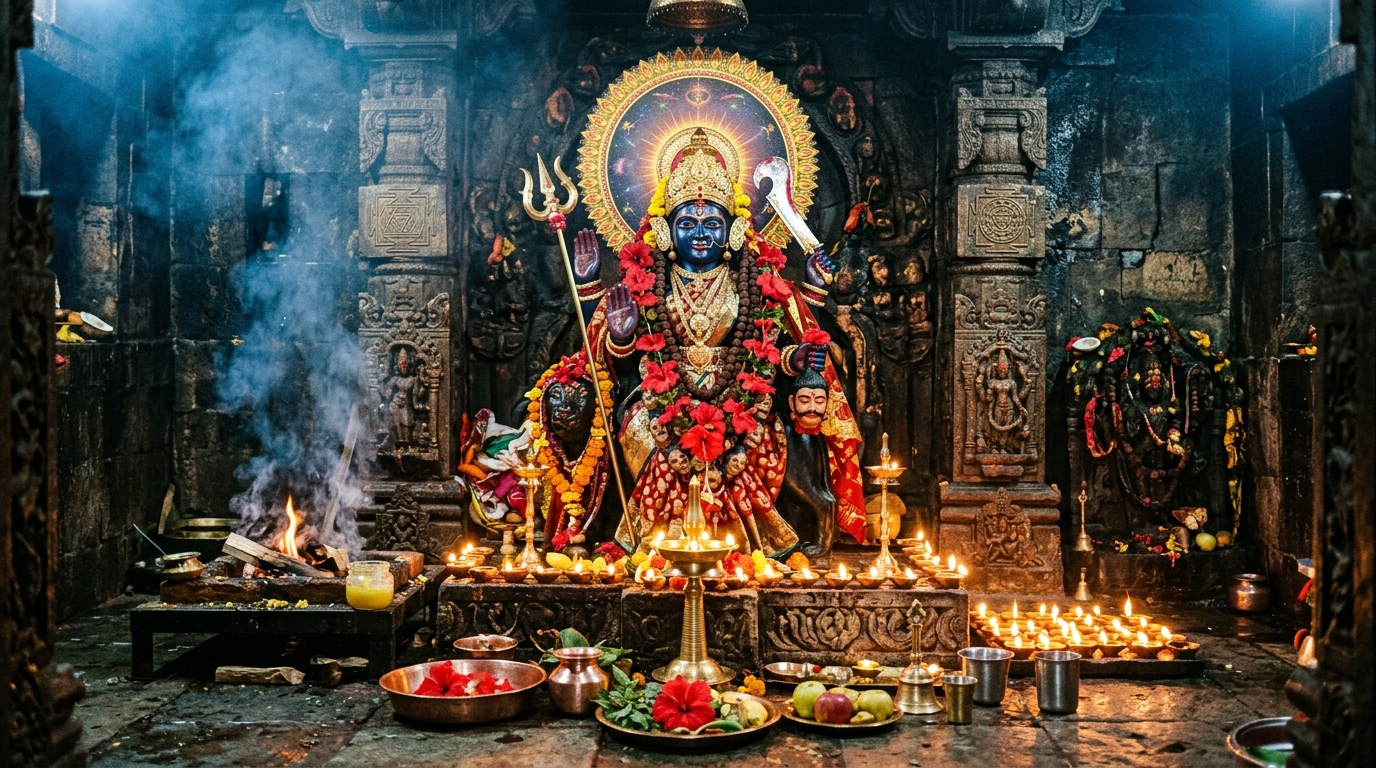
Maa Kaali Sadhana is the first and supreme stream of the sacred Dasa Mahavidyas, venerated as the primordial dark womb of all creation and dissolution. Radiating the blackness of the unlit night sky in which all colors dissolve, naked and wild-haired, standing upon the silent chest of Lord Shiva, she wears a garland of fifty human skulls representing the fifty letters of the Sanskrit alphabet. In her four hands, she holds a severed head, a bloody cleaver, and displays the gestures of fearlessness (Abhaya) and divine boons (Varada). In the authentic Sanatan tradition of Avhigat Akhara, Kaali is not a bloodthirsty demoness, but the supreme embodiment of fierce maternal love that slays the demon of false ego, liberates the seeker from the fear of death, and reveals the eternal, unchanging light of pure consciousness.
Who is Maa Kaali?
Adya Shakti — The Primordial Matrix of Time, Dissolution, and Eternal Awareness
What is Maa Kaali Sadhana?
Sacred essence, spiritual foundation, and scriptural truth
Maa Kaali Sadhana is the first and supreme stream of the sacred Dasa Mahavidyas, venerated as the primordial dark womb of all creation and dissolution. Radiating the blackness of the unlit night sky in which all colors dissolve, naked and wild-haired, standing upon the silent chest of Lord Shiva, she wears a garland of fifty human skulls representing the fifty letters of the Sanskrit alphabet. In her four hands, she holds a severed head, a bloody cleaver, and displays the gestures of fearlessness (Abhaya) and divine boons (Varada). In the authentic Sanatan tradition of Avhigat Akhara, Kaali is not a bloodthirsty demoness, but the supreme embodiment of fierce maternal love that slays the demon of false ego, liberates the seeker from the fear of death, and reveals the eternal, unchanging light of pure consciousness.
Why is Maa Kaali Sadhana Practiced?
Core spiritual purposes, inner purification, and consciousness evolution
Mental Stillness & Focus
Daily japa and meditative contemplation calm wandering thoughts, fostering sharp inward awareness and emotional balance.
Spiritual Fortitude & Energy Balance
Authentic sacred kavacha and nyasa practices protect subtle vitality from negative inclinations, fear, and distraction.
Cultivation of Sattvic Discernment
Helps dissolve pride, resentment, and restlessness, strengthening humility, discernment, and spiritual surrender.
Inner Realization & Lineage Grace
Not an outward exhibition, but an inward journey toward self-realization sheltered under authentic monastic lineage guidance.
Spiritual Significance & Philosophy
Philosophical essence and the science of internal transformation
“The eternal significance of Kaali Sadhana lies in her power to grant instantaneous psychological liberation. Most spiritual paths attempt to soothe the ego gradually through pleasant moral consolations; Kaali takes the sharp sword of discrimination and severs the ego at once. Saints like Ramakrishna Paramahamsa, Ramprasad Sen, and countless Himalayan masters demonstrated that beneath her terrifying exterior beats the tenderest mother heart in the universe. Her grace turns the darkest night of the soul into the dazzling dawn of self-realization.”
Who is This Sadhana For?
Eligibility criteria, seeker temperament, and prerequisite guidance
Individuals seeking daily focus, spiritual discipline, and quiet inward balance without complex rituals.
Practitioners balancing work, family, and social obligations while following a pure satvik spiritual path.
Dedicated practitioners who have mastered basic disciplines and wish to undertake formal anusthana under Guru Diksha.
Importance of Lineage Grace & Approval
Tantrik, Mahavidya, and advanced dhyana disciplines should not be initiated whimsically without lineage permission and proper understanding.
Who Should Take Lineage Guidance First?
Lineage Principle: Practice preserves sanctity and protects seekers when guided authentically
Historical Origins & Guru Parampara
Authentic scriptural foundation and unbroken monastic transmission
Traditional Origins
Scriptural Authority
Monastic Lineage Shelter

Our Acharyas remind us that an infant does not fear its mother even when she looks stern. When you sit for Kaali Sadhana, weep before her like a child who has lost its way in a crowded market. Confess your weaknesses, your attachments, and your fears. When you withhold nothing from her, her fierce form dissolves into a fountain of boundless love that protects you forever.
Preparation & Sacred Disciplines
Essential guidelines, satvik habits, and sanctum preparations
Altar Cleansing
RecommendedClean a wooden chowki, spread a fresh red cloth, and install the consecrated Kali Yantra or portrait facing North.
Lamp & Incense Offering
RecommendedLight a sesame oil lamp and burn pure guggulu incense, creating a focused, sacred atmosphere.
Ganesha & Shiva Prostrations
RecommendedBow to Lord Ganesha and Mahakala Shiva, seeking permission and protection for your Mahavidya sadhana.
Muladhara Breath Focus
RecommendedFocus awareness at the base of the spine, feeling red-golden warmth rising smoothly through the central sushumna nadi.
Adya Kaali Visualization
RecommendedVisualize the magnificent dark Mother standing upon Shiva chest, smiling with boundless grace and dispelling all worldly fears.
Practice Progression & Stages
Systematic pathway from preliminary understanding to final sanctum offering
Arambha (Dissolution of Restlessness)
The mind sheds chronic lethargy and restlessness, developing physical stability and focused attention during japa.
Bhaya Shamana (Conquering Fear)
Subconscious dread of death, darkness, and failure melts away, replaced by a deep, immovable sense of inner safety.
Tejas (Awakening of Spiritual Fire)
The subtle nervous system awakens with vitality; intuition sharpens and negative habits fall away effortlessly.
Siddhi (Union with Pure Consciousness)
The illusion of a separate, fragile ego dissolves into the infinite ocean of blissful, timeless awareness.
Daily Practice Discipline & Routine
Sanctum steadfastness: One Time, One Altar, and Inner Purity
Red or Black Sacred Attire
Rudraksha Mala Selection
Offering of Red Hibiscus
Strict Chastity (Brahmacharya)
Avoidance of Boasting & Display
Nightly Kali Kavach Recitation
Kindness to Strays & Dogs
Surrender of Ego at Sunset
Common Mistakes & Sacred Cautions
Safeguarding seekers against mispronunciation, haste, and unauthorized practices
Chanting with angry, hateful thoughts toward human adversaries.
Correct Lineage Guidance: Direct the mantra solely against your own internal demons of anger, greed, and arrogance.
Attempting cremation-ground rituals without sannyas initiation.
Correct Lineage Guidance: Practice the peaceful, sattvic household discipline in your clean home prayer room.
Wearing soiled or synthetic clothes during japa.
Correct Lineage Guidance: Wear freshly washed, pure cotton garments reserved exclusively for your daily prayers.
Skipping the concluding peace prayers and prayer for forgiveness.
Correct Lineage Guidance: Always conclude with the Aparadha Kshamapana Stotra and Shanti Mantra before getting up.
Authentic Questions Asked by Seekers
Direct, practical answers grounded in verified tradition and authentic lineage wisdom
Frequently Asked Questions
Authentic answers to common queries regarding initiation, timing, and practice
Amavasya (New Moon night), especially during Diwali (Kaali Puja), and the dark nights of Krishna Paksha Ashtami and Chaturdashi are considered exceptionally powerful for inner meditation.
Related Sacred Sadhanas
Connected disciplines within this lineage and spiritual tradition


Sacred Essentials & Sanctum Items
Consecrated items traditionally used to support meditation, focus, and sanctum discipline
Use of Mala, Yantra, Kit or other materials can vary by practice. Follow the guidance given for your Sadhana.
Consecrated Haldi / Tulsi Japa Mala
108 knotted beads consecrated according to Vedic rites.
Handcrafted Copper Yantra Plate
Sacred geometric plate for sanctum meditation and focus.
Pure Woolen Meditation Asana
Traditional insulation mat to preserve spiritual energy.
Ask About This Sacred Item
Inquire with the sanctum team regarding consecration, authenticity, or practice usage.
