Avhigat Akhara
Traditional Ascetic Hermitage & Vedic Lineage
Preserving Eternal Sanatan Dharma and Divine Guru Parampara
Membership Contact Us
Diksha, Sannyas & Marg Disciplines › Monastic Diksha Disciplines

Manasika Japa & Silent Sound Contemplation

Manasika Japa is the highest and most potent form of mantra repetition, where syllables are chanted entirely within the silence of the mind without moving the lips, tongue, or vocal cords. While spoken chanting cleanses the physical environment and whispered chanting calms the nervous system, silent mental chanting directly penetrates the subconscious mind. This guide details how to master silent japa, how to overcome wandering thoughts, how to synchronize the mantra with breathing, and how to reach the effortless state of Ajapa-Japa.

Level: Beginner
Vedic
Guru Diksha Required
Manasika Japa Sadhana (Mental Chanting)
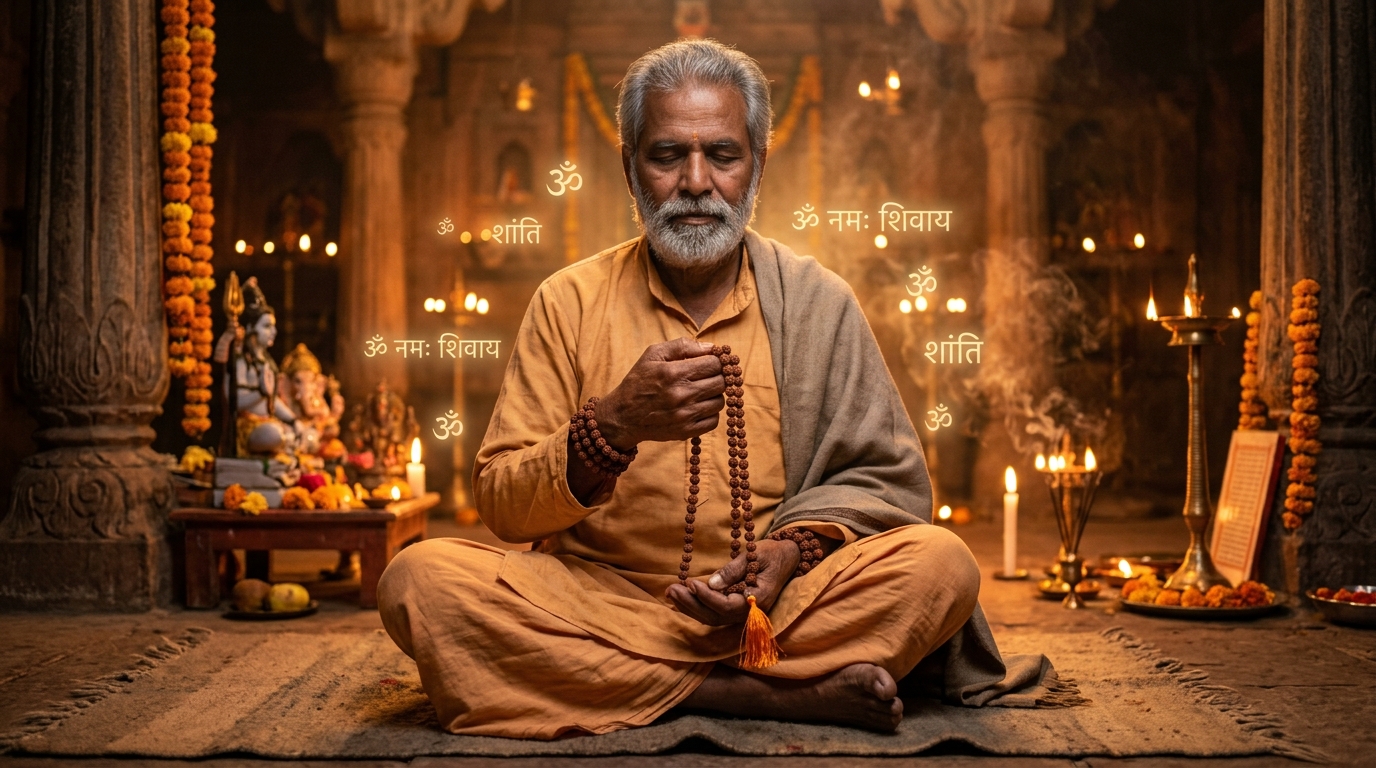
Sacred Deity Sanctum Darshan Consecrated Murti
Divine Origin & Spiritual Identity

What is Manasika Japa?

The Science of Inner Silent Chanting

According to the Manu Smriti and Patanjali Yoga Sutras, japa is classified into three distinct grades. Vaikhari (spoken out loud) is good; Upamshu (whispered with lips moving) is declared a hundred times more effective; but Manasika (silent mental repetition) is celebrated as a thousand times more powerful than spoken chanting. Why is mental japa so potent? Because when you speak aloud, your tongue can move automatically while your mind wanders elsewhere. You can speak a mantra with your mouth while thinking about your work. But in Manasika Japa, the mind itself is the instrument of repetition. If the mind drifts, the mantra immediately stops. Therefore, mental japa forces your scattered attention to unite into a single unbroken stream (Ekagrata). Over time, this unbroken stream dissolves inner mental noise and opens into lasting peace.
What is Manasika Japa?
Manasika Japa Sadhana (Mental Chanting)
Sanctum Sacred Representation
Total Internalization
Freedom from External Setting
Subconscious Cleansing
Bridge to Meditation (Dhyana)
Pranic Conservation
Ajapa Realization
Definition & Spiritual Essence

What is Manasika Japa Sadhana (Mental Chanting)?

Sacred essence, spiritual foundation, and scriptural truth

Authoritative Summary (Direct Essence)

Manasika Japa is the highest and most potent form of mantra repetition, where syllables are chanted entirely within the silence of the mind without moving the lips, tongue, or vocal cords. While spoken chanting cleanses the physical environment and whispered chanting calms the nervous system, silent mental chanting directly penetrates the subconscious mind. This guide details how to master silent japa, how to overcome wandering thoughts, how to synchronize the mantra with breathing, and how to reach the effortless state of Ajapa-Japa.

Practicing Manasika Japa requires patience because beginners frequently face two main obstacles: distraction (Vikshepa) and sleepiness (Laya). When you close your mouth and start mental chanting, years of buried thoughts, unresolved memories, and creative ideas suddenly bubble up to grab your attention. This does not mean your sadhana is failing; it means your inner housecleaning has begun. When thoughts arise, do not fight them with frustration. Simply observe them as passing clouds, and gently steer your attention back to the silent sound of the mantra. If sleepiness or heavy dullness takes over, immediately switch to whisper japa (Upamshu) or take five deep, rhythmic breaths to revitalize your prana before returning to silence. Over weeks of persistence, the mind learns to enjoy the pure silence of the inner sanctum. The senses withdraw from external sounds, the breath slows to an imperceptible rhythm, and the mantra becomes a golden thread leading straight to your authentic divine nature. In everyday life, silent chanting acts as an invisible spiritual shield. When you find yourself sitting in heavy traffic, standing in a long line at the bank, or waiting for an important appointment, you do not need to feel bored or impatient. Instead of picking up your mobile phone to browse social feeds, you can instantly turn inward. You can close your lips and silently repeat your sacred mantra ten or twenty times. The restless energy of the waiting room disappears. Your heartbeat settles, your blood pressure eases, and you remain anchored in calm awareness while others around you feel stressed. This practical ability to find solitude in the middle of a noisy crowd is the greatest gift of regular mental japa. Over years of practice, this inner sanctuary becomes so solid that no external crisis can shake your peace.
Spiritual Purpose & Inner Evolution

Why is Manasika Japa Sadhana (Mental Chanting) Practiced?

Core spiritual purposes, inner purification, and consciousness evolution

Mental Stillness & Focus

Daily japa and meditative contemplation calm wandering thoughts, fostering sharp inward awareness and emotional balance.

Spiritual Fortitude & Energy Balance

Authentic sacred kavacha and nyasa practices protect subtle vitality from negative inclinations, fear, and distraction.

Cultivation of Sattvic Discernment

Helps dissolve pride, resentment, and restlessness, strengthening humility, discernment, and spiritual surrender.

Inner Realization & Lineage Grace

Not an outward exhibition, but an inward journey toward self-realization sheltered under authentic monastic lineage guidance.

Tattvik Insight & Philosophy

Spiritual Significance & Philosophy

Philosophical essence and the science of internal transformation

“The ultimate fruit of dedicated Manasika Japa is Ajapa-Japa: the state where chanting becomes as natural and constant as breathing. In the Sandilya Upanishad, it is explained that the human body breathes approximately 21,600 times every single day. With each inhalation, the sound So arises; with each exhalation, the sound Ham resonates. When Manasika Japa synchronizes with this natural breath, the practitioner maintains continuous prayer even while performing household duties, writing, or resting. This produces an unbreakable shield of calm that worldly troubles cannot penetrate. The mind becomes like a mirror wiped clean of dust, reflecting the supreme Self without distortion. In addition, silent chanting heals old emotional scars stored deep in the subconscious layers of the mind. Spoken words only touch the surface level of our consciousness, but silent repetition reaches into the hidden storehouse of memories and desires (Chitta). By introducing a pure, divine vibration into that silent space, the old painful impressions gradually dissolve like salt in water. The practitioner wakes up in the morning feeling light and clear, without the heavy burden of ancient worries or unfulfilled regrets.”
Avhigat Akhara Monastic Wisdom
Seeker Eligibility & Suitability

Who is This Sadhana For?

Eligibility criteria, seeker temperament, and prerequisite guidance

Sincere Seekers

Individuals seeking daily focus, spiritual discipline, and quiet inward balance without complex rituals.

Householders

Practitioners balancing work, family, and social obligations while following a pure satvik spiritual path.

Disciplined Initiates

Dedicated practitioners who have mastered basic disciplines and wish to undertake formal anusthana under Guru Diksha.

Importance of Lineage Grace & Approval

Tantrik, Mahavidya, and advanced dhyana disciplines should not be initiated whimsically without lineage permission and proper understanding.

Seeker Discretion Notice

Who Should Take Lineage Guidance First?

Lineage Principle: Practice preserves sanctity and protects seekers when guided authentically

Do not force the mental chant so tightly that you create tension in your temples, forehead, or jaw. If your head feels tight or hot, relax your facial muscles, drop your shoulders, smile gently, and let the mantra arise from the heart rather than forcing it in the head. Keep a gentle, loving attitude toward the deity rather than treating the repetition like a mechanical drill. If you suffer from severe nervous headaches, pause mental chanting, open your eyes, and gaze peacefully upon a natural green tree or open sky.
Request Lineage Guidance Consultation Avhigat Akhara upholds the sacred decorum of traditional Diksha and guided practice.
Origins, Tradition & Guru Parampara

Historical Origins & Guru Parampara

Authentic scriptural foundation and unbroken monastic transmission

Traditional Origins

Manasika Japa is praised throughout the Mahabharata (Shanti Parva), where Bhishma Pitamaha teaches Yudhishthira that of all yajnas (sacrifices), Japa Yajna is the highest because it causes zero harm to any living creature. Lord Krishna confirms this in the Bhagavad Gita (10.25): Yajnanam Japa-Yajno Asmi (Among all sacrifices, I am the sacrifice of silent Japa). In the classical Vedic ashrams, disciples who mastered spoken chanting were eventually initiated into the silence of the forest (Aranyaka) to practice unbroken mental japa.

Scriptural Authority

Bhagavad Gita (Chapter 10, Verse 25), Manu Smriti (Chapter 2, Verses 85-87), and Patanjali Yoga Sutras (Sutra 1.28: Taj-japas tad-artha-bhavanam). Chanting the mantra with contemplation on its divine meaning is the core instruction of sage Patanjali. The Varaha Upanishad also emphasizes that mental japa is the direct royal road to destroying the web of illusion (Maya).

Monastic Lineage Shelter

Avhigat Akhara teaches beginners to anchor mental japa to the natural rhythm of the pulse or breath. Once the rhythm is established, the seeker is taught to withdraw from the counting mala and immerse directly into the unstruck inner sound. Disciples are guided to cultivate silent awareness during everyday actions.
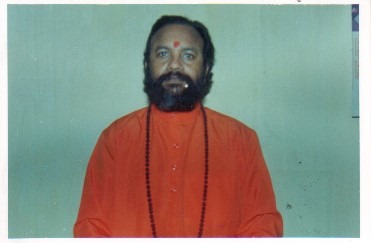
Pujya Guru Ji Maharaj - Avhigat Akhara
Guidance by Pujya Guru Ji Maharaj
“When your mouth speaks, the world hears you; when your mind repeats the mantra in silence, God alone listens.”

Guru Ji advises that silence is the language of the Divine. Spoken words create waves on the surface of the lake, but silent mental japa takes you deep down to the peaceful, undisturbed lake bed where pearls of wisdom rest. Do not worry if your mind strays; the moment you notice the wandering, you have already returned home to peace.

Preparation & Sacred Disciplines

Preparation & Sacred Disciplines

Essential guidelines, satvik habits, and sanctum preparations

01

Five Minutes of Audible Chanting

Recommended

Start with five minutes of gentle vocal chanting to settle your nervous system before closing your mouth into total silence.

02

Spinal Alignment

Recommended

Roll your shoulders back, tuck your chin slightly in, and make sure your head is balanced effortlessly over your spine.

03

Three Calming Exhalations

Recommended

Breathe in deeply through your nose, and exhale slowly through your mouth, releasing all physical tension from your forehead and belly.

04

Closing the Senses

Recommended

Gently rest your tongue against the roof of your mouth behind your upper front teeth. Let your lips rest softly closed without clenching.

05

Sanctuary Visualization

Recommended

Visualize an ancient stone temple inside your chest where your chosen deity sits in radiant golden light welcoming your prayer.

06

Gentle Timer Setting

Recommended

Set a soft-toned bell timer for thirty minutes so you do not open your eyes repeatedly to check the wall clock.

Practice Progression & Stages

Practice Progression & Stages

Systematic pathway from preliminary understanding to final sanctum offering

01

Stage 1: Mental Murmuring (With Inner Effort)

The mind actively pronounces words in thought. You feel like you are speaking silently inside your head with conscious effort.

02

Stage 2: Rhythmic Breathing Flow

The mantra merges with the natural breath. The conscious effort lessens, and the rhythm feels peaceful and natural.

03

Stage 3: Silent Inner Listening (Shruti Avastha)

You stop repeating the mantra actively; instead, you sit and listen as the mantra repeats itself within your heart cave.

04

Stage 4: Samadhi Laya (Dissolution in Soundless Peace)

The syllables melt into pure silent awareness. The practitioner forgets the physical body and rests in God realization.

Daily Practice Discipline & Niyama

Daily Practice Discipline & Routine

Sanctum steadfastness: One Time, One Altar, and Inner Purity

Rule
Recommended

Motionless Body (Sthira Asan)

Rule
Recommended

Breath Synchronization

Rule
Recommended

Heart Center Focus

Rule
Recommended

Patience with Intrusive Thoughts

Rule
Recommended

Daily Speech Economy (Mita Bhashana)

Rule
Recommended

Nocturnal Recapitulation

Sacred Cautions & Safety Guidelines

Common Mistakes & Sacred Cautions

Safeguarding seekers against mispronunciation, haste, and unauthorized practices

Clenching the jaw or moving the tongue inside a closed mouth.

Correct Lineage Guidance: Rest the tongue completely against the palate and relax your jaw muscles.

Falling asleep because the eyes are closed in silence.

Correct Lineage Guidance: Open your eyes halfway, gaze downward at the floor, or sit more upright.

Giving up quickly because the mind seems louder than before.

Correct Lineage Guidance: Persist. The storm always calms down after fifteen minutes of patient sitting.

Judging the quality of japa by whether you felt ecstatic sensations.

Correct Lineage Guidance: Even dry, quiet japa with zero visions cleanses deep karmas effectively. Trust the process.

Speeding up the mental repetition to an unnatural frantic blur.

Correct Lineage Guidance: Keep the mental pace steady, dignified, and clear, like a serene grandfather clock ticking in an empty hall.

Authentic Seeker Inquiries

Authentic Questions Asked by Seekers

Direct, practical answers grounded in verified tradition and authentic lineage wisdom

Should I count beads on a mala during mental japa?
You can use a mala if it helps keep your fingers anchored and prevents dozing off. However, in advanced practice, counting drops away and you practice for a fixed duration of time (such as 30 or 45 minutes) using a gentle chime timer.
Is mental japa safe for people with anxiety or depression?
Yes, very safe and therapeutic. Unlike aggressive breathing techniques, gentle mental repetition of peaceful mantras soothes the sympathetic nervous system and reduces cortisol.
What if bad thoughts arise alongside the mantra?
Never worry. Old mental junk must come up to be released. Do not condemn yourself. Continue holding the mantra like a lamp in the dark; the darkness will disperse on its own.
Can I do mental japa while walking or working?
Yes. That is the beauty of Manasika Japa. While washing dishes, walking to work, or waiting in line, keep your silent mantra rolling gently in the background.
How can I stop the tongue from micro-moving during silent japa?
Rest the tip of the tongue firmly against the ridge behind your upper teeth, or gently bite the tip of your tongue between your front teeth. This physically prevents speech muscle twitching.
Does mental japa require physical bathing if practiced midday?
A full bath is best for morning and evening seated sessions. However, during midday or travel, simply washing your hands, feet, and face (Kevala Marjana) is completely sufficient for silent chanting.
Frequently Asked Questions

Frequently Asked Questions

Authentic answers to common queries regarding initiation, timing, and practice

Because spoken chanting can be done mechanically with an unfocused mind. Mental chanting requires 100% of your attention; the moment your mind wanders, the chanting ceases.

YOUR SACRED NEXT STEP

Ready to Begin Manasika Japa Sadhana (Mental Chanting)?

Follow the authentic Vedic and monastic path under lineage guidance before starting your practice.

Guidance Recommended

Guru Guidance & Diksha Consultation

This sacred practice requires initiation and protective mantra guidance from the authentic monastic lineage before regular practice.

Direct connection with Avhigat Akhara.
Enquiry Open

Manasika Japa Sadhana (Mental Chanting) Guided Training

Learn step-by-step mantra japa, mudras, and nyasa under authentic Acharyas through our guided monastic batches.

Batch curriculum and registration dates announced periodically.
Approved Paraphernalia

Manasika Japa Sadhana (Mental Chanting) Sacred Essentials

View consecrated Jap Malas, consecrated Yantras, Kusha asanas, and authentic sadhana kits approved by Avhigat Akhara.

Consecrated items energized per scriptural traditions.
View Sadhana Essentials
Sacred Sanctum Essentials

Sacred Essentials & Sanctum Items

Consecrated items traditionally used to support meditation, focus, and sanctum discipline

Tradition & Guidance Advisory

Use of Mala, Yantra, Kit or other materials can vary by practice. Follow the guidance given for your Sadhana.

Essential Checklist Before Practice
Vedic Sequence
1
1. Guidance
Guru Guidance
Consult
2
2. Mala
Consecrated Mala
View ↓
3
3. Yantra
Sanctum Yantra
View ↓
4
4. Kit
Sadhana Kit
View ↓
5
5. Asan
Pure Woolen Asan
View ↓
Mala Sacred Tool

Consecrated Haldi / Tulsi Japa Mala

108 knotted beads consecrated according to Vedic rites.

Yantra Sanctum Item

Handcrafted Copper Yantra Plate

Sacred geometric plate for sanctum meditation and focus.

Asan Daily Practice

Pure Woolen Meditation Asana

Traditional insulation mat to preserve spiritual energy.

॥ श्री गुरु चरण सरोज रज ॥

One-to-One Samasya Samadhan

Confidential Guidance

Private guidance from Guru Ji and the Akhara's guides. Choose what you need help with.