Avhigat Akhara
Traditional Ascetic Hermitage & Vedic Lineage
Preserving Eternal Sanatan Dharma and Divine Guru Parampara
Membership Contact Us
Diksha, Sannyas & Marg Disciplines › Monastic Diksha Disciplines

Mantra Diksha & Sacred Japa Practice

Mantra Diksha is the sacred moment when a living Guru awakens a mantra and plants its seed into the heart of a sincere seeker. While words printed in books remain silent ink on paper, a mantra given through Guru Diksha carries spiritual life force. This guide explains how mantra initiation works, why oral transmission matters, how to practice daily japa with discipline, and how sound vibration purifies the human mind.

Level: Intermediate
Ascetic
Guru Diksha Required
Mantra Diksha & Japa Sadhana
Sacred Deity Sanctum Darshan Consecrated Murti
Divine Origin & Spiritual Identity

What is Mantra Diksha?

The Living Science of Sacred Sound Transmission
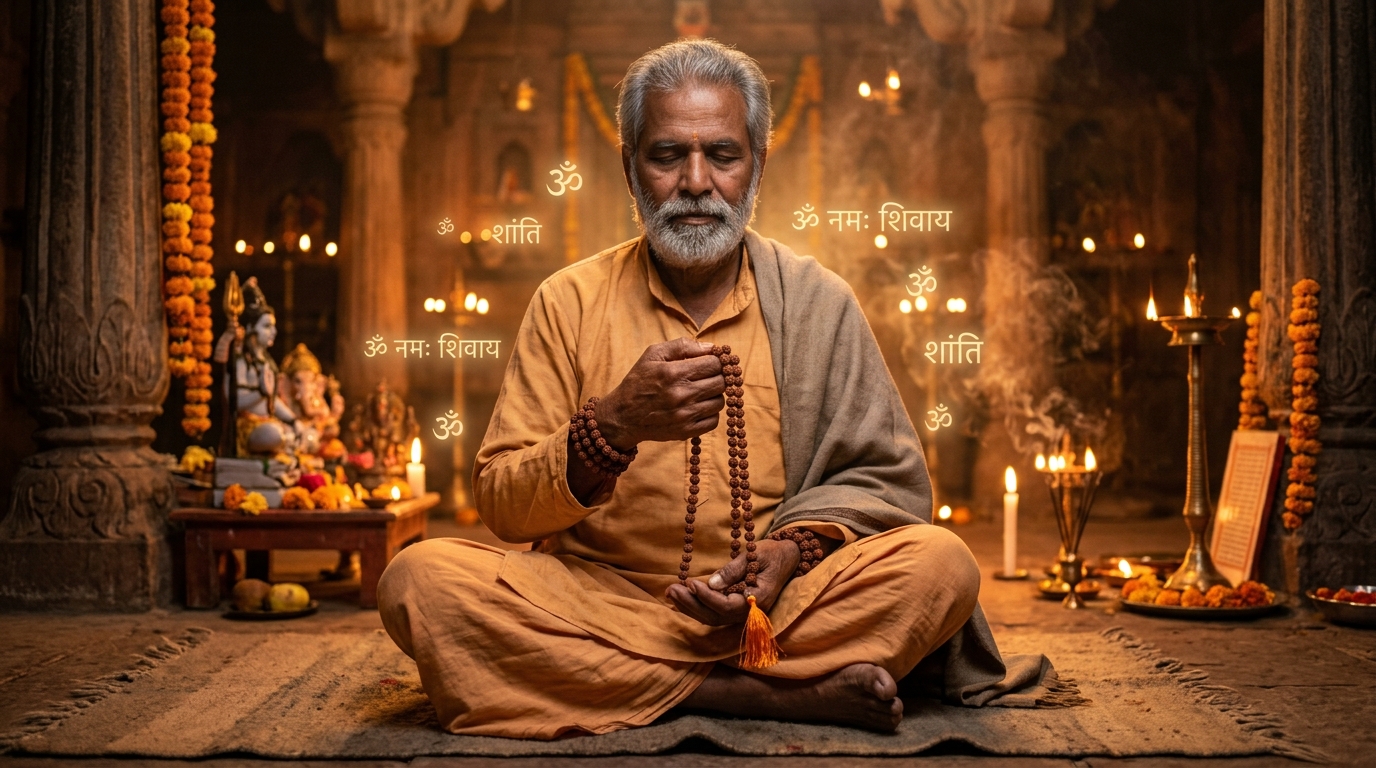
In the Sanatan tradition, a mantra is not just a sequence of syllables. The word mantra comes from two roots: man, which means mind, and tra, which means to protect or liberate. A mantra is a sound structure that shields the mind from confusion, fear, and sorrow. When a seeker receives a mantra from a realized Guru, the mantra is already alive. It carries the spiritual momentum of countless generations of masters who practiced it before. When you chant a mantra received through Diksha, you do not start from zero. You plug into a steady spiritual power line that supports your everyday effort. Chanting without initiation is like planting an unwatered seed in hard soil. It may eventually sprout after great struggle, but a seed watered by Guru Kripa takes root quickly and blossoms into lasting inner peace.
What is Mantra Diksha?
Mantra Diksha & Japa Sadhana
Sanctum Sacred Representation
Awakened Sound (Chaitanya Mantra)
Psychological Shielding
Deity Energy Realization
Karmic Purification
Definition & Spiritual Essence

What is Mantra Diksha & Japa Sadhana?

Sacred essence, spiritual foundation, and scriptural truth

Authoritative Summary (Direct Essence)

Mantra Diksha is the sacred moment when a living Guru awakens a mantra and plants its seed into the heart of a sincere seeker. While words printed in books remain silent ink on paper, a mantra given through Guru Diksha carries spiritual life force. This guide explains how mantra initiation works, why oral transmission matters, how to practice daily japa with discipline, and how sound vibration purifies the human mind.

To practice Mantra Sadhana successfully, a seeker must understand the progressive stages of japa. Japa is not mindless repetition while your mind wanders to bills and groceries. True japa demands bodily stillness, respectful attention, and deep breath connection. In the beginning, the seeker practices Vaikhari Japa, where the lips move and words are whispered or spoken softly. This external sound keeps the wandering mind tethered to the practice. Over months of steady discipline, the chanting naturally softens into Upamshu Japa, where only the tongue moves slightly and no one else can hear the sound. Finally, the sadhana ripens into Manasika Japa, where the mouth is completely still and the mantra echoes silently in the cave of the heart. In this silent state, the mantra reveals its true light, dissolving inner conflict and connecting the seeker to unbroken awareness. Also, as japa deepens over continuous months of practice, the body develops a natural sensitivity to sound. The practitioner notices that sacred vibrations resonate through the spine and chest, steadying the heartbeat and clearing physical heaviness. Many seekers struggle in the first thirty days because the ego rebels against sitting still. Thoughts of unfinished chores and restless memories flood the mind. When this happens, do not fight your mind with irritation. Acknowledge the thoughts, take a slow breath, and anchor yourself back onto the next bead of your mala. Consistency is the secret key that opens the door to inner stillness.
Spiritual Purpose & Inner Evolution

Why is Mantra Diksha & Japa Sadhana Practiced?

Core spiritual purposes, inner purification, and consciousness evolution

Mental Stillness & Focus

Daily japa and meditative contemplation calm wandering thoughts, fostering sharp inward awareness and emotional balance.

Spiritual Fortitude & Energy Balance

Authentic sacred kavacha and nyasa practices protect subtle vitality from negative inclinations, fear, and distraction.

Cultivation of Sattvic Discernment

Helps dissolve pride, resentment, and restlessness, strengthening humility, discernment, and spiritual surrender.

Inner Realization & Lineage Grace

Not an outward exhibition, but an inward journey toward self-realization sheltered under authentic monastic lineage guidance.

Tattvik Insight & Philosophy

Spiritual Significance & Philosophy

Philosophical essence and the science of internal transformation

“The significance of Mantra Diksha lies in establishing a spiritual lineage bond (Guru-Shishya Sambandha). When you accept a mantra, you also accept the ethical disciplines that guard it. You promise truthfulness, clean living, respect for all life, and loyalty to your daily sadhana. In our tradition, the mantra is regarded as a living companion. Whether you walk through deep joy or bitter hardship, the mantra stays rooted in your memory. It anchors your nervous system during crisis and keeps your ego humble during worldly success. Many ancient texts, including the Guru Gita and the Kul Arnava Tantra, affirm that without Diksha, spiritual efforts remain scattered. Diksha provides the sacred focus that directs all your mental energy toward Self-realization. In addition, when multiple seekers in an ashram chant the same lineage mantra, their combined spiritual momentum creates a shared field of peace. The seeker draws strength not only from personal willpower, but from the spiritual reservoir of the entire lineage.”
Avhigat Akhara Monastic Wisdom
Seeker Eligibility & Suitability

Who is This Sadhana For?

Eligibility criteria, seeker temperament, and prerequisite guidance

Sincere Seekers

Individuals seeking daily focus, spiritual discipline, and quiet inward balance without complex rituals.

Householders

Practitioners balancing work, family, and social obligations while following a pure satvik spiritual path.

Disciplined Initiates

Dedicated practitioners who have mastered basic disciplines and wish to undertake formal anusthana under Guru Diksha.

Importance of Lineage Grace & Approval

Tantrik, Mahavidya, and advanced dhyana disciplines should not be initiated whimsically without lineage permission and proper understanding.

Seeker Discretion Notice

Who Should Take Lineage Guidance First?

Lineage Principle: Practice preserves sanctity and protects seekers when guided authentically

Always treat your Guru mantra as a confidential spiritual treasure. Never broadcast your private mantra on social media or chant it casually to impress friends. Guard your japa mala in a clean bag (gomukhi) and do not allow strangers to handle it. Avoid chanting severe Tantric bija mantras without qualified direct supervision. If you feel dizzy, agitated, or emotionally destabilized while chanting, pause the practice, drink fresh water, practice gentle breathing, and consult your Guru. Moreover, never use mantra repetition with ill intentions toward others. Mantras are tools for liberation and universal healing; using sacred sounds for selfish harm recoils upon the practitioner with severe karmic consequences.
Request Lineage Guidance Consultation Avhigat Akhara upholds the sacred decorum of traditional Diksha and guided practice.
Origins, Tradition & Guru Parampara

Historical Origins & Guru Parampara

Authentic scriptural foundation and unbroken monastic transmission

Traditional Origins

The roots of Mantra Diksha trace back to the early Vedic Samhitas, where sacred suktas were handed down orally from Rishi to Shishya through hearing (Shruti). In the forest ashrams of the Upanishadic age, seekers served masters for years before receiving the sacred Mahavakyas. Tantric literature formalized these initiations into distinct levels, including Samaya Diksha, Visesha Diksha, and Nirvana Diksha. Avhigat Akhara upholds this unbroken oral legacy, ensuring that each seeker receives sound guidance suitable for their genuine spiritual capacity. Through historical upheavals, while many paper manuscripts were lost or altered, the living oral transmission of the mantra ensured that the exact intonation, meter, and spiritual intent remained pure across millennia.

Scriptural Authority

References to Mantra Diksha appear prominently in the Kul Arnava Tantra (Chapter 14), Shiva Samhita (Chapter 3), and Guru Gita (verses 100-115). These scriptures declare that a mantra imparted through a realized Guru possesses immediate potency, while unauthorized chanting often bears delayed or scattered fruit. The Agamas further describe that the Guru breathes the life force into the seed syllables, turning dead letters into a living divine shield for the student.

Monastic Lineage Shelter

In Avhigat Akhara, Mantra Diksha is not handed out as an automated retail transaction. The Acharya examines the seeker sincere commitment, temperament, and daily capacity before imparting the seed mantra. Seekers are taught correct posture, authentic Sanskrit pronunciation, nyasa hand gestures, and proper sankalpa dedication. The relationship established during Diksha is lifelong, offering the disciple an open door for spiritual guidance whenever doubts arise.
Pujya Guru Ji Maharaj - Avhigat Akhara
Guidance by Pujya Guru Ji Maharaj
“A mantra given by the Guru is not just a combination of letters; it is the Guru breath, heart, and spiritual flame placed safely into your care.”

Guru Ji teaches that the real test of your mantra sadhana is not how many malas you count, but how much your anger, ego, and greed decrease in daily life. If you chant ten thousand mantras every day but speak harshly to your family, your sadhana has not touched your heart. Let the peace of the mantra seep into your tone, your patience, and your service to others. A true sadhak becomes a soothing presence to anyone who crosses their path.

Preparation & Sacred Disciplines

Preparation & Sacred Disciplines

Essential guidelines, satvik habits, and sanctum preparations

01

Physical Cleanliness (Snana)

Recommended

Bathe with clean water. Wear unstitched or comfortable cotton clothes in white, yellow, or saffron according to your tradition.

02

Altar Preparation (Deepa Prajwalana)

Recommended

Wipe the altar clean, light an oil lamp, burn gentle incense, and place fresh flowers with heartfelt devotion.

03

Asan & Nyasa Purification

Recommended

Spread your asan on the floor. Recite the asan mantra and sprinkle a few drops of clean water for energetic protection.

04

Sankalpa (Sacred Intention)

Recommended

Hold water and rice in your right palm. Declare your name, lineage, and intention to complete your japa for spiritual growth.

05

Guru Smaran & Vandana

Recommended

Offer mental prostrations to your Guru lineage. Remember that the Guru is the living conduit through which the mantra power flows.

06

Pranayama Calming

Recommended

Practice five rounds of slow alternate nostril breathing (Anulom Vilom) to equalize the brain hemispheres before touching the beads.

Practice Progression & Stages

Practice Progression & Stages

Systematic pathway from preliminary understanding to final sanctum offering

01

Stage 1: Vaikhari Japa (Audible Pronunciation)

The seeker chants the mantra clearly with audible sound. This trains the physical tongue, attunes the ears, and cuts through strong initial mental noise.

02

Stage 2: Upamshu Japa (Subtle Whispering)

The chant drops into a soft whisper. The lips move slightly, but only the practitioner can hear the subtle vibration.

03

Stage 3: Manasika Japa (Silent Mental Repetition)

The physical lips and tongue stop moving completely. The mantra repeats rhythmically within the silent screen of the mind and heart.

04

Stage 4: Ajapa Japa (Spontaneous Constant Sound)

The conscious effort falls away. The mantra synchronizes with every breath, continuing effortlessly through waking, working, and resting.

Daily Practice Discipline & Niyama

Daily Practice Discipline & Routine

Sanctum steadfastness: One Time, One Altar, and Inner Purity

Rule
Recommended

Fixed Time & Place

Rule
Recommended

Mala Discipline

Rule
Recommended

Sattvic Diet & Clean Living

Rule
Recommended

Inner Secrecy (Gopaniya)

Rule
Recommended

Truthful Speech (Satya Vani)

Rule
Recommended

Post-Japa Stillness

Sacred Cautions & Safety Guidelines

Common Mistakes & Sacred Cautions

Safeguarding seekers against mispronunciation, haste, and unauthorized practices

Rushing through malas to hit a high number count quickly.

Correct Lineage Guidance: Slow down. Focus on clarity and loving awareness for every single syllable.

Changing mantras frequently whenever a new interest appears.

Correct Lineage Guidance: Stay devoted to your Guru mantra with one-pointed loyalty for life.

Chanting with an impure body or disrespectful posture.

Correct Lineage Guidance: Keep your spine erect, bathe beforehand, and treat the practice as a sacred meeting with God.

Crossing the Meru bead at the end of a round.

Correct Lineage Guidance: When you reach the Meru, turn the mala around in your fingers and continue counting in reverse.

Bragging to peers about your daily japa count or mystical visions.

Correct Lineage Guidance: Keep your sadhana completely secret. Real spiritual wealth hides quietly within.

Authentic Seeker Inquiries

Authentic Questions Asked by Seekers

Direct, practical answers grounded in verified tradition and authentic lineage wisdom

Can I chant a mantra if I do not have a living Guru yet?
Universal stotras, name mantras (such as Om Namah Shivaya, Hare Krishna, or the Gayatri Chalisa) can be chanted with devotion by anyone. However, secret Tantric bija mantras require living Guru Diksha for safety and full fruition.
What should I do if my mind wanders constantly during japa?
Do not fight your thoughts or become angry with yourself. Gently notice the wandering and bring your focus back to the sound of the mantra. Practice audible chanting for five minutes to anchor your attention.
Does a mala need to be energized before use?
Yes. A new japa mala should be purified with Gangajal, raw milk, and sacred ashes (vibhuti), then blessed by your Guru or placed before the altar with anusthana prayers.
What is the best time for daily mantra japa?
Brahma Muhurta (one and a half hours before sunrise) is considered the golden window because nature is silent and the mind is naturally calm. Sunset Sandhya is also highly auspicious.
Can I use a counter app on my phone instead of a mala?
While an app counts numbers, it lacks the electromagnetic conductivity of natural Rudraksha, Tulsi, or sandalwood beads. Natural seeds absorb your spiritual vibration and become a protective energetic battery over years of use.
What is an Anushthana and how does it differ from daily japa?
Daily japa is steady spiritual maintenance, like daily food. An Anushthana is an intense, time-bound sacred vow (such as chanting 125,000 mantras over 9, 21, or 40 days) under strict rules of fasting, celibacy, and seclusion to achieve a specific spiritual breakthrough.
Frequently Asked Questions

Frequently Asked Questions

Authentic answers to common queries regarding initiation, timing, and practice

A book provides information, but Diksha provides transmission. In Diksha, the Guru transmits personal spiritual energy (Sankalpa Shakti) that activates the dormant syllables, giving the seeker protection and accelerated results.

YOUR SACRED NEXT STEP

Ready to Begin Mantra Diksha & Japa Sadhana?

Follow the authentic Vedic and monastic path under lineage guidance before starting your practice.

Guidance Recommended

Guru Guidance & Diksha Consultation

This sacred practice requires initiation and protective mantra guidance from the authentic monastic lineage before regular practice.

Direct connection with Avhigat Akhara.
Enquiry Open

Mantra Diksha & Japa Sadhana Guided Training

Learn step-by-step mantra japa, mudras, and nyasa under authentic Acharyas through our guided monastic batches.

Batch curriculum and registration dates announced periodically.
Approved Paraphernalia

Mantra Diksha & Japa Sadhana Sacred Essentials

View consecrated Jap Malas, consecrated Yantras, Kusha asanas, and authentic sadhana kits approved by Avhigat Akhara.

Consecrated items energized per scriptural traditions.
View Sadhana Essentials
Sacred Sanctum Essentials

Sacred Essentials & Sanctum Items

Consecrated items traditionally used to support meditation, focus, and sanctum discipline

Tradition & Guidance Advisory

Use of Mala, Yantra, Kit or other materials can vary by practice. Follow the guidance given for your Sadhana.

Essential Checklist Before Practice
Vedic Sequence
1
1. Guidance
Guru Guidance
Consult
2
2. Mala
Consecrated Mala
View ↓
3
3. Yantra
Sanctum Yantra
View ↓
4
4. Kit
Sadhana Kit
View ↓
5
5. Asan
Pure Woolen Asan
View ↓
Mala Sacred Tool

Consecrated Haldi / Tulsi Japa Mala

108 knotted beads consecrated according to Vedic rites.

Yantra Sanctum Item

Handcrafted Copper Yantra Plate

Sacred geometric plate for sanctum meditation and focus.

Asan Daily Practice

Pure Woolen Meditation Asana

Traditional insulation mat to preserve spiritual energy.

॥ श्री गुरु चरण सरोज रज ॥

One-to-One Samasya Samadhan

Confidential Guidance

Private guidance from Guru Ji and the Akhara's guides. Choose what you need help with.