Avhigat Akhara
Traditional Ascetic Hermitage & Vedic Lineage
Preserving Eternal Sanatan Dharma and Divine Guru Parampara
Membership Contact Us
Devi & Mahavidya Sadhana › Shakti Upasana

Mahalaxmi Sadhana — Sacred Worship of the Divine Mother of Abundance

Mahalaxmi Sadhana is the traditional worship of Goddess Laxmi, the divine mother of abundance, prosperity, and spiritual wealth. In the Sanatan tradition, Laxmi is not simply a goddess of money. She represents Shraddha (faith), Saubhagya (good fortune), Santoshi (contentment), and Samriddhi (genuine prosperity that includes health, family harmony, and inner peace along with material stability). This Sadhana trains the seeker to invite Laxmi energy through clean living, honest earning, regular worship, and generous giving. It does not promise overnight riches. It builds the inner conditions where natural abundance can take root and grow steadily over time.

Goddess Mahalaxmi (Sri, Ashta Laxmi)
Level: Beginner
Sanatan / Pancharatra / Sri Vaishnava
Guru Diksha Required
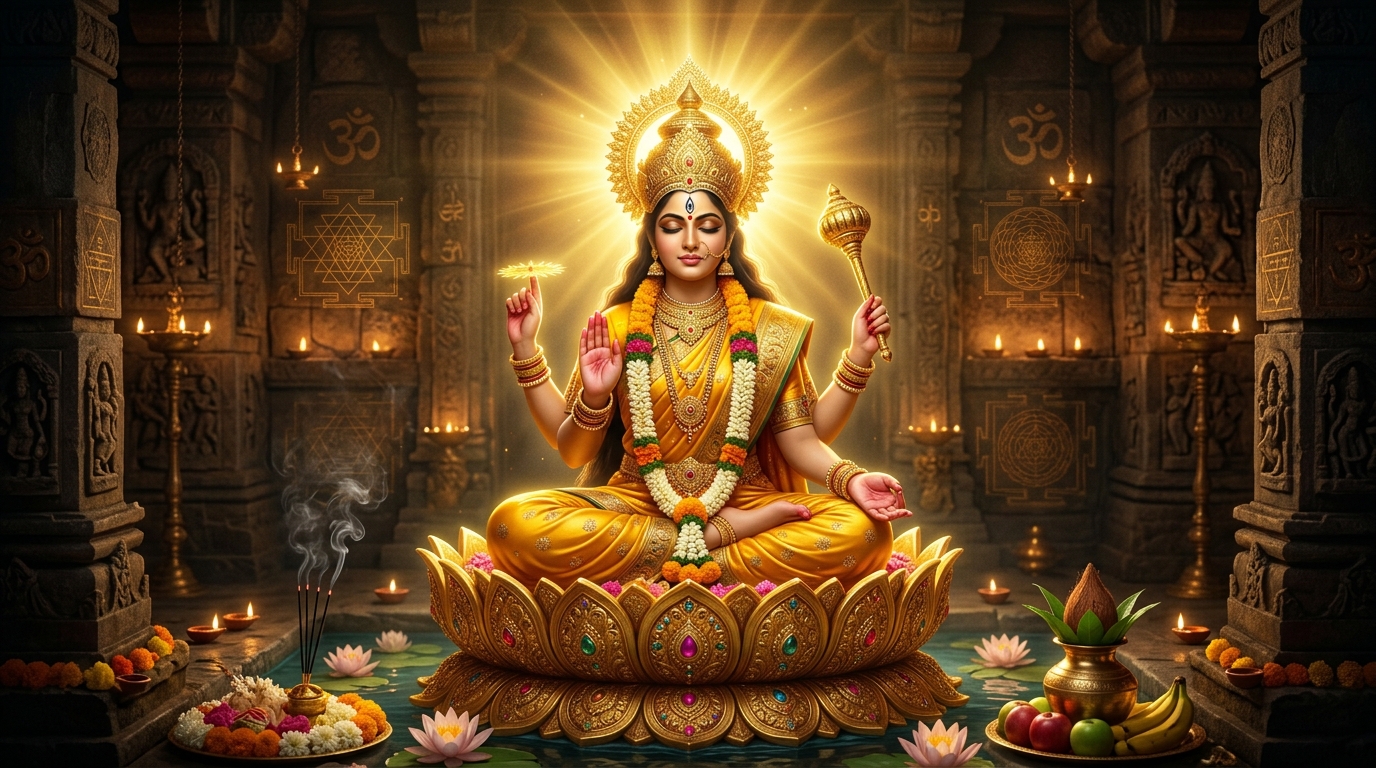
Goddess Mahalaxmi seated on lotus — sacred art for Mahalaxmi Sadhana
Sacred Deity Sanctum Darshan Consecrated Murti
Divine Origin & Spiritual Identity

The Cosmic Presence of Goddess Mahalaxmi

The Eight Forms of Prosperity and Divine Grace
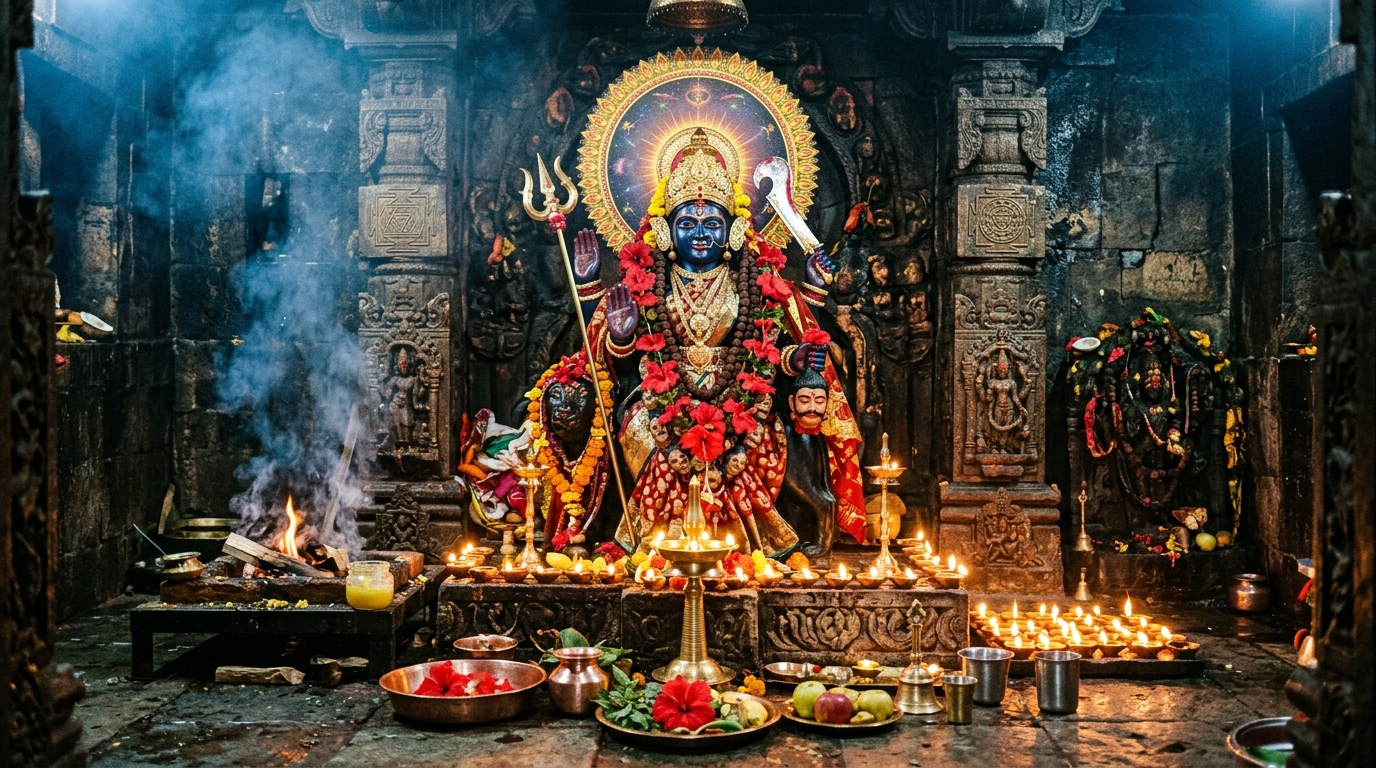
Goddess Mahalaxmi is one of the three primary divine mothers in the Sanatan tradition, alongside Saraswati (knowledge) and Parvati (power). She is the consort of Lord Vishnu and represents the sustaining energy of creation. Without Laxmi, the universe would collapse into poverty, decay, and disorder. She is described in eight forms known as Ashta Laxmi: Adi Laxmi (primordial wealth), Dhana Laxmi (material prosperity), Dhanya Laxmi (food grain abundance), Gaja Laxmi (royal dignity), Santana Laxmi (blessed progeny), Veera Laxmi (courage and valor), Vijaya Laxmi (victory), and Vidya Laxmi (knowledge and learning). A sincere Mahalaxmi devotee does not chase only one form. True Laxmi worship recognizes that genuine prosperity means having enough food, enough health, enough learning, enough courage, and enough contentment to live a dignified life. Grabbing at money while ignoring health, family, or moral character is not Laxmi worship — it is a distortion that drives Her away. This is why the tradition says that Laxmi stays only in homes where there is cleanliness, harmony, respect between family members, and honest income.
The Cosmic Presence of Goddess Mahalaxmi
Goddess Mahalaxmi (Sri, Ashta Laxmi)
Sanctum Sacred Representation
Laxmi Resides Where There is Cleanliness
Honest Earning Attracts Laxmi
Generosity Keeps Laxmi Flowing
Family Harmony as Laxmi Worship
Definition & Spiritual Essence

What is Mahalaxmi Sadhana?

Sacred essence, spiritual foundation, and scriptural truth

Authoritative Summary (Direct Essence)

Mahalaxmi Sadhana is the traditional worship of Goddess Laxmi, the divine mother of abundance, prosperity, and spiritual wealth. In the Sanatan tradition, Laxmi is not simply a goddess of money. She represents Shraddha (faith), Saubhagya (good fortune), Santoshi (contentment), and Samriddhi (genuine prosperity that includes health, family harmony, and inner peace along with material stability). This Sadhana trains the seeker to invite Laxmi energy through clean living, honest earning, regular worship, and generous giving. It does not promise overnight riches. It builds the inner conditions where natural abundance can take root and grow steadily over time.

The daily practice of Mahalaxmi Sadhana follows a structured routine rooted in purity and devotion. The seeker wakes before sunrise, bathes, and wears clean clothes, preferably white or light yellow. The puja space must be spotless. Even a small corner works, but it must be thoroughly clean. A Mahalaxmi image or murti is placed on a clean red or white cloth. Fresh lotus flowers (or pink/white alternatives) are offered along with fresh fruit, dry fruits, and a small bowl of raw rice. A ghee lamp is lit, and kumkum and turmeric are applied to the deity image. The seeker then sits with a straight spine and begins by chanting the Mahalaxmi Ashtakam or the assigned Guru-given mantra. The chanting is done with a lotus seed mala or sphatik mala. Each round is completed without breaking the flow. The mind is trained to visualize Laxmi seated on a lotus, with gold coins flowing from Her open palms — not as a wish for personal wealth, but as a symbol of the divine abundance that sustains all living beings. After mantra japa, the seeker recites the Sri Suktam if instructed by the Guru. This Vedic hymn is one of the oldest prayers to Laxmi, originating from the Rig Veda. Its carefully measured syllables create a specific sound pattern that purifies the subtle energy body and prepares the seeker to hold genuine abundance without becoming arrogant or wasteful. A critical part of daily Mahalaxmi Sadhana is the evening practice. Before sleeping, the seeker sweeps or tidies their home, ensuring the entrance is clean and the main door area is well-lit. Oil lamps near the threshold are a traditional practice based on the belief that Laxmi enters through lit, clean doorways. The seeker also reviews whether they earned honestly that day, whether they shared anything with someone in need, and whether they spoke respectfully to family members. These nightly reflections are as important as the morning mantra because Laxmi worship is a full-day discipline, not a thirty-minute morning ritual. Throughout the practice period, which typically lasts 16 days (Shodash Dina Vrata) or 21 days, the seeker avoids wasteful spending, reduces unnecessary purchases, and channels saved money toward charitable donation. This teaches the fundamental Laxmi principle: wealth that circulates with purpose grows; wealth that stagnates or is wasted shrinks. A central teaching in our ashram is that Mahalaxmi is not pleased by greedy begging. She is drawn to dignity, truth, and generous stewardship. When you prepare your altar for Her worship, make sure the room is well-swept and fragrant with natural incense or fresh blossoms. Sit quietly and contemplate Her form seated upon a pink lotus in a calm lake. The lotus grows through muddy water yet remains completely untouched by dirt. In the same way, a householder must earn a livelihood in the marketplace while keeping the inner heart clean and untainted by dishonest compromises. Let your daily repetition of Her sacred name remind you that honest labor performed with devotion is itself a continuous offering to the Divine Mother. Over the course of the practice, seekers notice that an anxious craving for material possessions gives way to deep gratitude for the gifts already present in daily life. A central teaching in our ashram is that Mahalaxmi is not pleased by greedy begging. She is drawn to dignity, truth, and generous stewardship. When you prepare your altar for Her worship, make sure the room is well-swept and fragrant with natural incense or fresh blossoms. Sit quietly and contemplate Her form seated upon a pink lotus in a calm lake. The lotus grows through muddy water yet remains completely untouched by dirt. In the same way, a householder must earn a livelihood in the marketplace while keeping the inner heart clean and untainted by dishonest compromises. Let your daily repetition of Her sacred name remind you that honest labor performed with devotion is itself a continuous offering to the Divine Mother. Over the course of the practice, seekers notice that an anxious craving for material possessions gives way to deep gratitude for the gifts already present in daily life.
Spiritual Purpose & Inner Evolution

Why is Mahalaxmi Sadhana Practiced?

Core spiritual purposes, inner purification, and consciousness evolution

Mental Stillness & Focus

Daily japa and meditative contemplation calm wandering thoughts, fostering sharp inward awareness and emotional balance.

Spiritual Fortitude & Energy Balance

Authentic sacred kavacha and nyasa practices protect subtle vitality from negative inclinations, fear, and distraction.

Cultivation of Sattvic Discernment

Helps dissolve pride, resentment, and restlessness, strengthening humility, discernment, and spiritual surrender.

Inner Realization & Lineage Grace

Not an outward exhibition, but an inward journey toward self-realization sheltered under authentic monastic lineage guidance.

Tattvik Insight & Philosophy

Spiritual Significance & Philosophy

Philosophical essence and the science of internal transformation

“The significance of Mahalaxmi Sadhana extends far beyond material wealth. In the Vishnu Purana, Laxmi is described as Sri — the divine beauty, grace, and dignity that elevates human life above mere survival. When Laxmi blesses a household, it is not just bank balances that improve. The family members treat each other with more respect. The children grow up with values. The food on the table nourishes rather than merely fills. The home atmosphere becomes warm and inviting rather than tense and cold. This holistic prosperity is what sets authentic Mahalaxmi worship apart from shallow money prayers. The Laxmi Tantra, an important Pancharatra text, describes Laxmi as the creative power (Shakti) of Vishnu without whom the cosmos cannot function. She is present in fertile soil that grows crops, in clean water that sustains life, in the mother milk that feeds an infant, and in the honest wage that feeds a family. When a seeker recognizes Laxmi in these everyday forms rather than only in gold and currency, their worship becomes genuine and their life naturally prospers. In community life, Mahalaxmi worship teaches social responsibility. The tradition of Anna Daan (food charity), Vastra Daan (clothing charity), and Vidya Daan (education support) are all practical expressions of Laxmi worship. The wealthiest person who hoards everything is considered Laxmi-poor in the tradition, while a modest family that shares generously is considered Laxmi-blessed. This inversion of worldly values is the heart of genuine Mahalaxmi Sadhana. When Mahalaxmi blesses a home, the primary sign is not sudden luxury, but deep contentment, mutual affection among relatives, and freedom from constant anxiety. True abundance means having enough to meet your honest needs, enough to care for your elders and children, and enough to share with someone in distress. Without inner peace, piles of gold only bring suspicion, family quarrels, and restless nights. This is why traditional seekers always pray for Lakshmi alongside Narayana, ensuring that material prosperity is guided by spiritual wisdom and righteous conduct. When Mahalaxmi blesses a home, the primary sign is not sudden luxury, but deep contentment, mutual affection among relatives, and freedom from constant anxiety. True abundance means having enough to meet your honest needs, enough to care for your elders and children, and enough to share with someone in distress. Without inner peace, piles of gold only bring suspicion, family quarrels, and restless nights. This is why traditional seekers always pray for Lakshmi alongside Narayana, ensuring that material prosperity is guided by spiritual wisdom and righteous conduct.”
Avhigat Akhara Monastic Wisdom
Seeker Eligibility & Suitability

Who is This Sadhana For?

Eligibility criteria, seeker temperament, and prerequisite guidance

Sincere Seekers

Individuals seeking daily focus, spiritual discipline, and quiet inward balance without complex rituals.

Householders

Practitioners balancing work, family, and social obligations while following a pure satvik spiritual path.

Disciplined Initiates

Dedicated practitioners who have mastered basic disciplines and wish to undertake formal anusthana under Guru Diksha.

Importance of Lineage Grace & Approval

Tantrik, Mahavidya, and advanced dhyana disciplines should not be initiated whimsically without lineage permission and proper understanding.

Seeker Discretion Notice

Who Should Take Lineage Guidance First?

Lineage Principle: Practice preserves sanctity and protects seekers when guided authentically

Mahalaxmi Sadhana must never be used for dishonest enrichment. Worshipping Laxmi while earning through exploitation or fraud is deeply contradictory and the tradition warns of severe karmic consequences for such hypocrisy. Do not combine Laxmi mantras with Alakshmi-related or Ucchatana practices without qualified Guru supervision. If greed or hoarding behavior increases during the practice, stop and consult your Guru immediately. Genuine Laxmi worship reduces greed, not increases it.
Request Lineage Guidance Consultation Avhigat Akhara upholds the sacred decorum of traditional Diksha and guided practice.
Origins, Tradition & Guru Parampara

Historical Origins & Guru Parampara

Authentic scriptural foundation and unbroken monastic transmission

Traditional Origins

Mahalaxmi worship traces back to the Rig Veda Sri Suktam, one of the oldest hymns dedicated to divine prosperity. The Vishnu Purana (Book 1) provides the famous account of Samudra Manthan (churning of the cosmic ocean) where Laxmi emerged seated on a lotus. The Laxmi Tantra (Pancharatra tradition) developed detailed Sadhana protocols for Her worship. During the Gupta Empire, Laxmi worship became central to state ceremony and household practice. In South India, the Sri Vaishnava tradition codified Laxmi worship through the Divya Prabandham hymns. Avhigat Akhara follows the composite lineage that integrates Vedic, Puranic, and Tantric approaches to Mahalaxmi Sadhana.

Scriptural Authority

The Sri Suktam (Rig Veda Appendix) invokes Laxmi as the golden-hued mother who brings fertility, abundance, and spiritual radiance. The Vishnu Purana (Book 1, Chapters 8-9) describes Her emergence during Samudra Manthan. The Laxmi Tantra (Pancharatra Agama) provides comprehensive worship procedures including mantra, yantra, and offering protocols. The Mahalaxmi Ashtakam attributed to Indra praises Her eight forms of prosperity.

Monastic Lineage Shelter

In Avhigat Akhara, Mahalaxmi Sadhana is prescribed only after the seeker demonstrates honest livelihood and a genuine spirit of charity. The Guru does not give Laxmi mantras to those who hoard wealth or exploit others for profit. The initiation includes instructions for correct Sri Yantra placement, lamp types, flower preferences, and the specific naivedya suited to the seeker household tradition. Community Laxmi puja during Diwali and Navaratri is organized at the Akhara, where collective chanting of Sri Suktam creates a shared field of abundance.
Pujya Guru Ji Maharaj - Avhigat Akhara
Guidance by Pujya Guru Ji Maharaj
“Laxmi does not come to the loudest chanter. She comes to the cleanest home, the most honest heart, and the most generous hand.”

The Acharya of Avhigat Akhara teaches that true Laxmi worship is a full-day practice, not a thirty-minute morning ritual. How you earn, how you spend, how you treat your family, how you keep your home — everything is either inviting Laxmi or driving Her away. The mantra opens the door, but your daily conduct determines whether She stays.

Preparation & Sacred Disciplines

Preparation & Sacred Disciplines

Essential guidelines, satvik habits, and sanctum preparations

01

Home Deep Cleaning

Mandatory Rule

Before starting, deep clean your entire home. Remove clutter, fix broken items, and ensure all spaces are tidy. Laxmi does not enter dirty homes.

02

Honest Income Review

Mandatory Rule

Honestly evaluate whether your income sources are ethical. Laxmi worship built on dishonest earnings is contradictory.

03

Family Harmony Commitment

Mandatory Rule

Resolve family conflicts before starting. Speak gently. Show respect to elders. Discord drives Laxmi away.

04

Puja Materials Arrangement

Recommended

Arrange lotus flowers (or alternatives), ghee lamp, kumkum, turmeric, fresh fruit, dry fruits, and a clean puja cloth in advance.

Practice Progression & Stages

Practice Progression & Stages

Systematic pathway from preliminary understanding to final sanctum offering

01

Home Cleansing & Puja Setup

Day 1-2

Deep clean your home and set up a dedicated Laxmi puja corner with proper cloth, image, and lamp.

02

Guru Diksha & Mantra Assignment

Day 3

Receive the Mahalaxmi mantra from your Guru along with specific offering and practice instructions.

03

Daily Mantra Japa & Sri Suktam

Day 4-16

Begin daily morning japa with mala. Recite Sri Suktam after mantra if instructed by Guru.

04

Evening Practice & Home Harmony

Daily Evening

Clean entrance, light evening lamps, and reflect on honest earning and family respect.

05

Weekly Dana & Charity

Weekly

Perform weekly charitable acts. Feed the hungry, support education, or donate useful items.

06

Completion Puja & Prasad Distribution

Final Day

Conclude the practice cycle with a special puja and distribute prasad to neighbors and family.

Daily Practice Discipline & Niyama

Daily Practice Discipline & Routine

Sanctum steadfastness: One Time, One Altar, and Inner Purity

Rule
Recommended

External & Internal Purity

Rule
Recommended

Respect for All Women

Rule
Recommended

Generosity & Circulation

Rule
Recommended

Right Attitude Toward Money

Rule
Recommended

Evening Lamp Lighting

Sacred Cautions & Safety Guidelines

Common Mistakes & Sacred Cautions

Safeguarding seekers against mispronunciation, haste, and unauthorized practices

Worshipping Laxmi While Earning Dishonestly

Correct Lineage Guidance: Consult your Guru and immediately correct your practice method.

Keeping a Dirty Home

Correct Lineage Guidance: Consult your Guru and immediately correct your practice method.

Hoarding Without Sharing

Correct Lineage Guidance: Consult your Guru and immediately correct your practice method.

Authentic Seeker Inquiries

Authentic Questions Asked by Seekers

Direct, practical answers grounded in verified tradition and authentic lineage wisdom

Frequently Asked Questions

Frequently Asked Questions

Authentic answers to common queries regarding initiation, timing, and practice

This Sadhana does not guarantee wealth. It builds the inner conditions — honest living, clean habits, generous heart — where genuine prosperity can take root naturally.

YOUR SACRED NEXT STEP

Ready to Begin Mahalaxmi Sadhana?

Follow the authentic Vedic and monastic path under lineage guidance before starting your practice.

Guidance Recommended

Guru Guidance & Diksha Consultation

This sacred practice requires initiation and protective mantra guidance from the authentic monastic lineage before regular practice.

Direct connection with Avhigat Akhara.
Enquiry Open

Mahalaxmi Sadhana Guided Training

Learn step-by-step mantra japa, mudras, and nyasa under authentic Acharyas through our guided monastic batches.

Batch curriculum and registration dates announced periodically.
Approved Paraphernalia

Mahalaxmi Sadhana Sacred Essentials

View consecrated Jap Malas, consecrated Yantras, Kusha asanas, and authentic sadhana kits approved by Avhigat Akhara.

Consecrated items energized per scriptural traditions.
View Sadhana Essentials
Sacred Sanctum Essentials

Sacred Essentials & Sanctum Items

Consecrated items traditionally used to support meditation, focus, and sanctum discipline

Tradition & Guidance Advisory

Use of Mala, Yantra, Kit or other materials can vary by practice. Follow the guidance given for your Sadhana.

Essential Checklist Before Practice
Vedic Sequence
1
1. Guidance
Guru Guidance
Consult
2
2. Mala
Consecrated Mala
View ↓
3
3. Yantra
Sanctum Yantra
View ↓
4
4. Kit
Sadhana Kit
View ↓
5
5. Asan
Pure Woolen Asan
View ↓
Mala Sacred Tool

Consecrated Haldi / Tulsi Japa Mala

108 knotted beads consecrated according to Vedic rites.

Yantra Sanctum Item

Handcrafted Copper Yantra Plate

Sacred geometric plate for sanctum meditation and focus.

Asan Daily Practice

Pure Woolen Meditation Asana

Traditional insulation mat to preserve spiritual energy.

॥ श्री गुरु चरण सरोज रज ॥

One-to-One Samasya Samadhan

Confidential Guidance

Private guidance from Guru Ji and the Akhara's guides. Choose what you need help with.