
Avhigat Akhara
Traditional Ascetic Hermitage & Vedic Lineage
Preserving Eternal Sanatan Dharma and Divine Guru Parampara
Membership Contact Us
श्रीहनुमान् / मारुतिः / अञ्जनेयः

Lord Hanuman

The Embodiment of Unwavering Devotion, Courage & Selfless Service
Lord Hanuman is the celestial hero of the Ramayana, revered as Sankat Mochan—the dissolver of obstacles, fears, and distress through wholehearted surrender to Shri Rama.
Revered Names & Sacred Epithets:
Hanuman Bajrangbali Maruti Anjaneya Pawanputra Sankatmochan Kesarinandan Mahaveer
Scripturally Verified Hub 4 Approved Works Quality 99.0/100
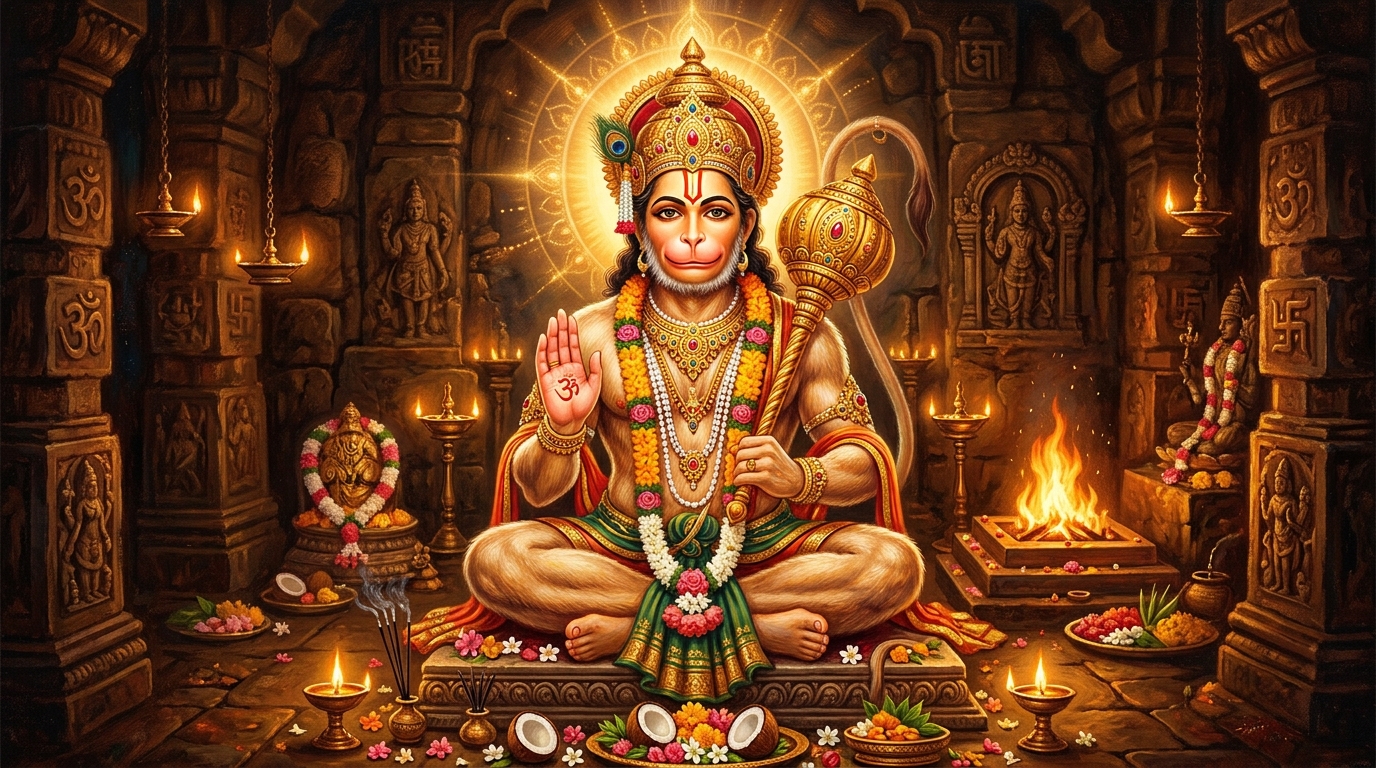
Lord Hanuman in supreme bhakti and valour, holding gada and glowing with golden radiance.
Artwork Source: Avhigat Akhara Sacred Archive
Sacred Identity & Context

Understanding Lord Hanuman in Hindu Traditions

Shri Hanuman exemplifies that true power reaches its zenith only when accompanied by boundless humility and dedication to a higher divine purpose. Though endowed with the strength to move mountains and cross oceans, He never acted for self-glorification; His entire being remained anchored in the remembrance of Rama's lotus feet.

For seekers facing inner weakness, anxiety, or external tribulations, meditating upon Hanuman's character provides moral courage, mental focus, and resolute inner strength.

Devotion to Hanuman is simple, grounded, and centered around pure conduct, truth, and righteous action.
Scriptural & Tradition Context

In the Ramayana and classical devotional literature, Shri Hanuman is celebrated as the pinnacle of Bhakti (Dasya Bhava—selfless devotion), unmatched physical and mental strength, humility, and celibacy (Brahmacharya). He is traditionally regarded as an incarnation of the Rudra aspect of Shiva born to assist Shri Rama in establishing Dharma.

Sacred Emblems

Sacred Iconography & Symbolic Meaning

Sacred iconography of Lord Hanuman conveys foundational spiritual lessons:
• Gada (Mace): Mastery over ego, self-discipline, and righteousness.
• Mountain (Dronagiri): Boundless resourcefulness in the service of life and healing.
• Tearing Open the Chest: The eternal presence of Sita-Rama enshrined within the heart.
• Kneeling in Pranam: Absolute humility despite possessing cosmic might.
Verified Devotional Library

Approved Sacred Texts & Prayers for Lord Hanuman

Authoritative, canonical scriptures and prayers dedicated to Lord Hanuman. Each text links to its dedicated reader with authentic Devanagari verses, transliteration, and simple meanings.

Chalisa

1
Chalisa Verified

Shri Hanuman Chalisa

Shri Hanuman Chalisa
Composed by Goswami Tulsidas in the sacred city of Kashi, Shri Hanuman Chalisa is a forty-verse poetic masterp...
0 Verses Read Text

Aarti

1

Ashtakam

1

Namavali

1
Spiritual Discipline

Related Sadhana & Spiritual Upasana

Authoritative Practice
Lord Hanuman Ji Sadhana
Lord Hanuman Ji Sadhana is one of the most beloved, accessible, and spiritually potent disciplines in all of Sanatan Dharma, dedicated to Lord Hanuman, the supr...
Guidance: Deeper contemplative disciplines require sincere practice and Guru guidance.
Auspicious Days & Fasting

Sacred Observances, Fasts & Festivals

Annual & Monthly Sacred Days

Hanuman Jayanti (Chaitra Purnima), Tuesdays and Saturdays sacred observances, and Sundara Kanda recitations.
Devotional Rule: Recitation of the Hanuman Chalisa and Sankat Mochan Hanuman Ashtak is widely practiced with sincerity and clean attire. Devotees are encouraged to cultivate truthful living and celibacy of mind rather than seeking transactional miraculous promises.
Authenticity & Bibliography

Scriptural Sources, Review & Governance

Primary Classical Scriptural References:
  • Valmiki Ramayana — Critical Edition BORI / Gita Press (Sundara Kanda & Yuddha Kanda)
  • Ramcharitmanas — Goswami Tulsidas / Gita Press (Kishkindha, Sundara, & Uttara Kandas)
  • Hanuman Chalisa — Classical Awadhi Recension (40 Chaupais & Opening/Closing Dohas)
॥ Authoritative Shastric Guidance ॥

Classical Context & Seekers Questions

Authoritative answers, ritual disciplines, and scriptural citations for sincere practitioners.

Q1
Ritual Vaishnava / Ramanandi

What is the auspicious time, direction, and posture for reciting Shri Hanuman Chalisa?

Context Note: General devotee worship protocol for Lord Hanuman.
Summary Answer

Shri Hanuman Chalisa is most auspiciously chanted during Brahma Muhurta (dawn) or Sandhya (dusk) facing East or North. The practitioner should sit on an asana of red cloth or kusha grass with calm mind and clean clothes.

Traditional acharyas recommend reciting Shri Hanuman Chalisa after bathing and donning clean unstitched or loose cotton garments. Lighting an earthen or brass lamp with pure sesame (til) oil or cow ghee before the image or idol of Lord Hanuman invokes sattvic vibration. Chanting facing East aligns with solar prana, whereas North supports spiritual receptivity. If chanting multiple rounds (such as 7, 11, or 100 repetitions), maintain steady posture and chant with distinct pronunciation without rushing.
Classical Scriptural Sources
Shri Ramcharitmanas & Hanuman Bahuk (Gita Press Edition) Verified

Author/Rishi: Goswami Tulsidas

Kishkindha & Uttara Kanda Parishishta • Doha 1-3 Commentary

Gita Press, Gorakhpur, Code 14

॥ श्री गुरु चरण सरोज रज ॥

One-to-One Samasya Samadhan

Confidential Guidance

Private guidance from Guru Ji and the Akhara's guides. Choose what you need help with.