
Avhigat Akhara
Traditional Ascetic Hermitage & Vedic Lineage
Preserving Eternal Sanatan Dharma and Divine Guru Parampara
Membership Contact Us
माँ महालक्ष्मीः / श्रीः / पद्मा

Maa Lakshmi

The Goddess of Auspiciousness, Spiritual Light & Righteous Abundance
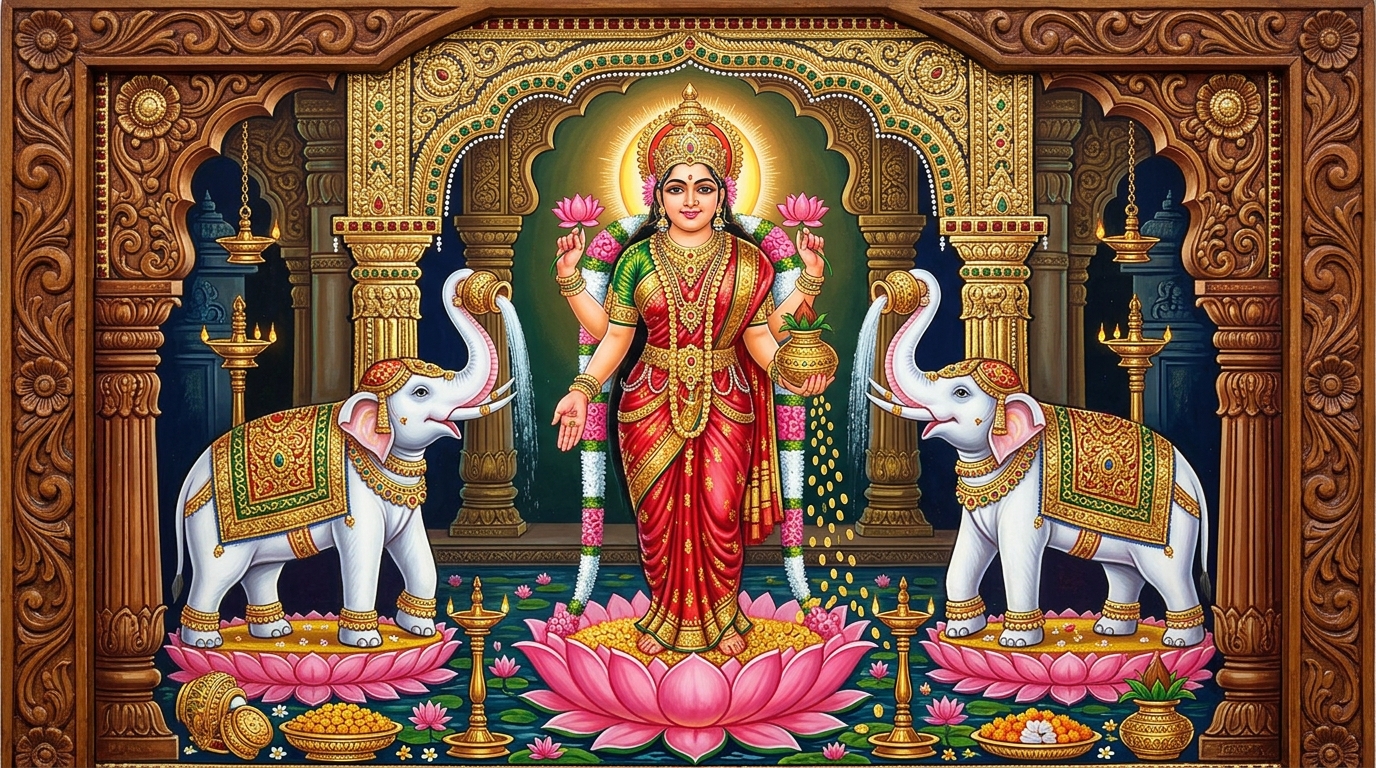
Maa Lakshmi is revered as the mother of the cosmos, seated upon a blooming lotus, bestowing ethical abundance, inner fulfillment, and auspicious grace upon righteous seekers.
Revered Names & Sacred Epithets:
Lakshmi Laxmi Mahalakshmi Sri Padma Kamala Chanchala Bhargavi Ashta Lakshmi
Scripturally Verified Hub 4 Approved Works Quality 98.5/100
Goddess Mahalakshmi standing on pink lotus with golden elephants offering sacred abhisheka.
Artwork Source: Avhigat Akhara Sacred Archive
Sacred Identity & Context

Understanding Maa Lakshmi in Hindu Traditions

In authentic Sanatana Dharma, wealth (Lakshmi) is sacred when earned through righteous labor (Satkarma) and utilized for noble charity and the upliftment of society.

She is called 'Padmasana'—seated upon a lotus that rises pristine and unsoiled above muddy waters. This teaches that true prosperity must never lead to pride or degradation, but remain pure, radiant, and anchored in gratitude.

Worshipping Lakshmi is free of selfish greed; it is an aspiration for auspiciousness in the home, peace in the heart, and the capacity to serve all beings.
Scriptural & Tradition Context

In Vedic texts such as the Sri Suktam and classical Puranas, Maa Lakshmi (Sri) is the divine embodiment of auspiciousness, grace, ethical wealth (Dharma-Artha), and spiritual radiance. She is not merely material currency, but the golden prosperity of health, wisdom, nobility, and generous conduct.

Sacred Emblems

Sacred Iconography & Symbolic Meaning

The sacred iconography of Maa Lakshmi expresses the four Purusharthas:
• Four Arms: Dharma (righteousness), Artha (wealth), Kama (fulfilled desire), and Moksha (liberation).
• Golden Elephants (Gajaraja): Abhisheka of divine wisdom, royal dignity, and protective strength.
• Gold Coins Flowing from Palm: Generosity and active benevolence flowing toward those who act with purity.
• Red and Gold Attire: Creative vibrancy, vitality, and noble spiritual kingship.
Verified Devotional Library

Approved Sacred Texts & Prayers for Maa Lakshmi

Authoritative, canonical scriptures and prayers dedicated to Maa Lakshmi. Each text links to its dedicated reader with authentic Devanagari verses, transliteration, and simple meanings.

Aarti

1

Stotra & Stotram

1

Suktam & Vedic Richas

1

Vrat, Puja & Festivals

1
Spiritual Discipline

Related Sadhana & Spiritual Upasana

Authoritative Practice
Mahalaxmi Sadhana
Mahalaxmi Sadhana is the traditional worship of Goddess Laxmi, the divine mother of abundance, prosperity, and spiritual wealth. In the Sanatan tradition, Laxmi...
Guidance: Deeper contemplative disciplines require sincere practice and Guru guidance.
Auspicious Days & Fasting

Sacred Observances, Fasts & Festivals

Annual & Monthly Sacred Days

Deepavali Lakshmi Puja (Kartik Amavasya), Sharad Purnima (Kojagari Lakshmi Puja), and Varalakshmi Vratam.
Devotional Rule: Recitation of Adi Shankara's Kanakadhara Stotram and the Vedic Sri Suktam is revered across generations. The Akhara strictly cautions seekers against unethical shortcuts, speculative rituals, or fraudulent claims of instant wealth; true Lakshmi enters through cleanliness, honesty, and peaceful contentment.
Authenticity & Bibliography

Scriptural Sources, Review & Governance

Primary Classical Scriptural References:
  • Rigveda Khilani (Sri Suktam) — Vedic Samhita Recension (15 Canonical Richas dedicated to Sri)
  • Kanakadhara Stotram — Sri Adi Shankaracharya Stotravali (21 Stanzas of Divine Benevolence)
  • Vishnu Purana — Gita Press Gorakhpur (Code 114) (Amsha 1, Adhyaya 9 (Samudra Manthana))
॥ Authoritative Shastric Guidance ॥

Classical Context & Seekers Questions

Authoritative answers, ritual disciplines, and scriptural citations for sincere practitioners.

Q1
Historical Smarta / Vedic

What is the historical event that led Adi Shankaracharya to compose the Kanakadhara Stotram?

Context Note: Maha Lakshmi's compassionate nature towards humble devotees.
Summary Answer

While begging for alms as a young brahmachari, Shankara encountered an impoverished woman who had only a single dried gooseberry (amla) to offer. Moved by her selfless charity, he praised Goddess Lakshmi, prompting a shower of golden amlas.

Recorded in the Madhaviya Shankara Digvijaya, Goddess Lakshmi initially noted that the woman's past-life karma did not warrant wealth. Shankara argued that her present act of surrendering her last sustenance with boundless devotion outweighed all past deficits. Pleased by his soaring poetic hymn "Angam Hareh Pulaka-Bhushanam Ashrayanti", the Mother showered pure golden amlas, lifting the family from destitution forever.
Classical Scriptural Sources
Madhaviya Shankara Digvijaya Verified

Author/Rishi: Swami Vidyaranya

Sarga 4 • Shlokas 40-52

Sri Ramakrishna Math / Sringeri Sharada Peetham

Related Concepts: #Sadhana #Seva #Guru
Q2
Theological Vaishnava / Ramanandi

What is the scriptural difference between Chanchala Lakshmi and Sthira Lakshmi?

Context Note: Theological principles of abiding prosperity through righteousness.
Summary Answer

Chanchala Lakshmi refers to fleeting material wealth pursued without dharma, whereas Sthira Lakshmi is righteous, enduring spiritual and material prosperity that abides wherever Lord Narayana (righteousness) is venerated.

In Puranic wisdom, worshipping Lakshmi independently for worldly pleasure turns wealth erratic and unstable (Chanchala). However, when Lakshmi is invoked alongside Narayana (Lakshmi-Narayana), wealth becomes sanctified (Sthira) and transforms into a vehicle for dharma, feeding the hungry (Annadanam), building temples, and spiritual elevation. Hence, the Shastras advise seeking divine Grace rather than mere currency.
Classical Scriptural Sources
Shrimad Bhagavata Mahapurana Verified

Author/Rishi: Maharshi Veda Vyasa

Skandha 8, Adhyaya 8 • Lakshmi Pradurbhava Shlokas 18-28

Gita Press, Gorakhpur

Related Concepts: #Sadhana #Seva
Q3
Scriptural Smarta / Vedic

Why does the opening verse of the Sri Suktam petition Agni to invoke Goddess Lakshmi?

Context Note: The Golden Radiant Splendour of Mother Sri.
Summary Answer

In Vedic ritualism, Agni (Jatavedas) is the divine messenger and mouth of all deities who purifies consciousness and carries the devotee's prayer to Goddess Sri.

The opening richa prays: "Hiranyavarnam Harinim Suvarna-Rajata-Srajam, Chandram Hiranmayim Lakshmim Jatavedo Ma Avaha." Jatavedas is the one who knows all created beings. The Rishis understood that prosperity without moral purity leads to corruption. Agni burns all impurities and greed, ensuring that the wealth brought by Goddess Lakshmi enters a home as holy spiritual nourishment rather than disruptive vanity.
Classical Scriptural Sources
Rigveda Parishishta (Sri Suktam) Verified

Author/Rishi: Rishi Ananda, Kardama & Chiklita

Khila Sukta 11 • Richa 1-2 Commentary

Gita Press / Vaidika Samshodhana Mandala

Related Concepts: #Sadhana #Mantra
॥ श्री गुरु चरण सरोज रज ॥

One-to-One Samasya Samadhan

Confidential Guidance

Private guidance from Guru Ji and the Akhara's guides. Choose what you need help with.