Avhigat Akhara
Traditional Ascetic Hermitage & Vedic Lineage
Preserving Eternal Sanatan Dharma and Divine Guru Parampara
Membership Contact Us
Vedic & Vaishnava Upasana › Vedic Chanting & Yajna

Ganesh Siddhi — Sacred Practice for Divine Wisdom & Obstacle Removal

Ganesh Siddhi Sadhana is a focused spiritual practice centered on Lord Ganesha, the remover of obstacles and the giver of wisdom. In the Sanatan tradition, no sacred work begins without remembering Ganesha first. This practice goes beyond simple prayer. It connects the seeker to the energy of Ganesha through disciplined mantra repetition, meditation on His form, and sincere inner surrender. People who face repeated blocks in their work, studies, or spiritual path turn to this Sadhana for clarity and strength. The practice does not promise instant results or magical fixes. It trains the mind to stay steady, think clearly, and act with patience even when life throws hard obstacles in your way.

Lord Ganesha (Vighneshwara, Ganapati)
Level: Beginner
Sanatan / Ganapati Upasana
Guru Diksha Required
Lord Ganesha in meditation posture for Ganesh Siddhi Sadhana — sacred art by Avhigat Akhara
Sacred Deity Sanctum Darshan Consecrated Murti
Divine Origin & Spiritual Identity

The Divine Reality of Lord Ganesha in Sadhana

The First Energy Invoked in Every Sacred Practice
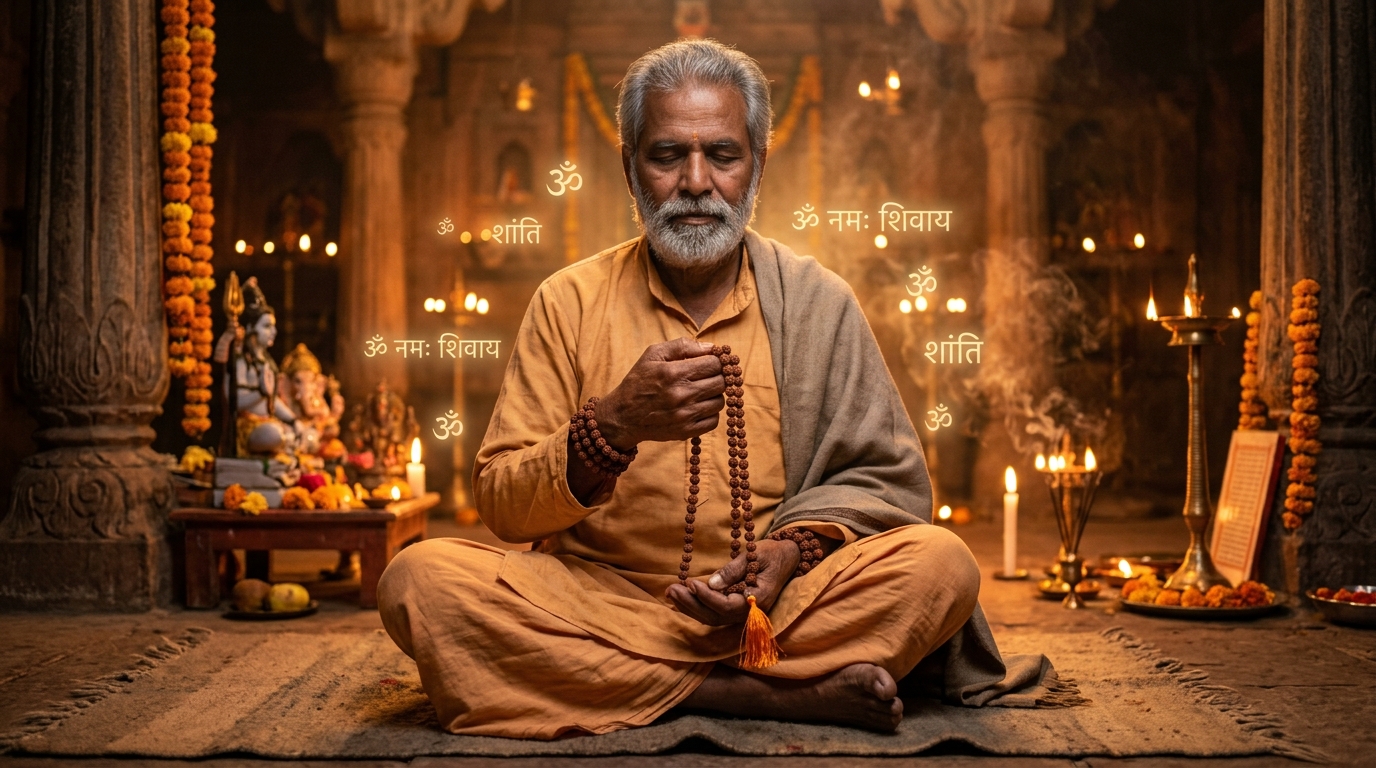
In every temple, every home altar, and every ashram across India, Ganesha is worshipped before any other deity. This is not just custom. The Sanatan tradition teaches that Ganesha guards the doorway between the visible world and the spiritual world. Without His blessing, the doors of inner growth stay shut. His large head represents clear thinking and the ability to hold vast knowledge. His big ears remind us to listen more and speak less. His small eyes show sharp focus on what truly matters. His trunk, which can uproot a tree or pick up a tiny needle, represents the balance between great power and gentle precision. When a seeker sits for Ganesh Siddhi Sadhana, they are not asking Ganesha for favors like a child begging for sweets. They are aligning their own mental energy with the qualities Ganesha represents: steady thinking, patient action, and the courage to remove inner blocks like laziness, fear, and confusion. The practice creates a direct channel between the seeker and this particular divine vibration. Over time, the seeker notices that problems that once felt impossible begin to sort themselves out, not through magic, but because the mind has grown sharper and calmer.
The Divine Reality of Lord Ganesha in Sadhana
Lord Ganesha (Vighneshwara, Ganapati)
Sanctum Sacred Representation
Vighneshwara — The Lord of Obstacles
Buddhi Pradayaka — The Giver of Wisdom
Pratham Pujya — Always Worshipped First
Mangal Murti — The Auspicious Form
Definition & Spiritual Essence

What is Ganesh Siddhi Sadhana?

Sacred essence, spiritual foundation, and scriptural truth

Authoritative Summary (Direct Essence)

Ganesh Siddhi Sadhana is a focused spiritual practice centered on Lord Ganesha, the remover of obstacles and the giver of wisdom. In the Sanatan tradition, no sacred work begins without remembering Ganesha first. This practice goes beyond simple prayer. It connects the seeker to the energy of Ganesha through disciplined mantra repetition, meditation on His form, and sincere inner surrender. People who face repeated blocks in their work, studies, or spiritual path turn to this Sadhana for clarity and strength. The practice does not promise instant results or magical fixes. It trains the mind to stay steady, think clearly, and act with patience even when life throws hard obstacles in your way.

The daily practice of Ganesh Siddhi Sadhana follows a clear structure. The seeker wakes before sunrise, bathes with cold or lukewarm water, and sits on a clean woolen or cotton mat facing East or North-East. A small Ganesha murti or image is placed at eye level. The seeker lights a ghee diya and offers fresh red flowers, durva grass, and modak or laddu as naivedya. After the offering, the seeker closes their eyes and brings the image of Ganesha into the mind. This internal visualization is called Dhyana. The trunk of Ganesha, the modak in His hand, the mouse vehicle at His feet — each detail matters because the mind anchors itself to these specific visual points. When the image is steady in the mind, mantra japa begins. The seeker chants the assigned Ganesh mantra using a rudraksha or sphatik mala. The chanting starts aloud in the first week to train the tongue and ears. After that, it moves to whispered repetition where only the lips move. Over several weeks of steady practice, the chanting becomes purely mental, resonating silently inside the chest. This is the deepest level, where the mantra vibration merges with the heartbeat and the mind stops wandering. One important rule in Ganesh Siddhi Sadhana is regularity. Missing one day and then doing double the next day does not work. The practice needs daily continuity, like watering a plant. Even ten minutes of sincere japa done every single day carries more weight than two hours done once a week. The seeker must also watch their food habits during the practice period. Heavy fried foods, onion, garlic, and alcohol disrupt the subtle energy channels that the mantra is trying to open. Simple home-cooked meals with fresh vegetables, dal, rice, and chapati keep the body light and the mind clear. Another key element is silence after japa. Once the chanting session ends, the seeker sits quietly for five to ten minutes without checking their phone or speaking to anyone. This silence allows the mantra vibrations to settle deep into the nervous system. Many beginners make the mistake of jumping straight from japa into breakfast conversation. That abrupt shift scatters the accumulated energy. Patience is the backbone of this practice. Some seekers feel peaceful and focused within the first week. Others notice changes only after forty days. Both experiences are normal. The Sadhana works on layers of the mind that are not always visible on the surface. Trust the process, follow the Guru instructions, and let Ganesha do His work in His own time. When you sit for daily japa, pay close attention to the way your breath moves in and out of the nostrils. Notice how the rhythm of the sacred sound gradually matches the natural expansion and contraction of your chest. In our ashram practice, we emphasize that meditation is not a battle against your thoughts. If thoughts about your household responsibilities or past mistakes enter your mind while chanting, simply witness them without frustration. Gently guide your attention back to the feel of the bead between your fingers and the clear vibration of the mantra. As weeks pass, this gentle redirection builds immense mental endurance that serves you well in every area of practical life. When you sit for daily japa, pay close attention to the way your breath moves in and out of the nostrils. Notice how the rhythm of the sacred sound gradually matches the natural expansion and contraction of your chest. In our ashram practice, we emphasize that meditation is not a battle against your thoughts. If thoughts about your household responsibilities or past mistakes enter your mind while chanting, simply witness them without frustration. Gently guide your attention back to the feel of the bead between your fingers and the clear vibration of the mantra. As weeks pass, this gentle redirection builds immense mental endurance that serves you well in every area of practical life.
Spiritual Purpose & Inner Evolution

Why is Ganesh Siddhi Sadhana Practiced?

Core spiritual purposes, inner purification, and consciousness evolution

Mental Stillness & Focus

Daily japa and meditative contemplation calm wandering thoughts, fostering sharp inward awareness and emotional balance.

Spiritual Fortitude & Energy Balance

Authentic sacred kavacha and nyasa practices protect subtle vitality from negative inclinations, fear, and distraction.

Cultivation of Sattvic Discernment

Helps dissolve pride, resentment, and restlessness, strengthening humility, discernment, and spiritual surrender.

Inner Realization & Lineage Grace

Not an outward exhibition, but an inward journey toward self-realization sheltered under authentic monastic lineage guidance.

Tattvik Insight & Philosophy

Spiritual Significance & Philosophy

Philosophical essence and the science of internal transformation

“The deeper meaning of Ganesh Siddhi goes beyond worldly success. While many people approach this Sadhana hoping for career breakthroughs or exam results, the true gift of Ganesha is inner clarity. When the mind is clear, decisions become easier. When decisions are easier, actions become more effective. When actions are effective, results follow naturally. This is the real mechanism behind Ganesh Siddhi — not supernatural intervention, but a disciplined sharpening of the human mind through sacred sound and focused intention. In the Puranic stories, Ganesha wrote the entire Mahabharata as dictated by Sage Vyasa without a single pause. This shows His capacity for sustained concentration. When a seeker worships Ganesha with sincerity, this same quality of unbroken focus begins to develop within them. Students find they can study longer without distraction. Workers find they can handle complex problems without panic. Spiritual practitioners find their meditation deepens because the restless surface thoughts quiet down. Ganesha is also the deity of new beginnings. Every Ganesh Chaturthi, millions of people welcome Him into their homes to mark a fresh start. In Sadhana, this energy of renewal is available every single morning when the seeker sits on their mat and begins japa. Each session is a small Chaturthi — a fresh invitation for divine clarity to enter the mind. The community aspect of Ganesh worship is also worth noting. In ashrams where multiple seekers practice together, the combined vibration of Ganesh mantras creates a powerful shared field. This collective energy supports even those seekers who struggle with personal discipline, carrying them forward through the power of the group. In addition, Ganesh Siddhi acts as an inner mirror. It reveals where a person is holding onto stubborn pride or unnecessary fear of failure. Many seekers discover that the biggest obstacle in their life was never an external rival, but their own habit of procrastination and self-doubt. By seeking the grace of Ganesha, who is the master of discriminating wisdom, the seeker develops the clarity to take practical, timely action without being paralyzed by worry. In addition, Ganesh Siddhi acts as an inner mirror. It reveals where a person is holding onto stubborn pride or unnecessary fear of failure. Many seekers discover that the biggest obstacle in their life was never an external rival, but their own habit of procrastination and self-doubt. By seeking the grace of Ganesha, who is the master of discriminating wisdom, the seeker develops the clarity to take practical, timely action without being paralyzed by worry.”
Avhigat Akhara Monastic Wisdom
Seeker Eligibility & Suitability

Who is This Sadhana For?

Eligibility criteria, seeker temperament, and prerequisite guidance

Sincere Seekers

Individuals seeking daily focus, spiritual discipline, and quiet inward balance without complex rituals.

Householders

Practitioners balancing work, family, and social obligations while following a pure satvik spiritual path.

Disciplined Initiates

Dedicated practitioners who have mastered basic disciplines and wish to undertake formal anusthana under Guru Diksha.

Importance of Lineage Grace & Approval

Tantrik, Mahavidya, and advanced dhyana disciplines should not be initiated whimsically without lineage permission and proper understanding.

Seeker Discretion Notice

Who Should Take Lineage Guidance First?

Lineage Principle: Practice preserves sanctity and protects seekers when guided authentically

Ganesh Siddhi Sadhana is generally safe for all seekers, but certain cautions apply. Never use this practice with anger or jealousy toward someone else. Ganesha energy is meant for personal growth, not for harming others. If you experience headaches or unusual restlessness during japa, reduce the count and consult your Guru. Do not combine Ganesh mantras with other deity mantras in the same sitting without Guru permission. Keep your mala clean and in a gomukhi bag. Do not allow others to touch your japa mala. If you are following a specific Tantric Ganesh practice, advanced nyasa and puja are required under direct Guru supervision only.
Request Lineage Guidance Consultation Avhigat Akhara upholds the sacred decorum of traditional Diksha and guided practice.
Origins, Tradition & Guru Parampara

Historical Origins & Guru Parampara

Authentic scriptural foundation and unbroken monastic transmission

Traditional Origins

Ganesh worship predates written history in India. Archaeological evidence from Elephanta Caves and early Gupta period sculptures show Ganesha figures carved as early as the 4th century CE, though oral tradition places His worship much earlier. The Mudgala Purana and the Ganesha Purana, composed between the 13th and 16th centuries, provide detailed descriptions of Ganesh mantras, yantras, and upasana methods. The Ganapati Atharvashirsha, an Upanishadic text, declares Ganesha as the supreme reality behind all creation. In the Nath Sampradaya and various Tantric lineages, Ganesh Siddhi was considered a prerequisite before any advanced practice. Avhigat Akhara continues this tradition by requiring seekers to receive Guru guidance before starting any systematic Ganesh mantra practice.

Scriptural Authority

The Ganapati Atharvashirsha (Upanishadic text) declares: "Tvam eva pratyaksham tattvamasi" — You alone are the visible truth. The Mudgala Purana describes eight incarnations of Ganesha, each addressing a specific inner obstacle. The Ganesha Purana provides detailed instructions for mantra japa, yantra worship, and the sequence of offerings. The Narada Purana also contains Ganesh Stotra hymns used during Sadhana. These texts consistently emphasize that Ganesha worship must precede all other spiritual endeavors for safe and steady progress.

Monastic Lineage Shelter

In Avhigat Akhara, Ganesh Siddhi Sadhana is taught as a foundational practice before other advanced disciplines. The Acharya assesses the seeker readiness and assigns a specific Ganesh mantra suited to their temperament and spiritual goal. No generic mantra is given to everyone. The initiation includes proper mudra, nyasa, and dhyana instructions specific to the Akhara lineage tradition. Seekers are also taught the correct pronunciation of bija syllables to ensure the mantra carries its full vibrational power.
Pujya Guru Ji Maharaj - Avhigat Akhara
Guidance by Pujya Guru Ji Maharaj
“Before you chase any power or knowledge, first learn to sit still and call upon Ganesha. He clears the mind so truth can enter.”

Avhigat Akhara Acharya teaches that Ganesh Siddhi is not about accumulating powers. It is about removing the inner garbage — fear, pride, confusion, and laziness — that blocks your natural wisdom. When these blocks are removed, you do not need external miracles. Your own clear thinking becomes the miracle.

Preparation & Sacred Disciplines

Preparation & Sacred Disciplines

Essential guidelines, satvik habits, and sanctum preparations

01

Guru Diksha for Ganesh Mantra

Mandatory Rule

Receive the specific Ganesh mantra from your Guru. Do not pick a mantra from a book or website. The Guru selects the right mantra for your nature.

02

Clean Practice Space

Mandatory Rule

Set up a dedicated corner in your home for daily practice. Keep it clean and free from clutter. Place a Ganesha image and keep your puja items nearby.

03

Satvik Diet During Practice

Recommended

Eat simple fresh food. Avoid heavy spices, onion, garlic, and alcohol during the practice period.

04

Fixed Daily Timing

Mandatory Rule

Choose a fixed time each day and stick to it. Irregular timing weakens the practice momentum.

Practice Progression & Stages

Practice Progression & Stages

Systematic pathway from preliminary understanding to final sanctum offering

01

Ganesh Smaran & Sankalpa

Day 1-3

Remember Ganesha with full attention and set your sincere intention for the practice. State your purpose clearly in your mind without greed or ego.

02

Puja Preparation & Offering

Day 4-7

Learn the correct method of offering durva, modak, red flowers, and lighting the ghee lamp. Set up your daily practice corner.

03

Mantra Japa Begins

Day 8-21

Start chanting the Guru-given Ganesh mantra aloud using a mala. Focus on clear pronunciation and steady rhythm.

04

Upamshu Japa & Dhyana

Day 22-35

Shift to whispered chanting. Combine with visualization of Ganesha form. The mind begins to settle more deeply.

05

Manasik Japa — Silent Inner Chanting

Day 36-41

The chanting becomes fully internal. The mantra echoes silently in the heart. The mind reaches a state of natural quiet and focus.

06

Havan & Purnahuti

Final Day

Perform a small Ganesh havan to complete the practice cycle. Offer tila, ghee, and durva into the sacred fire with Guru supervision.

Daily Practice Discipline & Niyama

Daily Practice Discipline & Routine

Sanctum steadfastness: One Time, One Altar, and Inner Purity

Rule
Recommended

Fixed Morning Hour

Rule
Recommended

Stillness of Posture

Rule
Recommended

Pure Satvik Diet

Rule
Recommended

Inner Secrecy of Practice

Rule
Recommended

Gentle & Truthful Speech

Sacred Cautions & Safety Guidelines

Common Mistakes & Sacred Cautions

Safeguarding seekers against mispronunciation, haste, and unauthorized practices

Skipping Days and Doubling Up

Correct Lineage Guidance: Consult your Guru and immediately correct your practice method.

Mixing Multiple Mantras

Correct Lineage Guidance: Consult your Guru and immediately correct your practice method.

Showing Off Your Practice

Correct Lineage Guidance: Consult your Guru and immediately correct your practice method.

Authentic Seeker Inquiries

Authentic Questions Asked by Seekers

Direct, practical answers grounded in verified tradition and authentic lineage wisdom

Frequently Asked Questions

Frequently Asked Questions

Authentic answers to common queries regarding initiation, timing, and practice

Simple Ganesh prayers and stotras can be recited by anyone. But for systematic Siddhi Sadhana with specific mantra and count, Guru Diksha is strongly recommended for safe and effective results.

YOUR SACRED NEXT STEP

Ready to Begin Ganesh Siddhi Sadhana?

Follow the authentic Vedic and monastic path under lineage guidance before starting your practice.

Guidance Recommended

Guru Guidance & Diksha Consultation

This sacred practice requires initiation and protective mantra guidance from the authentic monastic lineage before regular practice.

Direct connection with Avhigat Akhara.
Enquiry Open

Ganesh Siddhi Sadhana Guided Training

Learn step-by-step mantra japa, mudras, and nyasa under authentic Acharyas through our guided monastic batches.

Batch curriculum and registration dates announced periodically.
Approved Paraphernalia

Ganesh Siddhi Sadhana Sacred Essentials

View consecrated Jap Malas, consecrated Yantras, Kusha asanas, and authentic sadhana kits approved by Avhigat Akhara.

Consecrated items energized per scriptural traditions.
View Sadhana Essentials
Sacred Sanctum Essentials

Sacred Essentials & Sanctum Items

Consecrated items traditionally used to support meditation, focus, and sanctum discipline

Tradition & Guidance Advisory

Use of Mala, Yantra, Kit or other materials can vary by practice. Follow the guidance given for your Sadhana.

Essential Checklist Before Practice
Vedic Sequence
1
1. Guidance
Guru Guidance
Consult
2
2. Mala
Consecrated Mala
View ↓
3
3. Yantra
Sanctum Yantra
View ↓
4
4. Kit
Sadhana Kit
View ↓
5
5. Asan
Pure Woolen Asan
View ↓
Mala Sacred Tool

Consecrated Haldi / Tulsi Japa Mala

108 knotted beads consecrated according to Vedic rites.

Yantra Sanctum Item

Handcrafted Copper Yantra Plate

Sacred geometric plate for sanctum meditation and focus.

Asan Daily Practice

Pure Woolen Meditation Asana

Traditional insulation mat to preserve spiritual energy.

॥ श्री गुरु चरण सरोज रज ॥

One-to-One Samasya Samadhan

Confidential Guidance

Private guidance from Guru Ji and the Akhara's guides. Choose what you need help with.