Avhigat Akhara
Traditional Ascetic Hermitage & Vedic Lineage
Preserving Eternal Sanatan Dharma and Divine Guru Parampara
Membership Contact Us
Devi & Mahavidya Sadhana › Das Mahavidya

Das Maha Vidya Sadhana — Supreme Tenfold Wisdom Streams of Adi Shakti

10 Mahavidya Dus Mahavidya Cosmic Goddesses Shakti Upasana

Das Maha Vidya Sadhana represents the complete sovereign matrix of ten cosmic wisdom forms assumed by the Supreme Goddess Adi Shakti. In Sanatan Shakta philosophy, these ten great streams are not separate or rival deities; they are ten distinct dimensional windows through which the unmanifest Absolute reveals itself. Ranging from fierce lasting darkness (Kali) and cosmic stillness (Baglamukhi) to supreme royal beauty (Tripura Sundari) and universal space (Bhuvaneshwari), the Mahavidyas encompass all facets of cosmic time, sound, space, light, and silence. This parent sadhana provides the foundational philosophical vision, ethical safeguards, and lineage guidance needed before any seeker undertakes an individual Mahavidya practice.

Maha Shakti (Maa Durga / Parvati)
Level: Advanced
Tantrik
Guru Diksha Required
Das Maha Vidya Sadhana
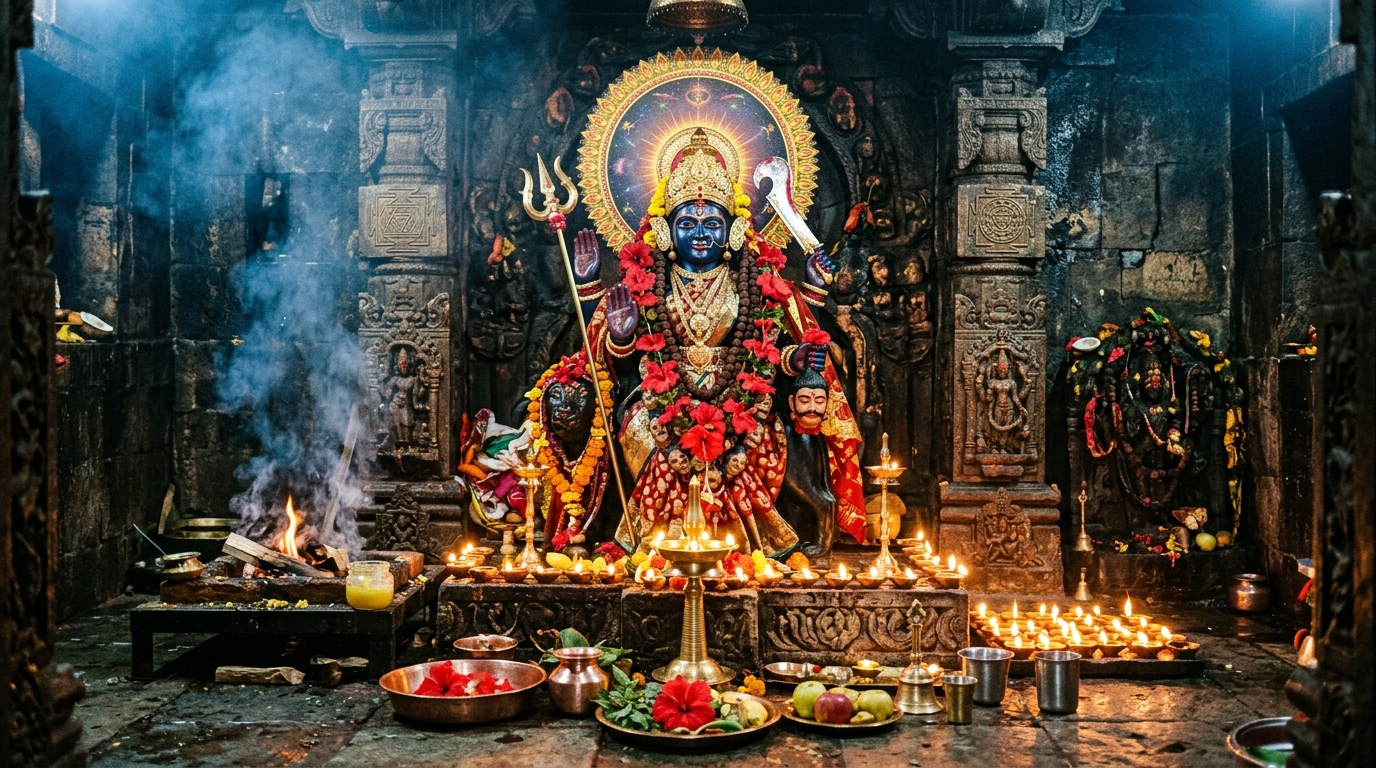
Sacred Deity Sanctum Darshan Consecrated Murti
Divine Origin & Spiritual Identity

The Cosmic Matrix of the Ten Wisdom Streams

Ten Dimensions of Absolute Consciousness Revealed Through the Divine Mother

The Shakta Agamas teach that when Lord Shiva asked the Divine Mother about her ultimate truth, she revealed ten cosmic forms facing ten cardinal and intermediate directions, sealing every point in space and time with sovereign divine awareness. These ten forms are known collectively as the Dasa Mahavidyas. Each Mahavidya governs a specific cosmic function: Kali embodies eternal time and dissolution; Tara represents the liberating sound and inner breath; Tripura Sundari radiates supreme joy and pure perception; Bhuvaneshwari rules the infinite expanse of cosmic space; Chhinnamasta pierces the knot of ego and Kundalini blockage; Bhairavi commands the fiery tapas of spiritual discipline; Dhumavati represents the sacred void and detachment from worldly sorrow; Baglamukhi stills all hostile movement and inner wavering; Matangi governs the spoken word, creative arts, and inner speech; and Kamala pours forth divine auspiciousness, abundance, and worldly harmony. Approaching this matrix requires high maturity, sincere devotion, and authentic guidance. The seeker must understand that no single Mahavidya can be understood in isolation without recognizing her place in the unified presence of the Supreme Goddess.
The Cosmic Matrix of the Ten Wisdom Streams
Maha Shakti (Maa Durga / Parvati)
Sanctum Sacred Representation
Complete Cosmic Architecture
Harmony of Fierce and Gentle Streams
Transcendence of Dualistic Fear
Direct Awakening of Kundalini
Definition & Spiritual Essence

What is Das Maha Vidya Sadhana?

Sacred essence, spiritual foundation, and scriptural truth

Authoritative Summary (Direct Essence)

Das Maha Vidya Sadhana represents the complete sovereign matrix of ten cosmic wisdom forms assumed by the Supreme Goddess Adi Shakti. In Sanatan Shakta philosophy, these ten great streams are not separate or rival deities; they are ten distinct dimensional windows through which the unmanifest Absolute reveals itself. Ranging from fierce lasting darkness (Kali) and cosmic stillness (Baglamukhi) to supreme royal beauty (Tripura Sundari) and universal space (Bhuvaneshwari), the Mahavidyas encompass all facets of cosmic time, sound, space, light, and silence. This parent sadhana provides the foundational philosophical vision, ethical safeguards, and lineage guidance needed before any seeker undertakes an individual Mahavidya practice.

Das Maha Vidya Sadhana is the ultimate contemplative curriculum of the Shakta tradition. Rather than jumping hastily into secret mantra repetition, an authentic practitioner first learns the cosmological position, philosophical purpose, and spiritual psychology of each of the ten goddesses. This holistic preparation protects the student from psychological distortion, spiritual arrogance, and erratic energy disturbances that often happen when advanced tantric practices are attempted without foundational maturity. In our lineage at Avhigat Akhara, a student spends extensive time establishing grounding through daily Gayatri japa, breath alignment, and the cultivation of selfless service before being admitted into any specific Mahavidya anushthan. Each goddess requires a specific attitude: Baglamukhi demands absolute truthfulness and stillness; Tara calls for unhesitating trust and acoustic awareness; Kali requires fearless surrender of the ego; and Kamala demands purity of intent and generous stewardship of worldly resources. Under proper guidance, the study of the Mahavidyas dissolves mental confusion, awakens natural intellectual brilliance, and brings the practitioner into conscious harmony with the cosmic rhythms of life.
Spiritual Purpose & Inner Evolution

Why is Das Maha Vidya Sadhana Practiced?

Core spiritual purposes, inner purification, and consciousness evolution

Mental Stillness & Focus

Daily japa and meditative contemplation calm wandering thoughts, fostering sharp inward awareness and emotional balance.

Spiritual Fortitude & Energy Balance

Authentic sacred kavacha and nyasa practices protect subtle vitality from negative inclinations, fear, and distraction.

Cultivation of Sattvic Discernment

Helps dissolve pride, resentment, and restlessness, strengthening humility, discernment, and spiritual surrender.

Inner Realization & Lineage Grace

Not an outward exhibition, but an inward journey toward self-realization sheltered under authentic monastic lineage guidance.

Tattvik Insight & Philosophy

Spiritual Significance & Philosophy

Philosophical essence and the science of internal transformation

“The spiritual significance of the Dasa Mahavidyas lies in their absolute refusal to compromise with superficial spiritual escapism. While conventional religious paths often avoid uncomfortable realities like disease, aging, anger, and mortality, the Mahavidyas integrate every shadow into the field of sacred consciousness. By honoring both Kali on the cremation ground and Sundari on the golden throne, the seeker realizes that nothing in creation is unholy when seen through the eyes of pure awareness. This realization brings unshakable peace, psychological resilience, and deep compassion for all beings who struggle under the illusions of worldly existence.”
Avhigat Akhara Monastic Wisdom
Seeker Eligibility & Suitability

Who is This Sadhana For?

Eligibility criteria, seeker temperament, and prerequisite guidance

Sincere Seekers

Individuals seeking daily focus, spiritual discipline, and quiet inward balance without complex rituals.

Householders

Practitioners balancing work, family, and social obligations while following a pure satvik spiritual path.

Disciplined Initiates

Dedicated practitioners who have mastered basic disciplines and wish to undertake formal anusthana under Guru Diksha.

Importance of Lineage Grace & Approval

Tantrik, Mahavidya, and advanced dhyana disciplines should not be initiated whimsically without lineage permission and proper understanding.

Seeker Discretion Notice

Who Should Take Lineage Guidance First?

Lineage Principle: Practice preserves sanctity and protects seekers when guided authentically

The Mahavidya tradition contains severe spiritual energies that must never be treated as casual hobbies, commercial magic tricks, or tools for selfish retribution. Any attempt to use Mahavidya mantras to harm another person, gain unfair worldly advantage, or manipulate public opinion rebounds severely upon the practitioner with immense psychological distress. Seekers must strictly avoid unqualified internet gurus and commercial websites selling cheap yantras or claiming instant siddhi. The path requires strict truthfulness, celibacy or disciplined marital fidelity during retreats, a clean vegetarian diet, and complete emotional stability. If mental agitation, strange dreams, or physical heat occur, stop the practice immediately, drink cool milk or fresh water, and seek personal counsel from your Acharya.
Request Lineage Guidance Consultation Avhigat Akhara upholds the sacred decorum of traditional Diksha and guided practice.
Origins, Tradition & Guru Parampara

Historical Origins & Guru Parampara

Authentic scriptural foundation and unbroken monastic transmission

Traditional Origins

The origins of the Dasa Mahavidya system trace back to the ancient Shakta Upapuranas and Agamic texts, notably the Mahabhagavata Purana, the Brihaddharma Purana, and the Guhyatiguhya Tantra. The classical legend describes Sati asserting her independent sovereign authority before Lord Shiva when he hesitated to permit her attendance at Daksha sacrifice. In asserting her divine nature, she assumed ten breathtaking forms that filled the ten directions of space. Over subsequent centuries, great masters of the Himalayan, Bengali, and Kashmiri Shakta traditions refined these insights into rigorous yogic practices. Avhigat Akhara has guarded these authentic oral lineages for generations, ensuring that modern seekers receive the pure spiritual wisdom untouched by superstitious corruptions.

Scriptural Authority

Primary scriptural authorities for the Dasa Mahavidyas include the Todala Tantra, Shakta Pramoda, Tantraraja Tantra, Mundamala Tantra, and the Shaktisangama Tantra. The Todala Tantra specifically correlates each Mahavidya with an avatar of Lord Vishnu, showing the deep harmony between Shakta and Vaishnava cosmologies (Kali corresponding to Krishna, Tara to Rama, Baglamukhi to Kurma, and so forth). along with this, the Rudrayamala Tantra and Sharada Tilaka provide the acoustic science, yantra geometry, and nyasa sequences that govern these sacred practices, emphasizing that external ritual is merely an anchor for deep internal contemplation.

Monastic Lineage Shelter

Within Avhigat Akhara, the Mahavidyas are treated as advanced stages of consciousness rather than isolated ritual techniques. No student is given initiation into an individual Mahavidya without first demonstrating mastery of foundational meditation, emotional balance, and unwavering loyalty to spiritual ethics. Our elders teach that a disciple must become like fertile soil through prayer and self-purification before receiving the powerful seed of a Mahavidya bija mantra. The lineage provides constant supervision, ensuring that the student uses their spiritual awakening solely for personal liberation and the selfless service of humanity.
Pujya Guru Ji Maharaj - Avhigat Akhara
Guidance by Pujya Guru Ji Maharaj
“The ten Mahavidyas are ten mirrors of your own inner self. When you wipe away the dust of ego and craving, you will see the radiant mother smiling in your own heart.”

The Acharyas constantly remind us that spiritual power without humility is a deadly poison. When studying the Dasa Mahavidyas, your goal must never be to impress others, control circumstances, or gain a reputation as an esoteric master. True spiritual attainment manifests as supreme peace, fearlessness in the face of death, and boundless kindness toward all living creatures. If a student becomes irritable, proud, or demanding after beginning a Mahavidya practice, their direction is wrong. In such moments, set aside all advanced rituals, sit at the feet of the Guru, and return to the simple repetition of the Divine Name until the heart is soft again.

Preparation & Sacred Disciplines

Preparation & Sacred Disciplines

Essential guidelines, satvik habits, and sanctum preparations

01

Sanctification of Space

Recommended

Thoroughly sweep and wash the prayer space, sprinkle holy Ganga water, and burn pure guggulu or sandalwood incense to establish a serene, elevated atmosphere.

02

Sankalpa and Resolution

Recommended

Hold fresh water, akshata, and a flower in your right palm while chanting the traditional sankalpa mantra, articulating your selfless intention for divine wisdom.

03

Guru and Ganesha Worship

Recommended

Bow to Lord Ganesha to remove obstacles and offer heartfelt mental prostrations to your lineage Guru, asking for protective guidance throughout the practice.

04

Pranayama and Inner Cleansing

Recommended

Perform five to ten rounds of Anuloma Viloma pranayama to balance the ida and pingala nadis, calming the heartbeat and bringing the mind to steady focus.

05

Dhyana and Form Contemplation

Recommended

Close your eyes and visualize the radiant form, weapons, and compassionate gaze of the Divine Mother seated on her lotus throne within your heart center.

Practice Progression & Stages

Practice Progression & Stages

Systematic pathway from preliminary understanding to final sanctum offering

01

Arambha (Foundation & Purification)

The practitioner establishes physical sitting endurance, cleanses internal lethargy, and develops steady rhythmic mantra recitation under careful supervision.

02

Ghatana (Energetic Activation)

The subtle nadis clear of toxic blockages, bodily sensations of warmth and tingling arise, and the mind experiences freedom from habitual negative thinking.

03

Parichaya (Deep Intimacy & Insight)

The practitioner feels the living presence of the goddess within daily consciousness, receiving spontaneous creative insights and deep emotional calm.

04

Nishpatti (Unified Realization)

The illusion of separation between the seeker and the Divine Mother dissolves, resulting in unshakeable spiritual freedom, fearlessness, and universal love.

Daily Practice Discipline & Niyama

Daily Practice Discipline & Routine

Sanctum steadfastness: One Time, One Altar, and Inner Purity

Rule
Recommended

Pure Ethical Foundation

Rule
Recommended

Directional and Spatial Order

Rule
Recommended

Authentic Mala Selection

Rule
Recommended

Dietary Purity

Rule
Recommended

Postural Steadiness

Rule
Recommended

Guardianship of Speech

Rule
Recommended

Reverence for Women

Rule
Recommended

Dedication of Merit

Sacred Cautions & Safety Guidelines

Common Mistakes & Sacred Cautions

Safeguarding seekers against mispronunciation, haste, and unauthorized practices

Treating the Mahavidyas as separate rival goddesses fighting each other.

Correct Lineage Guidance: Recognize that all ten Mahavidyas are one single Supreme Mother revealing different facets of her boundless wisdom.

Using fierce mantras to punish earthly enemies or win worldly lawsuits.

Correct Lineage Guidance: Direct your practice solely toward vanquishing internal enemies like anger, greed, jealousy, and delusion.

Chanting incomplete or corrupted mantras picked up from internet forums.

Correct Lineage Guidance: Receive the mantra exclusively from an initiated living Guru who provides the proper pronunciation and safety nyasa.

Abandoning household duties and moral responsibilities under the guise of sadhana.

Correct Lineage Guidance: Integrate sadhana harmoniously with your daily duties, treating your family service as an offering to the Divine Mother.

Authentic Seeker Inquiries

Authentic Questions Asked by Seekers

Direct, practical answers grounded in verified tradition and authentic lineage wisdom

Can an ordinary householder practice the Dasa Mahavidya disciplines safely?
Yes, householders can safely engage with the Dasa Mahavidyas provided they approach them through sattvic and devotional methods under proper guidance. While extreme ascetic rituals in cremation grounds are strictly reserved for initiated sannyasis, householders can practice daily stotra recitation, japa of saumya mantras, contemplation of the goddess philosophy, and devotional worship at their home altar with immense spiritual benefit.
Why are some Mahavidyas portrayed in terrifying forms like Kali and Chhinnamasta?
Fierce iconography serves a vital psychological and metaphysical function. It dismantles our superficial attachment to the physical body and exposes the temporal nature of the material world. By confronting these fierce depictions, the seeker learns to look past outer appearances and recognize the compassionate maternal love that destroys our inner demons of pride, ignorance, and fear of death.
How do I know which of the ten Mahavidyas is best suited for my personal temperament?
The choice of a specific Mahavidya should never be based on ego-driven ambitions or casual curiosity. In traditional ashrams, the Guru examines the disciple mental constitution, past karmic tendencies, astrological charts, and spiritual inclinations before assigning a specific deity. Often, a seeker feels an irresistible natural pull of love toward a particular form, which is confirmed through personal guidance.
Frequently Asked Questions

Frequently Asked Questions

Authentic answers to common queries regarding initiation, timing, and practice

Vedic worship primarily approaches the divine through community fire rituals, public chants, and universal cosmic order (Rita), whereas Mahavidya upasana is an intense, personalized, and internal yogic science. It utilizes specific acoustic bija frequencies, geometric yantras, and subtle breath techniques to awaken latent Kundalini energy directly within the human nervous system.

YOUR SACRED NEXT STEP

Ready to Begin Das Maha Vidya?

Follow the authentic Vedic and monastic path under lineage guidance before starting your practice.

Guidance Recommended

Guru Guidance & Diksha Consultation

This sacred practice requires initiation and protective mantra guidance from the authentic monastic lineage before regular practice.

Direct connection with Avhigat Akhara.
Enquiry Open

Das Maha Vidya Guided Training

Learn step-by-step mantra japa, mudras, and nyasa under authentic Acharyas through our guided monastic batches.

Batch curriculum and registration dates announced periodically.
Approved Paraphernalia

Das Maha Vidya Sacred Essentials

View consecrated Jap Malas, consecrated Yantras, Kusha asanas, and authentic sadhana kits approved by Avhigat Akhara.

Consecrated items energized per scriptural traditions.
View Sadhana Essentials
Sacred Sanctum Essentials

Sacred Essentials & Sanctum Items

Consecrated items traditionally used to support meditation, concentration, and focus

Tradition & Guidance Advisory

Use of Mala, Yantra, Kit or other materials can vary by practice. Follow the guidance given for your Sadhana.

Essential Checklist Before Practice
Vedic Sequence
1
1. Guidance
Guru Guidance
Consult
2
2. Mala
Consecrated Mala
View ↓
3
3. Yantra
Sanctum Yantra
View ↓
4
4. Kit
Sadhana Kit
View ↓
5
5. Asan
Pure Woolen Asan
View ↓
Mala Sacred Tool

Consecrated Haldi / Tulsi Japa Mala

108 knotted beads consecrated according to Vedic rites.

Yantra Sanctum Item

Handcrafted Copper Yantra Plate

Sacred geometric plate for sanctum meditation and focus.

Asan Daily Practice

Pure Woolen Meditation Asana

Traditional insulation mat to preserve spiritual energy.

॥ श्री गुरु चरण सरोज रज ॥

One-to-One Samasya Samadhan

Confidential Guidance

Private guidance from Guru Ji and the Akhara's guides. Choose what you need help with.