
Maa Tara Sadhana — The Compassionate Blue Savior & Cosmic Sound Mother
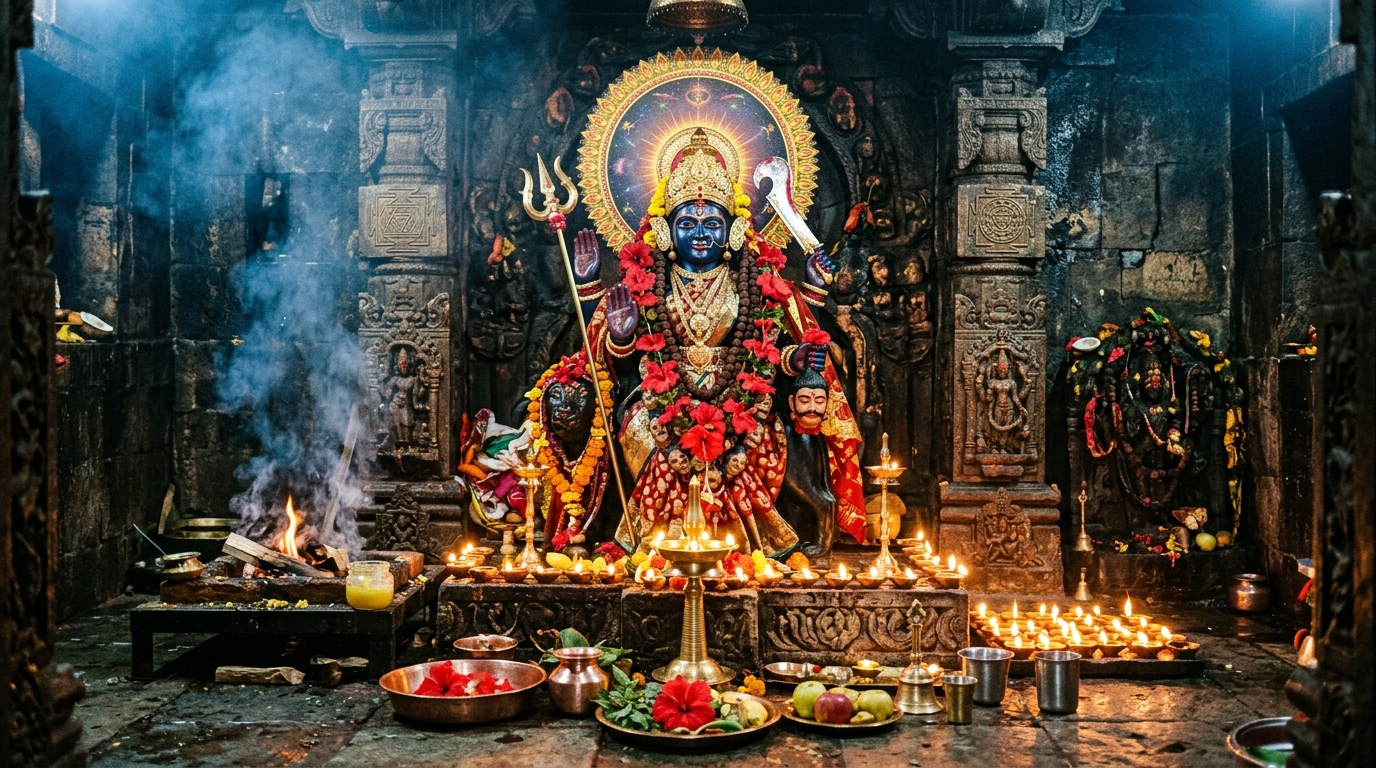
Maa Tara Sadhana is the second sublime stream of the sacred Dasa Mahavidyas, venerated across Sanatan Shakta and Tibetan Buddhist traditions as the supreme savior who ferries devotees across the terrifying ocean of worldly suffering (Samsara). Radiating a brilliant dark blue hue, standing upon the chest of Lord Shiva in dynamic compassion, she holds a pair of scissors, a sword, a lotus, and a skull-cup. Known also as Nila Saraswati and Ekajata, Tara is the primordial acoustic vibration of the cosmic womb (Taraka Mantra) that bestows poetic genius, spiritual wisdom, mastery of speech, and fearless liberation from mental sorrow.
Who is Maa Tara?
The Cosmic Savior (Tarini) and Primordial Sound Vibration of Liberation
What is Maa Tara Sadhana?
Sacred essence, spiritual foundation, and scriptural truth
Maa Tara Sadhana is the second sublime stream of the sacred Dasa Mahavidyas, venerated across Sanatan Shakta and Tibetan Buddhist traditions as the supreme savior who ferries devotees across the terrifying ocean of worldly suffering (Samsara). Radiating a brilliant dark blue hue, standing upon the chest of Lord Shiva in dynamic compassion, she holds a pair of scissors, a sword, a lotus, and a skull-cup. Known also as Nila Saraswati and Ekajata, Tara is the primordial acoustic vibration of the cosmic womb (Taraka Mantra) that bestows poetic genius, spiritual wisdom, mastery of speech, and fearless liberation from mental sorrow.
Why is Maa Tara Sadhana Practiced?
Core spiritual purposes, inner purification, and consciousness evolution
Mental Stillness & Focus
Daily japa and meditative contemplation calm wandering thoughts, fostering sharp inward awareness and emotional balance.
Spiritual Fortitude & Energy Balance
Authentic sacred kavacha and nyasa practices protect subtle vitality from negative inclinations, fear, and distraction.
Cultivation of Sattvic Discernment
Helps dissolve pride, resentment, and restlessness, strengthening humility, discernment, and spiritual surrender.
Inner Realization & Lineage Grace
Not an outward exhibition, but an inward journey toward self-realization sheltered under authentic monastic lineage guidance.
Spiritual Significance & Philosophy
Philosophical essence and the science of internal transformation
“The deep significance of Tara Sadhana lies in its synthesis of supreme wisdom and boundless motherly love. In the Hindu tradition, Lord Rama and Sage Vashistha are described as having worshipped Tara to cross severe crises and attain divine knowledge. In modern times, when human beings face intense anxiety, career stagnation, and mental depression, Tara stands as the eternal savior who restores hope and connects the soul with its infinite divine origin.”
Who is This Sadhana For?
Eligibility criteria, seeker temperament, and prerequisite guidance
Individuals seeking daily focus, spiritual discipline, and quiet inward balance without complex rituals.
Practitioners balancing work, family, and social obligations while following a pure satvik spiritual path.
Dedicated practitioners who have mastered basic disciplines and wish to undertake formal anusthana under Guru Diksha.
Importance of Lineage Grace & Approval
Tantrik, Mahavidya, and advanced dhyana disciplines should not be initiated whimsically without lineage permission and proper understanding.
Who Should Take Lineage Guidance First?
Lineage Principle: Practice preserves sanctity and protects seekers when guided authentically
Historical Origins & Guru Parampara
Authentic scriptural foundation and unbroken monastic transmission
Traditional Origins
Scriptural Authority
Monastic Lineage Shelter

Our Acharyas emphasize that intellectual cleverness cannot cross the ocean of life; only innocent surrender can. When you sit for Tara Sadhana, cast off all pride of scholarship and wealth. Lay your heart open before the Blue Mother. Ask her to cut the cords of your self-pity and sorrow. In her compassionate embrace, every fear turns into quiet courage.
Preparation & Sacred Disciplines
Essential guidelines, satvik habits, and sanctum preparations
Cleansing and Water Sanctification
RecommendedWash your prayer altar, sprinkle clean water chanting the Taraka mantra, and set a copper vessel of fresh water on the altar.
Invocation of Ganesha and Shiva
RecommendedOffer respectful salutations to Lord Ganesha and Lord Akshobhya Shiva, the divine consort who anchors Tara boundless energy.
Deepa & Blue Lotus Offering
RecommendedLight a pure ghee lamp and offer fresh blue flowers, contemplating the eternal flame of consciousness burning in your heart.
Vishuddha Breath Focus
RecommendedBreathe gently into the throat center, feeling cool blue light radiating through your vocal cords and chest.
Blue Tara Dhyana
RecommendedVisualize the luminous, three-eyed Blue Mother smiling with boundless compassion, holding her divine implements and blessing you with fearlessness.
Practice Progression & Stages
Systematic pathway from preliminary understanding to final sanctum offering
Arambha (Awakening of Trust)
The seeker releases cynicism, establishes comfortable sitting posture, and feels the initial softening of mental anxiety.
Shuddhi (Emotional Cleansing)
Deep-seated grief and suppressed sadness dissolve through spontaneous tears of devotion during japa, leaving the mind clean.
Medha (Flow of Intellect)
Vocal expression becomes clear, musical, and inspiring; intellectual comprehension of difficult spiritual ideas awakens naturally.
Tarana (Liberated Awareness)
The seeker crosses beyond the fear of death and worldly loss, resting securely in the protective embrace of the Divine Mother.
Daily Practice Discipline & Routine
Sanctum steadfastness: One Time, One Altar, and Inner Purity
Childlike Surrender (Sharanagati)
Blue & White Sacred Colors
Sphatik or Rudraksha Mala
Speech Purification
Offering of Blue Flowers
Daily Scriptural Reflection
Compassion for Suffering Beings
Offering of Spiritual Merits
Common Mistakes & Sacred Cautions
Safeguarding seekers against mispronunciation, haste, and unauthorized practices
Practicing aggressive left-hand cemetery rituals without sannyas initiation.
Correct Lineage Guidance: Follow only the sattvic, devotional Vedic-Agamic path of Tara at your home altar under authentic guidance.
Chanting with an arrogant, intellectually critical attitude.
Correct Lineage Guidance: Approach her as an innocent child seeking refuge in his mother lap.
Using dirty, broken rosaries or synthetic strings.
Correct Lineage Guidance: Use only authentic, unbroken sphatik or clean rudraksha beads tied with pure silk or cotton thread.
Speaking harshly to your mother, sisters, or women in your family.
Correct Lineage Guidance: Treat every woman in your life with reverence, courtesy, and active kindness.
Authentic Questions Asked by Seekers
Direct, practical answers grounded in verified tradition and authentic lineage wisdom
Frequently Asked Questions
Authentic answers to common queries regarding initiation, timing, and practice
Friday (dedicated to the Divine Mother) or Thursday (associated with Brihaspati and spiritual wisdom) during Shukla Paksha (waxing moon) are ideal. Tara Jayanti (observed on Chaitra Shukla Navami) is the most auspicious day of the year.
Related Sacred Sadhanas
Connected disciplines within this lineage and spiritual tradition


Sacred Essentials & Sanctum Items
Consecrated items traditionally used to support meditation, focus, and sanctum discipline
Use of Mala, Yantra, Kit or other materials can vary by practice. Follow the guidance given for your Sadhana.
Consecrated Haldi / Tulsi Japa Mala
108 knotted beads consecrated according to Vedic rites.
Handcrafted Copper Yantra Plate
Sacred geometric plate for sanctum meditation and focus.
Pure Woolen Meditation Asana
Traditional insulation mat to preserve spiritual energy.
Ask About This Sacred Item
Inquire with the sanctum team regarding consecration, authenticity, or practice usage.
