
Havan & Agnihotra — Daily Household and Ashram Fire Worship
The foundational Vedic practice of sunrise and sunset fire offerings for atmospheric purification, mental peace, and family harmony.
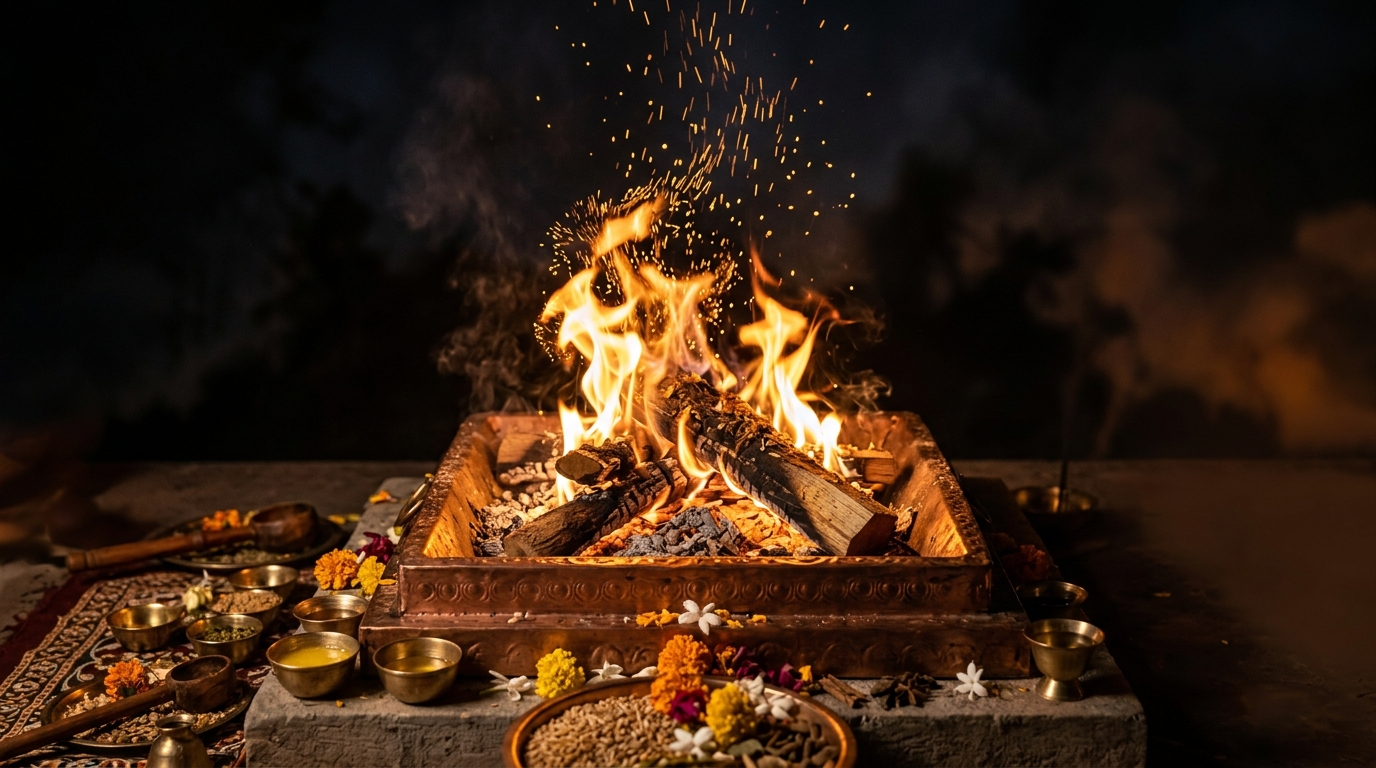
Havan and Agnihotra form the core daily fire ritual of the Vedic lifestyle. Performed at the exact moments of sunrise and sunset inside small copper pyramids or open ashram altars, pure desi cow ghee, unbroken rice grains (akshat), and aromatic medicinal woods are offered into consecrated fire with simple Vedic mantras. This ancient practice purifies domestic air, calms mental stress, and connects the practitioner directly with cosmic natural rhythms.
Tradition, Origin & Eternal Meaning
The Sacred Philosophy of Daily Agnihotra
In the ancient Vedic way of life, human beings never regarded themselves as separate from nature. Every sunrise brings a flood of life-giving solar energy that awakens plants, animals, and the subtle electrical currents of the human nervous system. Every sunset marks the cooling down of the day, when the atmosphere contracts and prepares for rest. The ancient rishis observed that during these two critical transition points (Sandhya kalas), an immense surge of cosmic energy touches the earth. To harmonize the human heart with this cosmic rhythm, the sacred science of Agnihotra was revealed in the Atharva Veda.
Agnihotra is not a complex, expensive temple ritual that only high scholars can perform. It is designed to be the daily spiritual heartbeat of every household and hermitage. In Avhigat Akhara, our day begins and ends with this simple, sacred fire. The fire altar acts as a miniature sun on earth. By feeding this flame with pure, non-violent offerings, the practitioner honors the five great elements (Pancha Mahabhutas) that sustain human life: earth, water, fire, air, and space.
The Four Pure Ingredients of Agnihotra
The beauty of Agnihotra lies in its radical purity. It uses four simple, natural elements that must be unadulterated:
- The Copper Pyramid Altar (Trikona Kunda): Copper is a supreme electrical and energetic conductor. The pyramid shape with specific sacred geometric angles acts as an energy generator, trapping and amplifying subtle sound vibrations and directing healing vapors upward into the room.
- Dried Desi Cow Dung Cakes: Only the dung of indigenous Indian cows (Bos indicus) is used. When dried dung burns slowly, it releases beneficial natural compounds (including menthol and ammonia vapors) that neutralize harmful airborne pathogens without producing toxic smoke.
- Pure Desi Cow Ghee (Clarified Butter): Ghee prepared from curd using the traditional wooden churner (Bilona method) is rich in volatile fatty acids. When vaporized by fire, it attaches to fine dust particles in the air, pulling pollutants down to the floor while releasing oxygenating compounds.
- Unbroken Polished Rice Grains (Akshat): Grains of whole, unbroken raw rice represent pure, complete life energy. Before offering, a pinch of rice is coated with a drop of warm ghee and divided into two exact portions for the morning or evening mantras.
The Exact Timing and Simple Mantras
Agnihotra is bound to the exact astronomical minute of local sunrise and sunset. At the very moment when the sun’s upper rim touches the horizon, the fire is ignited with dried cow dung and a drop of ghee. As the flames catch, the practitioner sits with an erect spine facing east in the morning, or facing west at sunset.
In the morning, two simple mantras from the Yajurveda are chanted with calm reverence:
1. "Sooryaya Swaha, Sooryaya Idam Na Mama" (To the Divine Sun this offering is made; this is not mine).
2. "Prajapataye Swaha, Prajapataye Idam Na Mama" (To the Lord of all Creation this offering is made; this is not mine).
With each recitation of the word "Swaha", half the rice is offered into the flame. The entire process takes less than ten minutes, yet the fragrant, healing aura created by the smoke remains in the room for hours, soothing the minds of everyone who enters.
Scientific and Ecological Benefits of the Daily Havan
Modern botanical and environmental researchers have tested the air quality of homes before and after regular Agnihotra practice. The findings confirm ancient scriptural claims. The combination of burning ghee, cow dung, and rice significantly reduces the colony count of harmful airborne bacteria by up to 90% within a radius of thirty feet. Furthermore, regular practice neutralizes unpleasant domestic odors, reduces static electromagnetic radiation from television sets and Wi-Fi routers, and helps house plants grow healthier with deeper green leaves.
Healing the Modern Mind: The Home as an Ashram
Modern families often struggle with arguments, irritation, and restless children addicted to digital screens. Avhigat Akhara encourages every householder devotee to install a small copper Agnihotra kit at home. When parents and children gather around the flame for ten minutes at sunset, chanting together and sitting in brief silence, the tense atmosphere of the day melts away. The house ceases to be merely a physical flat of concrete and furniture; it becomes a sanctuary of peace, protection, and spiritual light.
Monastic Discipline & Public Service
Key Elements & Sacred Disciplines
Sandhya-Samanvaya (Harmony with Solar Cycles)
Aligning human consciousness with the precise astronomical turning points of sunrise and sunset to reset inner bio-rhythms.
Vata-Shuddhi (Atmospheric Healing)
Purifying indoor air and micro-environments through the antibacterial, therapeutic smoke of burnt cow ghee and herbs.
Grihastha Shanti (Domestic Harmony)
Bringing the whole family together in prayer twice a day dissolves petty misunderstandings and cultivates warmth.
Idam Na Mama (Selfless Offering)
Reinforcing non-possessiveness with every oblation, remembering that everything we have is a sacred trust from God.
Discipline, Eligibility & Conduct
Who May Participate?
Anyone with a sincere desire for domestic peace and spiritual cleanliness may practice Agnihotra. You need only a small copper pot, dried cow dung, pure cow ghee, and raw unbroken rice. Bathe or wash your hands, feet, and face before the sunrise or sunset hour. The practice requires no complicated priesthood; family members perform it directly with their own hands.
Camp Code of Conduct
Agnihotra must be performed with complete cleanliness and reverence. Never blow into the fire with your mouth; use a small hand fan if needed. Avoid using broken rice (Khandit Akshat) or adulterated commercial butter. Maintain silence for at least two to three minutes after the final offering to absorb the healing vibrations.
How You Can Offer Seva
Assisting in packing certified copper pyramids, dry cow dung patties, and pure ghee containers for distribution to families.
Teaching correct Sanskrit mantra pronunciation, sunrise calculation, and fire lighting methods to first-time learners.
Preparing the ashram fire altars before dawn, cleaning copper utensils, and distributing holy bhasma to visitors.
The copper pyramid gets hot during the brief offering. Always place the copper vessel on a heat-resistant tile or stone coaster, well away from curtains, loose papers, or flammable household carpets. Keep a small brass cup of water nearby.
