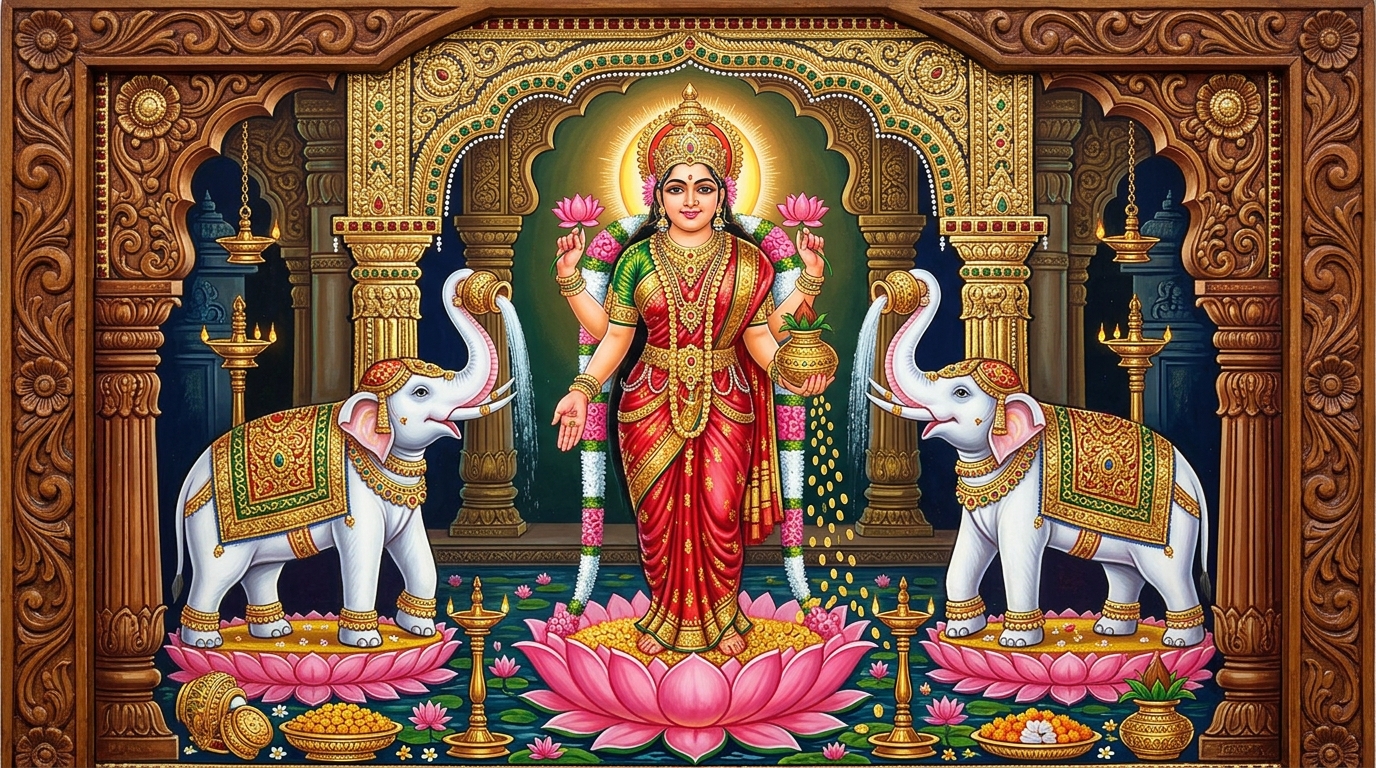
Composed in classical Sanskrit and traditionally attributed to Jagadguru Adi Shankaracharya, Shri Kanakadhara Stotram is a sublime 21-shloka hymn meditating upon the compassionate and auspicious glances (kataksha) of Mother Mahalakshmi, the embodiment of supreme spiritual and temporal grace.
10 mins chanting
21 Shlokas
Sanskrit Shlokas & Meter
Text review in progress
Printable Reading Booklet (PDF)
a5 • 12 pages
Source-locked Devanagari text with transliteration & paired bilingual meanings. Free for devotional study.
Composed in classical Sanskrit and traditionally attributed to Jagadguru Adi Shankaracharya, Shri Kanakadhara Stotram is a sublime 21-shloka hymn meditating upon the compassionate and auspicious glances (kataksha) of Mother Mahalakshmi, the embodiment of supreme spiritual and temporal grace.
Devotional Notice:
This sacred Stotram is presented for sincere devotional recitation, contemplation, and study from attested recensions with accurate Sanskrit shlokas and verse-by-verse bilingual meanings. Recitation customs vary across traditional lineages. Avhigat Akhara presents authentic textual editions without any claims of supernatural guarantees, financial windfalls, or commercialized promises; true spiritual peace arises from selfless devotion (Bhakti) and inner discipline (Sadhana).
Hindi Meaning:
जिस प्रकार भ्रमरी कलियों से सुशोभित तमाल वृक्ष का आश्रय लेती है, उसी प्रकार जो श्रीहरि के रोमांचित अंगों का आश्रय ग्रहण करती हैं और जिनमें समस्त ऐश्वर्य समाहित हैं, उन परम मंगलमयी माँ लक्ष्मी की कृपा-कटाक्ष दृष्टि मेरे लिए कल्याणकारी हो।
English Meaning:
Just as a female bee rests upon a dark Tamala tree adorned with blossoms, so does the glance of Mother Lakshmi rest upon Lord Hari whose limbs thrill with joy. May that playful, benevolent side-glance of the Goddess of auspiciousness, embodying all divine glories, bestow eternal well-being upon me.
The verse poetically likens Lord Vishnu to a dark Tamala tree and Lakshmi's moving eyes to a bee hovering over fragrant buds.
Shloka 2: The Repeated Glance of Love
#2 / 21
मुग्धा मुहुर्विदधती वदने मुरारेः
प्रेमत्रपाप्रणयितानि गतागतानि ।
माला दृशोर्मधुकरीव महोत्पले या
सा मे श्रियं दिशतु सागरसंभवायाः ॥ २ ॥
Hindi Meaning:
जो मुग्ध होकर प्रेम और लज्जा के भाव से मुरारी (श्रीकृष्ण) के मुखारविंद पर बार-बार आती और लौटती हैं—जैसे महान नीलकमल पर भंवरी की पंक्ति मँडराती है—क्षीरसागर से प्रकट हुई माँ लक्ष्मी की वे नयन-पंक्तियाँ मुझे आध्यात्मिक समृद्धि प्रदान करें।
English Meaning:
Like a garland of bees hovering repeatedly over a blossoming blue lotus, the innocent glance of the Ocean-born Goddess moves back and forth upon Murari's countenance with sweet shyness and love. May that divine gaze bestow auspicious spiritual wealth upon me.
Highlights the graceful interplay of devotion, affection, and sacred modesty in the divine presence.
Hindi Meaning:
आनंदकंद भगवान मुकुंद के अर्द्ध-निमीलित नेत्रों को देखकर जो आनंद से भर जाती हैं, शेषशायी श्रीहरि की उन प्राणवल्लभा माँ लक्ष्मी के प्रेम-विभोर, मंद-मुस्कान युक्त नयन मेरे सर्वतोभावेन कल्याण के निमित्त हों।
English Meaning:
Gazing joyfully upon Mukunda, the fountainhead of bliss resting serenely on the serpent couch, the half-closed, softly curved eyelashes of His divine Consort shimmer with supreme grace. May those gentle eyes bring about my spiritual upliftment.
Presents the blissful union of Sri and Vishnu in meditative serenity.
Shloka 4: Resting on the Kaustubha Jewel
#4 / 21
बाह्वन्तरे मधुजितः श्रितकौस्तुभे या
हारावलीव हरिनीलमयी विभाति ।
कामप्रदा भगवतोऽपि कटाक्षमाला
कल्याणमावहतु मे कमलालयायाः ॥ ४ ॥
Hindi Meaning:
मधुसूदन के वक्षःस्थल पर जहाँ कौस्तुभ मणि विराजमान है, जो नीलमणि के हार के समान सुशोभित होती हैं और स्वयं भगवान की भी समस्त कामनाओं को पूर्ण करने वाली हैं, कमलवासिनी माँ लक्ष्मी की वह कृपा-कटाक्ष माला मेरा कल्याण करे।
English Meaning:
Resting upon the breast of Lord Vishnu alongside the sparkling Kaustubha gem, Her glance shines like a brilliant necklace of blue sapphires, fulfilling even the divine wishes of the Lord Himself. May that garland of glances from the Lotus-dwelling Mother shower blessings upon me.
Contemplates the radiance of Her eyes upon the chest of the Lord like a garland of deep-blue sapphires.
Shloka 5: The Flash of Lightning
#5 / 21
कालाम्बुदालिललितोरसि कैटभारेः
धाराधरे स्फुरति या तटिदङ्गनेव ।
मातुः समस्तजगतां महनीयमूर्तिः
भद्राणि मे दिशतु भार्गवनन्दनायाः ॥ ५ ॥
Hindi Meaning:
कैटभारि (भगवान विष्णु) के श्याम मेघ सदृश मनोहर वक्षःस्थल पर जो विद्युत्-लता के समान देदीप्यमान होती हैं, समस्त चराचर जगत की माता, भृगु-पुत्री माँ लक्ष्मी की वह पूज्य प्रतिमा मुझे सर्वमंगल प्रदान करे।
English Meaning:
Flashing like a brilliant streak of golden lightning upon the dark raincloud-like chest of Lord Vishnu (the foe of Kaitabha), the universally revered form of Bhrigu's daughter, the Mother of all creation, may She bestow eternal auspiciousness upon me.
Symbolizes the eternal divine union through the metaphor of a golden lightning bolt across dark monsoon clouds.
Shloka 6: The Conquest of Kamadeva
#6 / 21
प्राप्तं पदं प्रथमतः किल यत्प्रभावात्
माङ्गल्यभाजि मधुमाथिनि मन्मथेन ।
मय्यापतेत्तदिह मन्थरमीक्षणार्धं
मन्दालसं च मकरालयकन्यकायाः ॥ ६ ॥
Prāptaṁ padaṁ prathamataḥ kila yatprabhāvāt
Māṅgalyabhāji madhumāthini manmathena |
Mayyāpatettadiha mantharamīkṣaṇārdhaṁ
Mandālasaṁ ca makarālayakanyakāyāḥ || 6 ||
Hindi Meaning:
जिनके पावन प्रभाव से कामदेव ने मंगलमय मधुसूदन के हृदय में प्रथम स्थान प्राप्त किया, क्षीरसमुद्र की सुपुत्री माँ लक्ष्मी का वह सौम्य, अलसाया और कृपापूर्ण अर्द्ध-कटाक्ष मुझ पर भी पड़े।
English Meaning:
By whose grace alone the god of love (Manmatha) found sovereign entry into the auspicious heart of Lord Madhusudana, may that gentle, slowly moving half-glance of the Daughter of the Ocean fall tenderly upon me.
Acknowledges the supreme divine power of Mother Lakshmi in awakening pure spiritual love in the heart of God.
Hindi Meaning:
जो दृष्टि देवराज इन्द्र के पद और संपूर्ण लोकों के ऐश्वर्य को प्रदान करने में समर्थ है, और जो मुरारि श्रीकृष्ण के लिए भी परम आनंद का कारण है, नीलकमल के भीतरी भाग के समान कोमल इंदिरा (लक्ष्मी) का वह कटाक्ष क्षणभर के लिए मुझ पर भी ठहरे।
English Meaning:
Capable of granting the exalted status of Indra over all the worlds, and the source of supreme bliss even to the conqueror of Mura, may that glance of Indira, tender as the heart of a blue lotus, rest upon me for even a single fraction of a moment.
Even heavenly sovereignty is easily granted by a momentary movement of Her compassionate gaze.
Shloka 8: Granting the Abode of Heaven
#8 / 21
इष्टा विशिष्टमतयोऽपि यया दयार्द्र-
दृष्ट्या त्रिविष्टपपदं सुलभं लभन्ते ।
दृष्टिः प्रहृष्टकमलोदरदीप्तिरिष्टां
पुष्टिं कृषीष्ट मम पुष्करविष्टरायाः ॥ ८ ॥
Hindi Meaning:
जिनकी दयार्द्र दृष्टि के प्रभाव से विशिष्ट बुद्धिमान साधक भी दुर्लभ स्वर्गपद को सरलता से प्राप्त कर लेते हैं, खिले हुए कमल के भीतरी भाग जैसी कांति वाली, कमलवासिनी माँ लक्ष्मी की वह कृपादृष्टि मुझे अभीष्ट आत्म-पुष्टि प्रदान करे।
English Meaning:
Through whose compassion-laden gaze devoted seekers easily attain the heavenly realms, may that glance of Mother Lakshmi, resplendent like the core of an open lotus resting upon Her lotus throne, nourish my heart with divine spiritual abundance.
Clarifies that Sri Lakshmi bestows spiritual wisdom, virtue, and heavenly peace beyond mere worldly goods.
Hindi Meaning:
पूर्व संचित दुष्कर्म रूपी भीषण ग्रीष्म-ताप को सदा के लिए दूर कर, नारायण की प्राणप्रिया के नयन रूपी मेघ अपनी दया रूपी अनुकूल पवन से मुझ दीन-हीन विहंग-शिशु (चातक पक्षी के बच्चे) पर कृपारूपी अमृत-जल की धारा बरसाएं।
English Meaning:
Dispelling the scorching summer heat of past accumulated misdeeds, may the dark raincloud of Narayana's Beloved's eyes, stirred by the gentle breeze of Her boundless compassion, pour down a rain of spiritual treasures upon this helpless, distressed nestling bird of a seeker.
The poet humbly assumes the role of a thirsty Chataka fledgling, crying solely for the rain of divine grace.
Hindi Meaning:
सृष्टि, स्थिति और प्रलय की दिव्य लीलाओं में जो क्रमशः सरस्वती (गीर्देवता), लक्ष्मी (गरुड़ध्वज-सुन्दरी), शाकम्भरी तथा पार्वती (शशिशेखर-वल्लभा) के रूप में स्थित हैं, त्रिभुवन के एकमात्र गुरु भगवान नारायण की उस नित्य-युवा शक्ति महालक्ष्मी को मेरा बारम्बार प्रणाम।
English Meaning:
Salutations to Her who, in the cosmic play of creation, preservation, and dissolution, is known as Saraswati (the goddess of speech), Lakshmi (the consort of Lord Vishnu), Shakambhari, and Parvati (the beloved of Shiva with the crescent moon)—the eternal youthful Power of the Supreme Preceptor of the three worlds.
Affirms that Sri Lakshmi is the non-dual supreme cosmic power operating through creation, sustenance, and transformation.
Shloka 11: Salutations to the Vedic Personification
Hindi Meaning:
शुभ कर्मों के फल को उत्पन्न करने वाली वेदरूपा (श्रुति) को प्रणाम! रमणीय गुणों की आश्रयदात्री रतिरूपा को प्रणाम! शतदल कमल में निवास करने वाली पराशक्ति को प्रणाम! और पुरुषोत्तम श्रीहरि की प्राणवल्लभा पुष्टिरूपा माँ लक्ष्मी को मेरा प्रणाम!
English Meaning:
Salutations to You as Shruti (the Vedas), the dispenser of the auspicious fruits of righteous deeds! Salutations to You as Rati, the sanctuary of all delightful virtues! Salutations to You as supreme Shakti, dwelling in the thousand-petaled lotus! Salutations to You as Pushti (spiritual nourishment), the beloved Consort of Purushottama!
Praises the divine Mother as Scripture, Joy, Supreme Power, and Cosmic Sustenance.
Hindi Meaning:
कमल के समान सुंदर मुख वाली माँ को प्रणाम! क्षीरसागर से प्रकट होने वाली माता को प्रणाम! चंद्रमा और अमृत की सहोदरा भगवती को प्रणाम! और भगवान श्रीनारायण की परम प्रिया को मेरा बारंबार प्रणाम!
English Meaning:
Salutations to Her whose face resembles a blooming lotus! Salutations to Her whose birthplace is the sacred Ocean of Milk! Salutations to the twin sister of the Moon and the Divine Nectar! Salutations to the dearest beloved of Lord Narayana!
Recalls the Samudra Manthan where Sri Lakshmi, the Moon, and the Amrita nectar arose as divine siblings.
Hindi Meaning:
स्वर्ण कमल के आसन पर विराजमान भगवती को प्रणाम! संपूर्ण भूमंडल की स्वामिनी को प्रणाम! देवताओं पर अहैतुकी दया करने वाली माता को प्रणाम! और शार्ङ्गधनुर्धर श्रीहरि की वल्लभा को मेरा प्रणाम!
English Meaning:
Salutations to Her who is seated upon a golden lotus throne! Salutations to the sovereign Ruler of the universe! Salutations to Her who showers unending mercy upon the gods! Salutations to the beloved Consort of the wielder of the Sharnga bow!
Exalts Mother Lakshmi as the cosmic sovereign and eternal companion of the bow-wielding Lord Vishnu.
Hindi Meaning:
भृगुमुनि की कन्या देवी लक्ष्मी को प्रणाम! भगवान विष्णु के वक्षःस्थल पर नित्य वास करने वाली माता को प्रणाम! कमलनिवासिनी महालक्ष्मी को प्रणाम! और दामोदर श्रीहरि की प्रिया को मेरा प्रणाम!
English Meaning:
Salutations to the Goddess, the radiant daughter of Sage Bhrigu! Salutations to Her who eternally dwells upon the heart of Lord Vishnu! Salutations to Lakshmi seated in the lotus! Salutations to the beloved of Damodara!
Addresses the Mother as Bhargavi, permanently established in the sacred chest of the Lord.
Hindi Meaning:
कमलनयनी, कांतिस्वरूपा भगवती को प्रणाम! संपूर्ण ब्रह्मांड को जन्म देने वाली ऐश्वर्यरूपा माता को प्रणाम! समस्त देवताओं द्वारा पूजित देवी को प्रणाम! और नंदनंदन श्रीकृष्ण की प्राणवल्लभा को मेरा प्रणाम!
English Meaning:
Salutations to Her who possesses lotus eyes and radiant splendor! Salutations to the divine Abundance who gave birth to all the worlds! Salutations to Her who is worshipped by Indra and all the gods! Salutations to the beloved of the son of Nanda (Lord Krishna)!
Reveres Lakshmi as the cosmic mother whose grace is sought by all deities.
Hindi Meaning:
हे कमलनयनी! आपकी वंदना समस्त संपत्तियों को देने वाली, सभी इंद्रियों को आनंदित करने वाली, साम्राज्य का वैभव प्रदान करने वाली तथा पापों को हरने वाली है। हे पूज्य मात! आपकी वह वंदना नित्य मेरे हृदय में प्रतिष्ठित रहे।
English Meaning:
O Lotus-eyed Mother! Devout salutations unto You bestow true wealth, rejoice every sense, grant the glory of sovereignty, and destroy all sins. O venerable Mother, may the privilege of continually worshipping You ever abide within my heart.
Affirms that steady devotion to the divine Mother cleanses the senses and dissolves karmic burdens.
Hindi Meaning:
जिनके कृपा-कटाक्ष की उपासना-विधि सेवक को समस्त पुरुषार्थ और संपत्तियां प्रदान करती है, मन, वाणी और शरीर से उन मुरारि-हृदयेश्वरी माँ लक्ष्मी का मैं अनन्य भाव से भजन करता हूँ।
English Meaning:
The worship of whose compassionate glance bestows all four aims of life (dharma, artha, kama, moksha) upon Her devoted servant—with speech, body, and mind I worship You, the Queen of Murari's heart.
Surrenders body, mind, and speech to the divine Queen who resides in the heart of Vishnu.
Hindi Meaning:
कमल में निवास करने वाली, हाथ में कमल धारण करने वाली, अति श्वेत वस्त्र, चंदन और सुगंधित पुष्पमालाओं से सुशोभित, भगवान विष्णु की परमप्रिया, त्रिभुवन को ऐश्वर्य प्रदान करने वाली हे भगवती! आप मुझ पर प्रसन्न हों।
English Meaning:
O Dweller in the lotus! Holding lotuses in Your hands, adorned with dazzling white silken garments, fragrant sandal paste, and lovely garlands! O divine Mother, beloved of Hari, charming one who brings prosperity to the three worlds, be gracious unto me!
Meditation on the serene white-robed form of Sri Lakshmi seated gracefully upon a lotus.
Hindi Meaning:
दिशाओं के गजराजों द्वारा सुवर्ण कलशों के मुख से बरसाए गए आकाशगंगा के निर्मल जल से जिनका श्रीअंग अभिषिक्त होता है, उन समस्त जगत की माता, अखिल लोकनाथ श्रीहरि की गृहणी, क्षीरसमुद्र की सुपुत्री माँ लक्ष्मी को मैं प्रातःकाल प्रणाम करता हूँ।
English Meaning:
Whose divine limbs are bathed by the mighty celestial elephants of the directions with the pristine waters of the heavenly Ganga flowing from the mouths of golden pitchers—in the morning I bow to Her, the Mother of all creation, the Queen of the Lord of all the worlds, the Daughter of the ocean of nectar.
The celebrated Gaja-Lakshmi iconography where divine elephants pour sanctified waters from golden vessels.
Hindi Meaning:
हे कमले! हे कमलनयन भगवान की प्राणप्रिया! आप करुणा की तरंगों से परिपूर्ण अपने कृपा-कटाक्ष से मुझ पर दृष्टिपात करें, जो कि निर्धनों और असहायों में सबसे अग्रगण्य हूँ, ताकि आपकी अद्भुत महिमा प्रकट हो सके।
English Meaning:
O Lotus-born Goddess! O beloved of the Lotus-eyed Lord! With Your side-glances overflowing with waves of compassion, cast Your merciful look upon me, who stands foremost among the destitute, so that Your wondrous power of grace may be revealed.
A peak of selfless humility where the seeker asks for compassion not through merit, but through utter dependence.
Hindi Meaning:
हे देवि! हे जगदीश्वरी! हे जगतजननी! हे कल्याणमयी अंगों वाली! हे कमलनयन श्रीहरि के जीवन-सर्वस्व! दारिद्र्य और भय से व्याकुल होकर आपकी शरण में आए हुए मुझ सेवक पर प्रतिदिन अपनी दयामयी दृष्टि बनाए रखें।
English Meaning:
O Goddess! Be pleased, O Ruler of the cosmos, O Mother of all the worlds! O Embodiment of auspiciousness, O breath of life to the lotus-eyed Lord! Look daily with Your kind glances upon me, who have sought refuge in You with a heart afflicted by spiritual poverty and fear.
The concluding benediction seeking daily divine refuge to dissolve inner poverty and anxiety.
Stotra Pathway
Classical Sanskrit Protective Stotra Pathway
Recommended Next Steps
Classical Sanskrit protective meters, nyasa invocations, and uplifting stotras.
Recited during morning or evening sandhya before an image of Sri Mahalakshmi, seated on a clean asana with a tranquil and devoted heart. Light a pure ghee lamp and offer fragrant flowers or bilva leaves.
Spiritual Significance:
Each shloka poetically compares the benevolent glance of Goddess Lakshmi to dark monsoon clouds, swarms of black bees hovering over blue lotuses, and radiant garlands of lightning that dispel spiritual poverty, ignorance, and inner grief.
Phala-Shruti (Spiritual Fruits):
Devout recitation with purity of heart is traditionally revered for dispelling inner distress, cultivating contentment, and invoking divine motherly grace.
This text is still being reviewed by the Akhara. If you see a mistake, please tell us.
॥ Authoritative Shastric Guidance ॥
Classical Context & Seekers Questions
Authoritative answers, ritual disciplines, and scriptural citations for sincere practitioners.
Q1
Historical
Smarta / Vedic
What is the historical event that led Adi Shankaracharya to compose the Kanakadhara Stotram?
Context Note:
The historic compassion and divine grace underlying Kanakadhara Stotram.
Summary Answer
While begging for alms as a young brahmachari, Shankara encountered an impoverished woman who had only a single dried gooseberry (amla) to offer. Moved by her selfless charity, he praised Goddess Lakshmi, prompting a shower of golden amlas.
Recorded in the Madhaviya Shankara Digvijaya, Goddess Lakshmi initially noted that the woman's past-life karma did not warrant wealth. Shankara argued that her present act of surrendering her last sustenance with boundless devotion outweighed all past deficits. Pleased by his soaring poetic hymn "Angam Hareh Pulaka-Bhushanam Ashrayanti", the Mother showered pure golden amlas, lifting the family from destitution forever.
Avhigat Akhara is a registered trust managed directly by sadhus. We do not hire private fundraising agencies. Donations are used for daily meals, cow care, Gurukul students and daily yajna.