॥ AUTHENTIC PANCHANG CALENDAR TIMING ॥
2026 Observance Date & Calculation
Verified by Akhara Secretariat
Asia/Kolkata
Event Date:
11 October 2026
– 19 October 2026
Lunar Tithi & Phase:
आश्विन शुक्ल प्रतिपदा से नवमी (Ashwin Shukla Pratipada to Navami)
Reference Coordinates:
Delhi, India
Methodology / Tradition:
Drik Ganita / Smarta Tradition
Explanation of Observance Rule:
Pratipada tithi begins at sunrise on Ashwin Shukla Pratipada, establishing Ghatasthapana. The nine nights conclude with Maha Navami on October 19, followed by Vijaya Dashami (Dussehra) on October 20.
Auspicious Muhurat Windows (Delhi Reference):
Abhijit Muhurat:
11:45 AM – 12:31 PM
Ghatasthapana End:
10:14 AM
Vijayadashami Date:
2026-10-20
Ghatasthapana Start:
06:21 AM
Notice for Seekers in Other Cities or Timezones:
All dates, muhurat windows, and tithi calculations displayed above are calculated specifically for the declared reference city (Delhi, India / Asia/Kolkata). If you are observing from another city, state, or country, please consult an authentic local regional Panchang or temple schedule for your local sunrise (Suryodaya) and tithi alignment. The akhara never relabels Delhi timestamps for disparate geographies.
Medical, Fasting & Safety Directives
In Sanatana Dharma, preserving bodily well-being is the primary instrument of virtue.
Fasting Principles:
Fasting during Navratri is an act of voluntary devotion and spiritual self-purification. Traditional practitioners observe either a single sattvic meal (fruits, milk, buckwheat/kuttu, water-chestnut/singhara) or fruit-and-milk fasting. Prolonged or rigid fasting is never mandatory. Medically vulnerable seekers must prioritize physical well-being.
Medical & Safety Advisory:
Fire and Akhand Diya Safety: If maintaining a continuous flame (Akhand Jyoti), place the lamp inside a glass chimney or secure metal lantern away from curtains, drafts, and children. Fasting Safety: Expectant or nursing mothers, individuals with diabetes, hypertension, or chronic conditions, and growing children should NOT observe strict fasts. Consult a licensed medical physician before altering your regular diet or medications.
Observance dates depend upon local sunrise (Suryodaya) and the alignment of Pratipada and Navami tithis according to traditional regional Panchangs. Dates listed represent verified calculations for the declared reference city (Delhi, India / Asia-Kolkata). Always consult your local temple or authentic regional Panchang for your specific city.
Sacred Preparation Items & Samagri Checklist
Gather these clean and sattvic articles before commencing worship.
Clay or brass Kalash (sacred pot) with clean water and mango leaves
Clean red cloth, unpeeled coconut with husk, and moli (sacred red thread)
Fresh barley seeds (jau) and clean fertile soil for the sacred sprout bed (khetri)
Akshat (unbroken rice grains), sandalwood paste, kumkum, and fresh flowers
Pure cow ghee lamp (diya), incense sticks, camphor, and clove-cardamom offerings
Fresh fruits, dry fruits, and clean offerings for Naivedya
#1
1. Cosmic Meaning & The Spiritual Dimension
Pan-Indian Shakta Tradition
१. आध्यात्मिक अर्थ एवं ब्रह्मांडीय चेतना
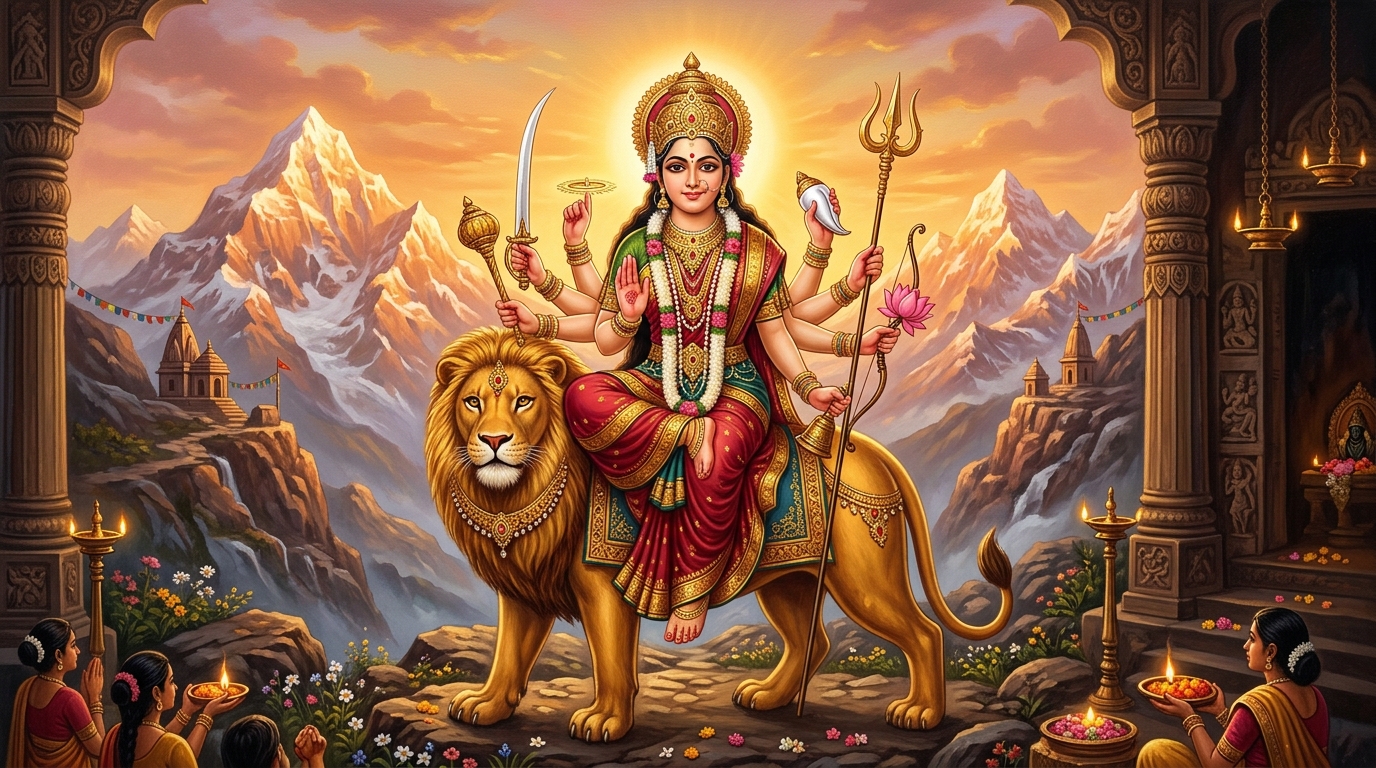
The word "Navratri" literally translates to "Nine Nights". In Vedic symbology, night represents stillness, inward contemplation, and rejuvenation. While day represents extroverted physical action, night is the sacred sanctum where the seeker turns inward to connect with the divine source of all energy.\n\nAccording to the Devi Mahatmya, the Divine Mother manifests when negative demonic forces (symbolized by Mahishasura, Madhu-Kaitabha, and Shumbha-Nishumbha) disrupt cosmic righteousness. These demons represent inner psychological obstacles: Mahishasura represents dull lethargy and arrogance; Madhu and Kaitabha represent craving and aversion; Shumbha and Nishumbha symbolize the illusion of ego and self-importance. Celebrating Navratri is an active spiritual commitment to conquer these inner enemies under the protective grace of the Divine Mother.
#2
2. Scriptural Origin & Navadurga Manifestations
Puranic Shakta Injunctions
२. शास्त्रोक्त उद्भव एवं नवदुर्गा के पावन स्वरूप
The primary scriptural authority for Navratri is the Markandeya Purana, specifically the celebrated Devi Mahatmya (popularly known as Sri Durga Saptashati). The Brahma Vaivarta Purana and Devi Bhagavata Purana also describe the nine manifestations of Mother Parvati adored across the nine days:\n\n1. Shailaputri (Day 1): Daughter of the Himalayas, embodying steadfast devotion and unshakeable resolve.\n2. Brahmacharini (Day 2): The ascetic practitioner of penance and self-control.\n3. Chandraghanta (Day 3): Bearer of the serene crescent bell, bestowing courage and inner harmony.\n4. Kushmanda (Day 4): Creator of the cosmic egg through her divine gentle smile.\n5. Skandamata (Day 5): Mother of Lord Skanda (Kartikeya), radiating nurturing compassion.\n6. Katyayani (Day 6): Born of Sage Katyayana’s spiritual austerities to vanquish demonic oppression.\n7. Kalaratri (Day 7): The fierce destroyer of darkness and fear, shielding righteous seekers.\n8. Mahagauri (Day 8): Radiant and peaceful, bestowing spiritual purification and liberation.\n9. Siddhidatri (Day 9): Bestower of all supernatural accomplishments and supreme spiritual wisdom.
#3
3. Preparation & Sacred Ghatasthapana (Kalash Sthapana)
Smarta Ritual Manuals
३. पूजा पूर्व तैयारी एवं पवित्र घटस्थापना विधान
Setting up the altar should be done with peaceful mindfulness before the auspicious Pratipada Muhurat concludes:\n\n1. Sanctify the Earth Bed: In a shallow earthen bowl, place clean river sand or fertile soil. Sow cleaned barley seeds (jau) evenly, lightly covering them with soil and sprinkling a few drops of water.\n2. Consecrate the Kalash: Clean a copper, brass, or earthen pot. Fill it with pure water, a dash of sacred water (Ganga jal), a coin, a betel nut, and an unbroken cardamom.\n3. Position Leaves & Coconut: Place five mango or ashoka leaves radiating outwards from the neck of the pot. Wrap a ripe brown coconut (with its fibrous husk intact) in a clean red cloth tied with sacred thread (moli), placing it securely atop the leaves facing eastward.\n4. Light the Lamp: Place the Kalash in the center of the barley bed, invoke Varuna and the Divine Mother with sincere reverence, and light a ghee lamp.
#4
4. Daily Puja Process & Devotional Routine
Universal Devotional Practice
४. नित्य पूजा क्रम एवं सरल भक्ति विधि
The daily worship routine does not require complex priestly incantations. Sincere devotion (bhakti) is the ultimate qualification:\n\n1. Morning Cleansing: Bathe, wear clean traditional attire, and sit facing east or north on a clean wool or cotton mat.\n2. Deepa & Dhupa Invocation: Light the sacred ghee lamp and offer incense to purify the domestic atmosphere.\n3. Tilak & Flowers: Offer sandalwood paste, kumkum, and fresh fragrant flowers (red flowers such as hibiscus or roses are cherished by the Mother) to the deity.\n4. Scriptural Reading: Read or listen to the daily chapter of Sri Durga Saptashati, Devi Kavach, or Sri Durga Chalisa with understanding.\n5. Naivedya: Offer clean sattvic fruits, soaked dry fruits, or mishri as divine food, followed by gentle arati and folded-hand prayers for world welfare.
#5
5. Fasting Guidelines & Health Precautions
Ayurvedic & Smarta Fasting Rules
५. उपवास के नियम एवं स्वास्थ्य संबंधी सावधानियां
Fasting during Navratri serves to give the digestive system rest and promote mental alertness:\n\n• Permitted Foods: Seasonal fruits, milk, fresh curd, makhana (fox nuts), sabudana, water chestnut flour (singhara), buckwheat flour (kuttu), potatoes, pumpkin, and rock salt (sendha namak).\n• Strictly Excluded: Wheat, rice, pulses, onions, garlic, standard table salt, packaged processed junk food, and non-vegetarian fare.\n• Hydration is Essential: Drink sufficient water, coconut water, or buttermilk. Dehydration during fasting causes dizziness, headaches, and digestive stress.\n• Medical Exemption: Anyone with medical fragility, insulin dependency, or kidney disorders must never engage in extreme fasts. True devotion respects the human body as the living temple of God.
#6
6. Regional Observances Across India
Cultural Anthropology of Bharat
६. भारत के विभिन्न क्षेत्रों में नवरात्रि उत्सव
Navratri reflects the magnificent cultural mosaic of Bharat:\n\n• North India: Focuses on nine-day fasting, Ramlila theatrical enactments depicting Lord Rama’s victory over Ravana, culminating in Dussehra effigy burning.\n• Bengal & Eastern India (Durga Puja): Celebrated from Shashthi to Dashami with magnificent thematic pandals, dhak drumming, dhunuchi dance, and heartfelt farewell (Bishorjon) to daughter Durga.\n• Gujarat & Western India: Nights reverberate with Dandiya and Garba dances around a sanctified earthen lamp (Garbha Deepa), celebrating the womb of the universe and cosmic rhythm.\n• South India (Navaratri Golu): Families arrange stepped doll displays (Bommala Kolu), revere Saraswati for learning, and perform Ayudha Puja dedicating work tools to divine service.
#7
7. Environmental & Fire Safety Guidelines
Ecological Dharma & Safety Standards
७. पर्यावरण एवं अग्नि सुरक्षा संबंधी दिशानिर्देश
1. Deepa & Lamp Safety: Never leave oil lamps or havan embers unattended. Use heat-resistant ceramic or brass plates under lamps.\n2. Natural Clay & Colors: For idol worship, choose unbaked natural clay (shadu mati) idols colored with plant-based dyes to protect aquatic life during immersion.\n3. Artificial Immersion Tanks: Follow civic directives to immerse idols in designated artificial municipal ponds rather than polluting natural rivers and lakes.\n4. Crowd Caution: When visiting busy community temples or pandals, take care of children and senior citizens, avoid overcrowding near electrical fixtures, and respect entry-exit guidelines.