
Living as a Sannyasi in Household Life
Grihastha Sannyas is the practical spiritual discipline of practicing radical inner renunciation while fulfilling worldly duties as a parent, spouse, and professional. True renunciation is not about running away to mountain caves or deserting dependent children; it is the mastery of living in the world without letting the world take ownership of your heart. Inspired by King Janaka, Sant Eknath, and the Karma Yoga teachings of Lord Krishna in the Bhagavad Gita, this path reveals how everyday household chores can become an altar of liberation.
What Does Sannyas Mean for a Householder?
The Lotus Leaf on Water: Living in the World Untouched
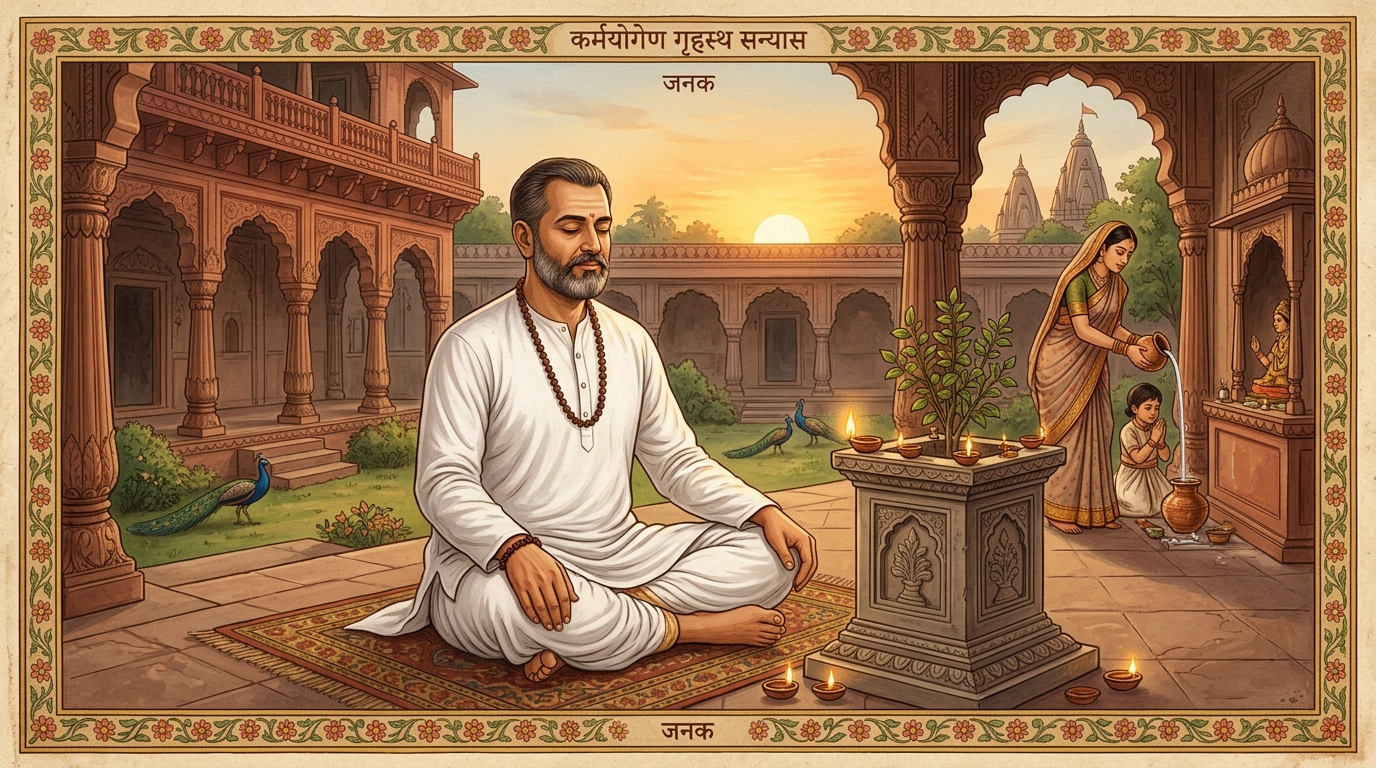
What is Grihastha Sannyas: Inner Renunciation for Householders?
Sacred essence, spiritual foundation, and scriptural truth
Grihastha Sannyas is the practical spiritual discipline of practicing radical inner renunciation while fulfilling worldly duties as a parent, spouse, and professional. True renunciation is not about running away to mountain caves or deserting dependent children; it is the mastery of living in the world without letting the world take ownership of your heart. Inspired by King Janaka, Sant Eknath, and the Karma Yoga teachings of Lord Krishna in the Bhagavad Gita, this path reveals how everyday household chores can become an altar of liberation.
Why is Grihastha Sannyas: Inner Renunciation for Householders Practiced?
Core spiritual purposes, inner purification, and consciousness evolution
Mental Stillness & Focus
Daily japa and meditative contemplation calm wandering thoughts, fostering sharp inward awareness and emotional balance.
Spiritual Fortitude & Energy Balance
Authentic sacred kavacha and nyasa practices protect subtle vitality from negative inclinations, fear, and distraction.
Cultivation of Sattvic Discernment
Helps dissolve pride, resentment, and restlessness, strengthening humility, discernment, and spiritual surrender.
Inner Realization & Lineage Grace
Not an outward exhibition, but an inward journey toward self-realization sheltered under authentic monastic lineage guidance.
Spiritual Significance & Philosophy
Philosophical essence and the science of internal transformation
“The significance of Grihastha Sannyas is that it preserves civilization while achieving the highest spiritual liberation. The Vedic scriptures declare: Just as all rivers find their final resting place in the ocean, so do all other three Ashramas find their sustenance in the householder. If every good person abandoned their family to wander in forests, society would collapse into lawless chaos; schools would close, children would grow up without moral grounding, and wandering monks would starve because there would be no one left to provide alms. The householder who masters inner non-attachment becomes the pillar upholding the world. The ancient sage King Janaka ruled a vast kingdom, wore royal silks, commanded armies, and managed immense treasury wealth, yet great forest hermits walked hundreds of miles to sit at his feet and learn pure detachment. Sannyas is an inner condition of the mind, not a piece of orange fabric.”
Who is This Sadhana For?
Eligibility criteria, seeker temperament, and prerequisite guidance
Individuals seeking daily focus, spiritual discipline, and quiet inward balance without complex rituals.
Practitioners balancing work, family, and social obligations while following a pure satvik spiritual path.
Dedicated practitioners who have mastered basic disciplines and wish to undertake formal anusthana under Guru Diksha.
Importance of Lineage Grace & Approval
Tantrik, Mahavidya, and advanced dhyana disciplines should not be initiated whimsically without lineage permission and proper understanding.
Who Should Take Lineage Guidance First?
Lineage Principle: Practice preserves sanctity and protects seekers when guided authentically
Historical Origins & Guru Parampara
Authentic scriptural foundation and unbroken monastic transmission
Traditional Origins
Scriptural Authority
Monastic Lineage Shelter
Guru Ji advises that treating your spouse with patience when they are angry is a higher sadhana than sitting cross-legged for hours on a tiger skin. When you wash the dishes, do not slam them in frustration; wash each plate with care as if you were washing the sacred utensils of the temple. Let your love for your children be free from suffocating ownership. Guide them with moral integrity, teach them to respect elders and nature, and release them to fulfill their destiny without demanding that they live out your unfulfilled ambitions.
Preparation & Sacred Disciplines
Essential guidelines, satvik habits, and sanctum preparations
Sanctifying the Home Corner
Recommended
Mutual Spousal Understanding
Recommended
Financial Transparency
Recommended
Cultivating Morning Solitude
Recommended
Simplifying Material Desires
Recommended
Daily Sankalpa of Offering
Recommended
Practice Progression & Stages
Systematic pathway from preliminary understanding to final sanctum offering
Stage 1: Sakama to Nishkama (Desire to Duty)
The seeker stops demanding selfish emotional payoffs from family and performs duties simply because it is righteous to do so.
Stage 2: Titiksha (Equanimity in Friction)
The practitioner stops reacting with hot temper to family misunderstandings, viewing domestic friction as sandpaper that smooths the ego.
Stage 3: Ishvara Pranidhana (Living as a Trustee)
The deep psychological shift occurs where my family and my bank balance are perceived as belonging solely to God.
Stage 4: Jivanmukta Grihastha (Living Free at Home)
The highest state where the seeker experiences continuous bliss and oneness while managing household tasks with effortless grace.
Daily Practice Discipline & Routine
Sanctum steadfastness: One Time, One Altar, and Inner Purity
Honest Livelihood (Dharmic Artha)
Dashamsha Seva (Sacred Tithing)
Patience in Conflict (Kshama)
Digital Restraint at Home
Sattvic Kitchen Discipline
Nightly Detachment Surrender
Common Mistakes & Sacred Cautions
Safeguarding seekers against mispronunciation, haste, and unauthorized practices
Neglecting your spouse and children while claiming to be a great yogi.
Correct Lineage Guidance: Shower your family with patience, listening, and affection. God smiles through their happy faces.
Acting like an angry critic at home and judging everyone for not being spiritual enough.
Correct Lineage Guidance: Inspire by gentle example, sweetness, and humble service, not by preaching or scolding.
Quitting your job without adequate savings under the illusion that God will deliver cash.
Correct Lineage Guidance: Work hard with your own hands. Earn your bread honestly and share with those in need.
Bringing unresolved office anger into the dinner conversation with family.
Correct Lineage Guidance: Pause at the doorway for ten seconds before entering your house. Drop work stress outside the threshold.
Giving away children school tuition money to self-styled godmen.
Correct Lineage Guidance: Secure your family basic security first. Donate only surplus discretionary savings.
Authentic Questions Asked by Seekers
Direct, practical answers grounded in verified tradition and authentic lineage wisdom
Frequently Asked Questions
Authentic answers to common queries regarding initiation, timing, and practice
A regular householder believes: This is my house, these are my children, and I must control everything. A Grihastha Sannyasi says: This is God house, these are God children, and I am grateful to serve them as a humble caretaker.
Related Sacred Sadhanas
Connected disciplines within this lineage and spiritual tradition
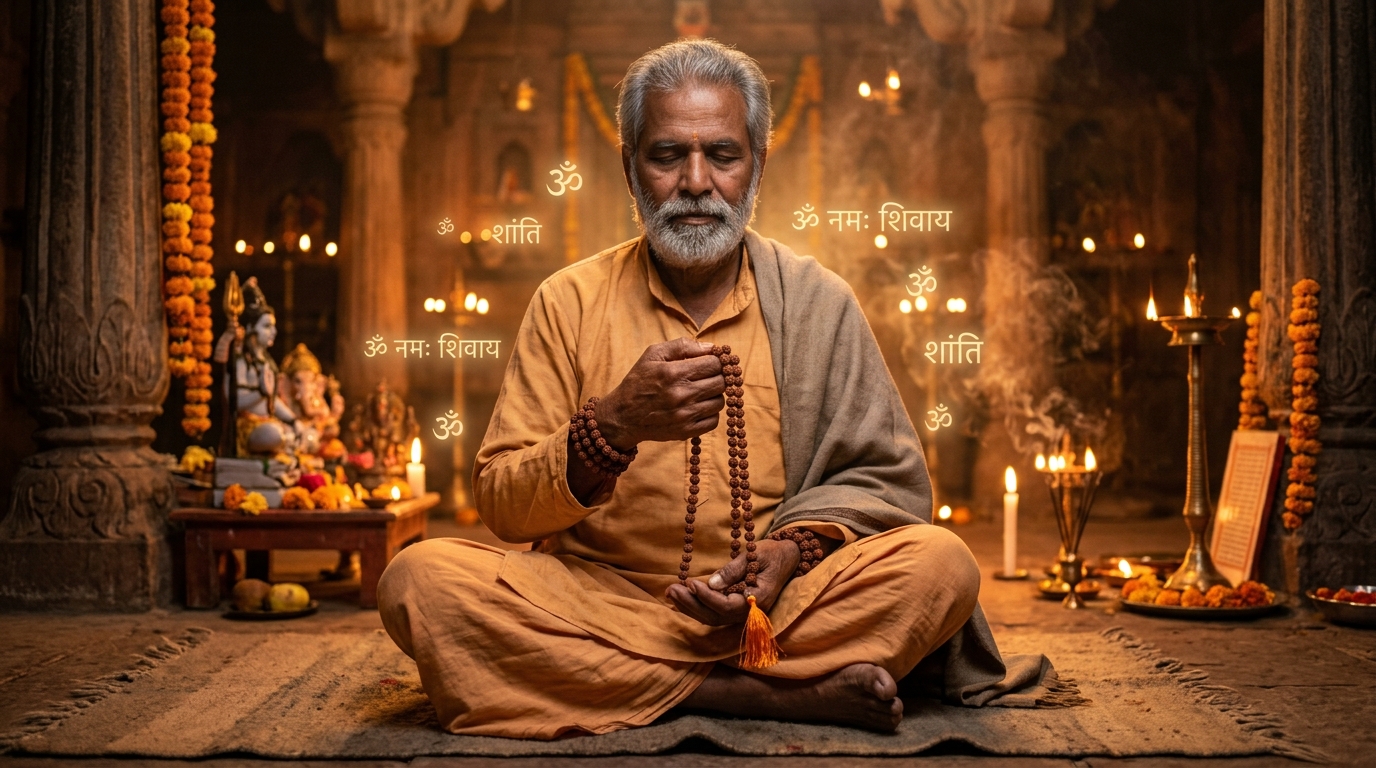


Sacred Essentials & Sanctum Items
Consecrated items traditionally used to support meditation, focus, and sanctum discipline
Use of Mala, Yantra, Kit or other materials can vary by practice. Follow the guidance given for your Sadhana.
Consecrated Haldi / Tulsi Japa Mala
108 knotted beads consecrated according to Vedic rites.
Handcrafted Copper Yantra Plate
Sacred geometric plate for sanctum meditation and focus.
Pure Woolen Meditation Asana
Traditional insulation mat to preserve spiritual energy.
Ask About This Sacred Item
Inquire with the sanctum team regarding consecration, authenticity, or practice usage.
