
Panchamukhi Hanuman Sadhana
The protective and strength-bestowing spiritual discipline invoking the five divine visages of Lord Hanuman across all five quarters.
Who is Shri Panchamukhi Hanuman Ji?
The Five-Faced Protector Dispelling Planetary Afflictions & Negative Forces
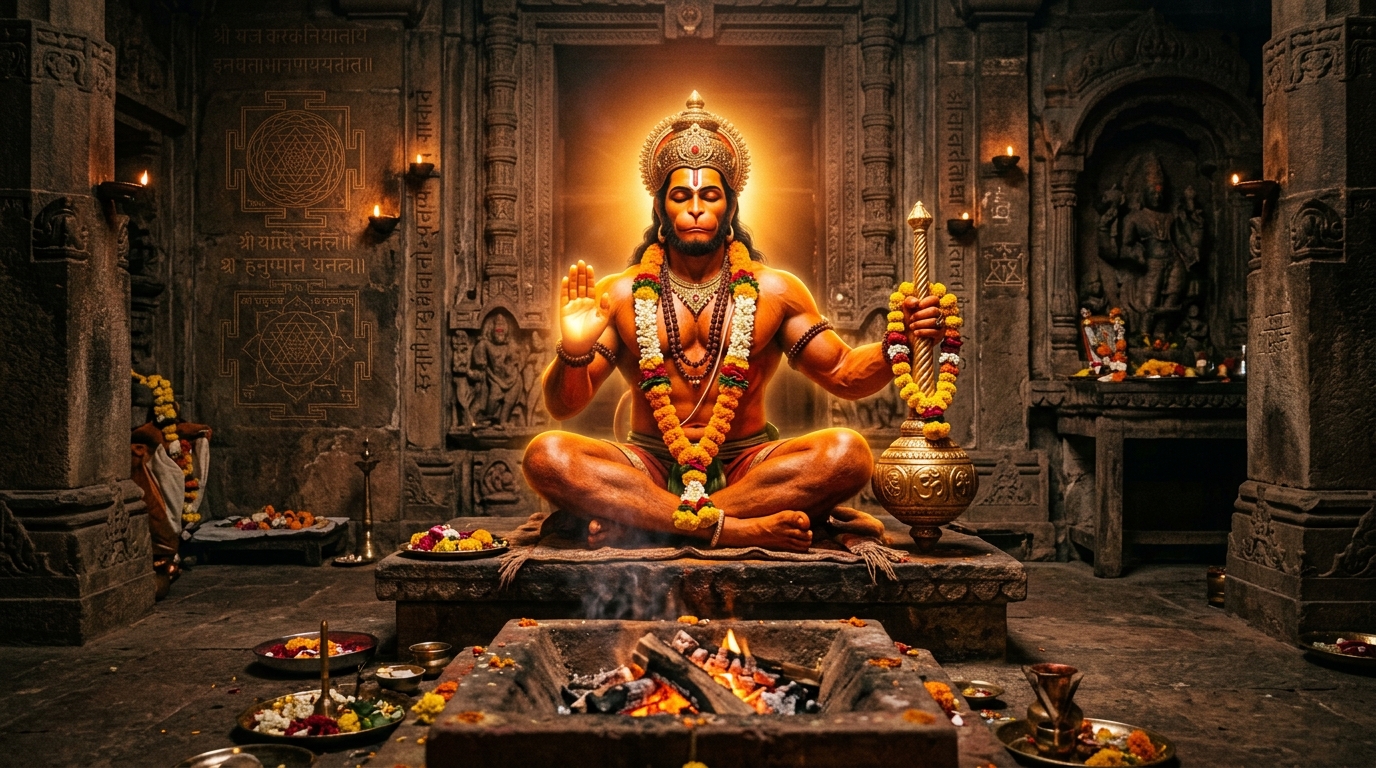
Shri Panchamukhi Hanuman is the wondrous five-faced manifestation of the eleventh Rudra avatar, revealed in Patala Loka to extinguish the five lamps of the demon Ahiravana simultaneously and rescue Shri Rama and Lakshmana. The five divine faces—Hanuman (East, pure devotion and monkey face), Narasimha (South, fearless protection and lion face), Garuda (West, poison dissipation and eagle face), Varaha (North, wealth and victory, boar face), and Hayagriva (Skyward, supreme intellect and horse face)—constitute an impenetrable fortress of spiritual protection.
Worshipping Shri Panchamukhi Hanuman dissolves deep-seated planetary afflictions (especially Saturn's Sade Sati and Mars Manglik Doshas), removes nocturnal fears, dispels negative entities, and infuses the devotee with heroic courage (Veeratva) and unshakeable bhakti.
What is Panchamukhi Hanuman Sadhana?
Sacred essence, spiritual foundation, and scriptural truth
The protective and strength-bestowing spiritual discipline invoking the five divine visages of Lord Hanuman across all five quarters.
Panchamukhi Hanuman Sadhana is the revered practice of worshipping Lord Hanuman in his awe-inspiring five-headed manifest form (Hanuman, Narasimha, Garuda, Varaha, and Hayagriva).
As revealed in traditional Agamas, each face governs a specific realm of protection and inner mastery, dismantling fear, negativity, and confusion from the life of the practitioner.
Why is Panchamukhi Hanuman Sadhana Practiced?
Core spiritual purposes, inner purification, and consciousness evolution
Mental Stillness & Focus
Daily japa and meditative contemplation calm wandering thoughts, fostering sharp inward awareness and emotional balance.
Spiritual Fortitude & Energy Balance
Authentic sacred kavacha and nyasa practices protect subtle vitality from negative inclinations, fear, and distraction.
Cultivation of Sattvic Discernment
Helps dissolve pride, resentment, and restlessness, strengthening humility, discernment, and spiritual surrender.
Inner Realization & Lineage Grace
Not an outward exhibition, but an inward journey toward self-realization sheltered under authentic monastic lineage guidance.
Spiritual Significance & Philosophy
Philosophical essence and the science of internal transformation
“The five faces represent mastery over the five elements (Pancha Mahabhutas) and transformation of instincts into pure spiritual willpower.”
Who is This Sadhana For?
Eligibility criteria, seeker temperament, and prerequisite guidance
Individuals seeking daily focus, spiritual discipline, and quiet inward balance without complex rituals.
Practitioners balancing work, family, and social obligations while following a pure satvik spiritual path.
Dedicated practitioners who have mastered basic disciplines and wish to undertake formal anusthana under Guru Diksha.
Importance of Lineage Grace & Approval
Tantrik, Mahavidya, and advanced dhyana disciplines should not be initiated whimsically without lineage permission and proper understanding.
Who Should Take Lineage Guidance First?
Lineage Principle: Practice preserves sanctity and protects seekers when guided authentically
Historical Origins & Guru Parampara
Authentic scriptural foundation and unbroken monastic transmission
Traditional Origins
Scriptural Authority
Monastic Lineage Shelter
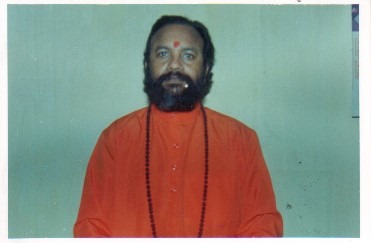
Pujya Guru Ji teaches that spiritual practice without surrender becomes mere mental gymnastics. When approached with a clean heart, reverence for the lineage, and daily discipline, this sacred vidya becomes an illuminated bridge to inner peace.
Preparation & Sacred Disciplines
Essential guidelines, satvik habits, and sanctum preparations
Use pure red sandalwood (Rakta Chandana) or coral mala.
Mandatory RuleUse pure red sandalwood (Rakta Chandana) or coral mala.
Observe strict celibacy throughout the practice cycle.
Mandatory RuleObserve strict celibacy throughout the practice cycle.
Practice Progression & Stages
Systematic pathway from preliminary understanding to final sanctum offering
Brahmacharya & Sankalpa
Day 1 - 2Take solemn inner vow of mental purity, truth, and dedication to Lord Rama.
Panchamukhi Kavach & Japa
Day 3 - 7Recite the protective kavach followed by regulated japa on coral or red sandalwood beads.
Deepening of Courage & Seva
Day 8 - 11Practice fearless concentration in silence and perform selfless seva for the needy.
Daily Practice Discipline & Routine
Sanctum steadfastness: One Time, One Altar, and Inner Purity
Strict Brahmacharya Vow
Red / Saffron Asana & Ghee Lamp
Common Mistakes & Sacred Cautions
Safeguarding seekers against mispronunciation, haste, and unauthorized practices
Displaying aggression, anger, or pride after practice.
Correct Lineage Guidance: True strength produces gentleness and humility, not belligerence.
Authentic Questions Asked by Seekers
Direct, practical answers grounded in verified tradition and authentic lineage wisdom
Frequently Asked Questions
Authentic answers to common queries regarding initiation, timing, and practice
They face East (Hanuman - purity), South (Narasimha - fearlessness), West (Garuda - poison removal), North (Varaha - prosperity), and Skyward (Hayagriva - wisdom).
Related Sacred Sadhanas
Connected disciplines within this lineage and spiritual tradition
Sacred Essentials & Sanctum Items
Consecrated items traditionally used to support meditation, focus, and sanctum discipline
Use of Mala, Yantra, Kit or other materials can vary by practice. Follow the guidance given for your Sadhana.
Panchamukhi Hanuman Raksha Kit
Consecrated materials for Panchamukhi Hanuman sankalpa and daily discipline.
Ask About This Sacred Item
Inquire with the sanctum team regarding consecration, authenticity, or practice usage.
