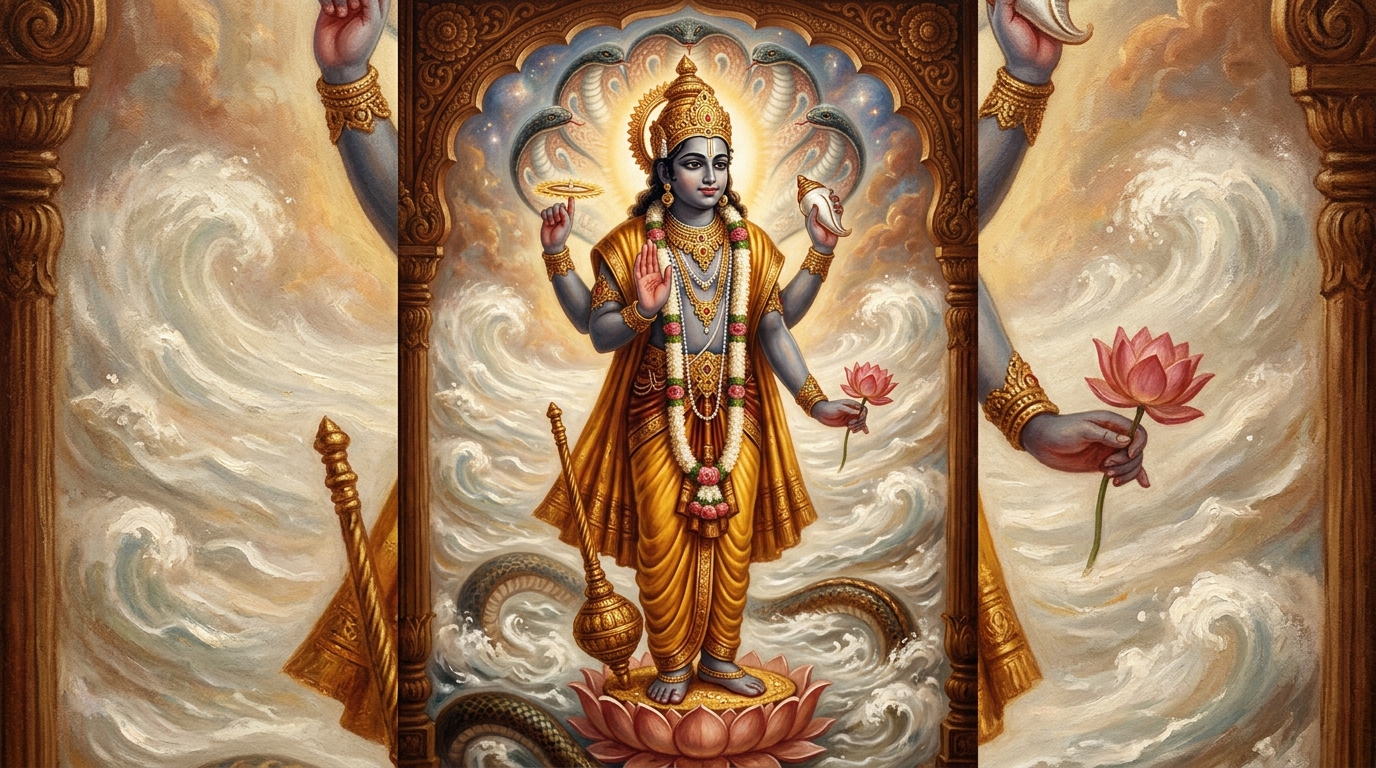
Shri Rama Raksha Stotram is an immortal Sanskrit protective shield (Kavach) revealed to Sage Budha Kaushika by Lord Shiva in a dream. Consisting of 38 complete units spanning formal Viniyoga, contemplative Dhyana, detailed anatomical limb-by-limb protection (Anga Raksha), and profound spiritual fruits (Phala-Shruti), it surrounds the devotee’s mind and body with the sacred vibration of Sri Rama’s names.
12 mins chanting
38 Protective Shlokas
Classical Sanskrit Protective Meter
Text review in progress
Shri Rama Raksha Stotram is an immortal Sanskrit protective shield (Kavach) revealed to Sage Budha Kaushika by Lord Shiva in a dream. Consisting of 38 complete units spanning formal Viniyoga, contemplative Dhyana, detailed anatomical limb-by-limb protection (Anga Raksha), and profound spiritual fruits (Phala-Shruti), it surrounds the devotee’s mind and body with the sacred vibration of Sri Rama’s names.
Devotional Notice:
This sacred protective Kavach is presented for sincere devotional contemplation, inner fortitude, and spiritual study from attested recensions with accurate Sanskrit shlokas and verse-by-verse bilingual meanings. Avhigat Akhara presents authentic textual editions without any claims of supernatural cures, talismanic miracles, or commercialized promises; true spiritual protection arises from selfless devotion (Bhakti), ethical conduct (Dharma), and inner discipline (Sadhana).
Hindi Meaning:
ॐ, इस श्रीरामरक्षा स्तोत्र मंत्र के ऋषि बुधकौशिक हैं, इसके अधिष्ठातृ देवता श्री सीता-रामचंद्र हैं, इसका छंद अनुष्टुप है, शक्ति माता जानकी (सीता) हैं, कीलक श्री हनुमान जी हैं, तथा भगवान श्री सीतारामचंद्र जी की प्रसन्नता हेतु इस पाठ में इसका विनियोग (संकल्प) किया जाता है।
English Meaning:
Om. The seer of this Shri Rama Raksha Stotra mantra is Sage Budha Kaushika; the presiding deity is Shri Sita-Ramachandra; the poetic meter is Anushtup; the primal energy (Shakti) is Mother Sita; the protective pin (Kilakam) is Lord Hanuman; and the formal recitation is dedicated solely for the pleasing grace of Shri Sita-Ramachandra.
Viniyoga establishes the lineage, presiding energies, and divine intention before commencing recitation.
Unit 2 — Dhyanam (Contemplative Visualization of Lord Rama)
Hindi Meaning:
जिनकी भुजाएं घुटनों तक लंबी हैं, जिन्होंने धनुष-बाण धारण किया हुआ है, जो पद्मासन पर विराजमान हैं, जिन्होंने पीतांबर धारण किया है, जिनके नेत्र नवीन कमल की पंखुड़ियों के समान प्रफुल्लित और सुंदर हैं, जो परम प्रसन्नचित्त हैं, जिनके वाम अंक में विराजमान माता सीता के मुखकमल पर जिनकी कृपा-दृष्टि टिकी हुई है, जिनका श्याम वर्ण नवीन मेघ के समान कांतिमान है और जो विभिन्न आभूषणों तथा जटाओं के मुकुट से शोभित हैं—उन करुणामय भगवान रामचंद्र का हम ध्यान करते हैं।
English Meaning:
One should meditate upon Lord Ramachandra, whose arms reach down to His knees, who holds the divine bow and arrows, who sits in the steadfast lotus posture (Padmasana), clad in radiant yellow garments, whose joyful eyes rival the petals of a fresh blooming lotus, whose loving gaze rests upon the lotus countenance of Mother Sita seated upon His left lap, whose complexion glistens like a rain-bearing cloud, and who is adorned with celestial ornaments and a crown of sacred matted locks.
The Dhyana shloka visualizes Sri Rama’s balance of supreme power, serenity, and compassion.
Unit 3 — Shloka 1: The Boundless Glory of Sri Rama’s Character
#3 / 38
चरितं रघुनाथस्य शतकोटिप्रविस्तरम् ।
एकैकमक्षरं पुंसां महापातकनाशनम् ॥ ३ ॥
Hindi Meaning:
भगवान श्री रघुनाथ जी का पावन चरित्र सौ करोड़ श्लोकों के समान अनंत विस्तार वाला है। इसका एक-एक अक्षर भी मनुष्यों के बड़े से बड़े पापों और संतापों को समूल नष्ट करने में समर्थ है।
English Meaning:
The sacred life and character of Lord Raghunatha is celebrated across a hundred crore verses in the celestial realms. Even a single syllable of His divine story possesses the power to obliterate the gravest of moral flaws and transgressions.
Contemplating even a single syllable of Rama’s virtues purifies the mind of negative tendencies.
Unit 4 — Shloka 2: Meditating upon the Lotus-Eyed Dark-Hued Lord
#4 / 38
ध्यात्वा नीलोत्पलश्यामं रामं राजीवलोचनम् ।
जानकीलक्ष्मणोपेतं जटामुकुटमण्डितम् ॥ ४ ॥
Hindi Meaning:
नीलकमल के समान श्याम वर्ण वाले, कमल-नयन, माता जानकी और भाई लक्ष्मण से सुशोभित तथा मस्तक पर जटाओं का मुकुट धारण किए हुए भगवान श्रीराम का ध्यान करके...
English Meaning:
Having meditated upon Lord Rama, who possesses the gentle dark hue of a blue lotus, with eyes like blooming lotuses, accompanied by Mother Janaki and brother Lakshmana, and crowned with regal ascetic matted locks...
Visualizing Rama with Sita and Lakshmana integrates righteousness, loving devotion, and detached service.
Unit 5 — Shloka 3: Beginning the All-Encompassing Armor
Hindi Meaning:
खड्ग, तरकश और धनुष-बाण से सुसज्जित, युद्ध हेतु तत्पर तथा कंगन बांधे हुए श्रीराम का स्मरण करते हुए बुद्धिमान पुरुष को समस्त पापों का नाश करने वाले और सभी शुभ कामनाओं को पूर्ण करने वाले इस श्रीरामरक्षा स्तोत्र का पाठ करना चाहिए।
English Meaning:
Armed with sword, quiver, and bow, fully girded for righteous defense and adorned with divine bracelets, let the discerning seeker recite this Rama Raksha Stotra, which destroys all impurities and bestows every noble aspiration.
The warrior imagery symbolizes inner readiness to conquer mental afflictions.
Unit 6 — Shloka 4: Protection of the Head and Forehead
#6 / 38
शिरो मे राघवः पातु भालं दशरथात्मजः ।
कौसल्येयो दृशौ पातु विश्वामित्रप्रियः श्रुती ॥ ६ ॥
Hindi Meaning:
रघुकुल तिलक श्री राघव मेरे सिर की रक्षा करें। राजा दशरथ के आत्मज मेरे भाल (ललाट) की रक्षा करें। माता कौसल्या के नंदन मेरे नेत्रों की रक्षा करें और महर्षि विश्वामित्र के प्रिय प्रभु मेरे कानों (श्रवणेंद्रिय) की रक्षा करें।
English Meaning:
May Raghava protect my head; may the son of Dasharatha protect my forehead; may the beloved child of Kausalya protect my eyes; and may the beloved of sage Vishvamitra protect my ears.
Protection commences at the head and sensory faculties, consecrating thought and hearing.
Unit 7 — Shloka 5: Protection of Nose, Mouth, Tongue, and Throat
Hindi Meaning:
यज्ञों की रक्षा करने वाले प्रभु मेरी नासिका की रक्षा करें। लक्ष्मण जी के वत्सल भ्राता मेरे मुख की रक्षा करें। समस्त विद्याओं के निधान श्रीराम मेरी जिह्वा की रक्षा करें और भरत जी द्वारा वंदित प्रभु मेरे कंठ की रक्षा करें।
English Meaning:
May the protector of sacred sacrifices guard my nose; may the loving brother of Lakshmana preserve my mouth; may the ocean of all knowledge protect my tongue; and may He who is revered by Bharata protect my throat.
Consecrating the mouth and throat purifies speech, infusing words with truth and kindness.
Unit 8 — Shloka 6: Protection of Shoulders, Arms, Hands, and Heart
Hindi Meaning:
दिव्य अस्त्र-शस्त्रों को धारण करने वाले प्रभु मेरे दोनों कंधों की रक्षा करें। शिवजी के धनुष को भंग करने वाले प्रभु मेरी दोनों भुजाओं की रक्षा करें। जानकीनाथ सीतापति मेरे दोनों हाथों की रक्षा करें और परशुराम जी के अहंकार को शांत करने वाले प्रभु मेरे हृदय की रक्षा करें।
English Meaning:
May He who wields celestial weapons protect my shoulders; may the breaker of Shiva’s mighty bow protect my arms; may the Lord of Sita protect my hands; and may the conqueror of Jamadagni’s son (Parashurama) protect my heart.
The arms represent righteous action, while the heart is consecrated as the sanctuary of pure love.
Unit 9 — Shloka 7: Protection of Midriff, Navel, Waist, and Loins
Hindi Meaning:
खर-दूषण का संहार करने वाले प्रभु मेरे उदर के मध्य भाग की रक्षा करें। ऋक्षराज जाम्बवान् के आश्रयदाता मेरी नाभि की रक्षा करें। सुग्रीव के स्वामी मेरी कटि (कमर) की रक्षा करें और पवनपुत्र हनुमान जी के स्वामी मेरी दोनों जांघों की रक्षा करें।
English Meaning:
May the slayer of Khara protect my midriff; may the refuge of Jambavan protect my navel; may the Lord of Sugriva protect my waist; and may the Master of Hanuman protect my loins.
The navel is the seat of vital prana, balanced through the protective grace of Sri Rama.
Unit 10 — Shloka 8: Protection of Thighs, Knees, Shins, and Feet
Hindi Meaning:
रघुकुलश्रेष्ठ श्रीराम मेरे दोनों उरुओं (जांघों) की रक्षा करें। समुद्र पर सेतु बांधने वाले प्रभु मेरे दोनों घुटनों की रक्षा करें। दशानन रावण का अंत करने वाले प्रभु मेरी पिंडलियों (जंघाओं) की रक्षा करें और विभीषण को लंका का ऐश्वर्य प्रदान करने वाले प्रभु मेरे दोनों चरणों की रक्षा करें।
English Meaning:
May the foremost of Raghus protect my thighs; may the architect of the oceanic bridge protect my knees; may the vanquisher of the ten-headed Ravana protect my shins; and may the bestower of royal sovereignty upon Vibhishana protect my feet.
With the feet protected, the devotee’s entire physical form is enveloped in the divine shield.
Unit 11 — Shloka 9: Protection of the Entire Body
#11 / 38
शिरसा पादपर्यन्तं सर्वं मे रघुनन्दनः ।
एतां रामबलोपेतां रक्षां यः सुकृती पठेत् ॥ ११ ॥
Hindi Meaning:
इस प्रकार सिर से लेकर पैरों तक मेरे संपूर्ण शरीर की रक्षा रघुनंदन श्रीराम करें। श्रीराम के अलौकिक बल से युक्त इस पावन रक्षा-स्तोत्र का जो भी पुण्यात्मा व्यक्ति पाठ करता है...
English Meaning:
May Raghunandana thus protect my entire being from the crown of my head to the soles of my feet. Whosoever of virtuous deeds recites this protective shield endowed with the divine strength of Sri Rama...
This verse consolidates the individualized anatomical protections into an indivisible shield.
Unit 12 — Shloka 10: Attainment of Longevity, Peace, and Victory
#12 / 38
स चिरायुः सुखी पुत्री विजयी विनयी भवेत् ।
पातालभूतलव्योमचारिणश्छद्मचारिणः ॥ १२ ॥
Hindi Meaning:
वह मनुष्य दीर्घायु, सुखी, योग्य संतान वाला, जीवन के धर्मयुद्ध में विजयी तथा नम्र (विनयशील) होता है। पाताल, पृथ्वी अथवा आकाश में विचरण करने वाली कपटी व अदृश्य आसुरी शक्तियां...
English Meaning:
He attains long life, enduring peace, worthy progeny, righteous victory, and noble humility. Negative invisible forces or deceitful entities roaming the netherworlds, the earth, or the skies...
Victory accompanied by humility ensures that spiritual elevation deepens modesty rather than pride.
Unit 13 — Shloka 11: Impotence of Negative Forces Against Rama’s Name
#13 / 38
न द्रष्टुमपि शक्तास्ते रक्षितं रामनामभिः ।
रामेति रामभद्रोति रामचन्द्रेति वा स्मरन् ॥ १३ ॥
Hindi Meaning:
वे कुटिल शक्तियां राम के पावन नामों से रक्षित उस साधक को आंख उठाकर देखने में भी समर्थ नहीं होतीं। जो मनुष्य "राम", "रामभद्र", अथवा "रामचंद्र" इन नामों का निरंतर स्मरण करता है...
English Meaning:
They are not even capable of gazing upon the one guarded by the sacred names of Sri Rama. Remembering continually the names: "Rama", "Ramabhadra", or "Ramachandra"...
Uttering Rama’s names forms a resilient spiritual aura dispelling debilitating fear and anxiety.
Unit 14 — Shloka 12: Freedom from Sin and Attainment of Inner Freedom
#14 / 38
नरो न लिप्यते पापैर्भुक्तिं मुक्तिं च विन्दति ।
जगज्जैत्रैकमन्त्रेण रामनाम्नाभिरक्षितम् ॥ १४ ॥
naro na lipyate pāpair-bhuktiṁ muktiṁ ca vindati |
jagaj-jaitraika-mantreṇa rāma-nāmnābhirakṣitam || 14 ||
Hindi Meaning:
वह मनुष्य संसार के पापों और मलिनताओं से लिप्त नहीं होता, और वह इस लोक में धर्मसम्मत सुख (भुक्ति) तथा अंततः परम मोक्ष (मुक्ति) दोनों को प्राप्त करता है। संपूर्ण जगत को जीतने वाले इस एकमात्र समर्थ मंत्र "राम नाम" द्वारा रक्षित...
English Meaning:
Such a person remains untainted by worldly impurities, enjoying both wholesome fulfillment in this life and final spiritual liberation. Guarded by the supreme world-conquering mantra of Rama’s holy name...
The verse balances ethical engagement in worldly duties (bhukti) with ultimate transcendence (mukti).
Unit 15 — Shloka 13: The Adamantine Armor in the Throat
#15 / 38
यः कण्ठे धारयेत्तस्य करस्थाः सर्वसिद्धयः ।
वज्रपञ्जरनामेदं यो रामकवचं पठेत् ॥ १५ ॥
Hindi Meaning:
जो साधक इस स्तोत्र को कंठस्थ कर लेता है (या इसका नित्य पाठ करता है), समस्त आत्मिक सिद्धियां उसकी हथेलियों में आ जाती हैं। "वज्रपंजर" नामक इस अभेद्य राम-कवच का जो नित्य पाठ करता है...
English Meaning:
Whosoever holds this sacred hymn in their throat (memorizing and reciting it with feeling), all spiritual accomplishments rest within the palm of their hand. Whosoever recites this Rama Kavach known as the impenetrable "Adamantine Cage" (Vajra Panjara)...
Vajra Panjara signifies an adamantine enclosure of truth that no negative doubt can penetrate.
Unit 16 — Shloka 14: Unbroken Authority and Auspicious Triumph
#16 / 38
अव्याहताज्ञः सर्वत्र लभते जयमङ्गलम् ।
आदिष्टवान् यथा स्वप्ने रामरक्षामिमां हरः ॥ १६ ॥
Hindi Meaning:
उसकी आज्ञा कहीं बाधित नहीं होती और वह सर्वत्र विजय और मंगल को प्राप्त करता है। देवाधिदेव भगवान शिव ने स्वप्न में इस श्रीरामरक्षा स्तोत्र का जैसा आदेश दिया था...
English Meaning:
His righteous intentions meet no obstruction anywhere, and he attains auspicious triumph at all times. Just as Lord Shiva commanded and revealed this Rama Raksha in a dream...
Lord Shiva transmitting Sri Rama’s praise highlights the profound unity between Shiva and Vishnu.
Unit 17 — Shloka 15: Inscription by Sage Budha Kaushika
#17 / 38
तथा लिखितवान् प्रातः प्रबुद्धो बुधकौशिकः ।
आरामः कल्पवृक्षाणां विरामः सकलापदाम् ॥ १७ ॥
Hindi Meaning:
प्रातःकाल नींद से जागने पर महर्षि बुधकौशिक ने उसे अक्षरशः वैसा ही लिपिबद्ध कर दिया। जो श्रीराम कल्पवृक्षों के उद्यान के समान आनंद देने वाले हैं और समस्त विपत्तियों को शांत (विराम) करने वाले हैं...
English Meaning:
Awakening in the morning with purified awareness, Sage Budha Kaushika inscribed it down precisely as received. Lord Rama, who is like a tranquil grove of wish-yielding Kalpavriksha trees and the final cessation of all calamities...
Writing down the dream upon waking demonstrates unclouded meditative clarity and fidelity.
Unit 18 — Shloka 16: Ornament of the Three Worlds and Sovereign
#18 / 38
अभिरामस्त्रिलोकानां रामः श्रीमान् स नः प्रभुः ।
तरुणौ रूपसम्पन्नौ सुकुमारौ महाबलौ ॥ १८ ॥
Hindi Meaning:
जो तीनों लोकों में सबसे सुंदर व प्रिय हैं, वे शोभासंपन्न श्री रामचंद्र जी हमारे स्वामी हैं। जो दोनों भाई (श्रीराम और लक्ष्मण) नित्य तरुण अवस्था वाले, परम रूपवान, कोमल अंगों वाले और महाबली हैं...
English Meaning:
Lord Rama, the delight of all three worlds, endowed with divine splendor, is our supreme Master. Both divine brothers, ever youthful, endowed with exquisite beauty, delicate in grace yet possessed of immense valor...
Rama exemplifies the sublime harmony of gentleness and invincible strength.
Unit 19 — Shloka 17: Lotus-Eyed Ascetics in Deerskin Raiment
#19 / 38
पुण्डरीकविशालाक्षौ चीरकृष्णाजिनाम्बरौ ।
फलमूलांशिनौ दान्तौ तापसौ ब्रह्मचारिणौ ॥ १९ ॥
Hindi Meaning:
जिनके विशाल नेत्र खिले हुए श्वेत कमल के समान हैं, जिन्होंने वल्कल वस्त्र और कृष्णमृग का चर्म धारण किया है, जो वन के कंद-मूल और फलों का सात्विक आहार करते हैं, जो इंद्रियों को वश में रखने वाले (दान्त), तपस्वी और ब्रह्मचारी हैं...
English Meaning:
Having expansive eyes like blooming white lotuses, clad in sacred bark garments and dark antelope hide, subsisting upon fruits and roots, with senses perfectly mastered, embodying austere asceticism and divine celibacy...
Even in forest exile, Rama and Lakshmana embodied the peak of discipline and simplicity.
Unit 20 — Shloka 18: Sons of Dasharatha and Valiant Protectors
Hindi Meaning:
महाराज दशरथ के वे दोनों सुपुत्र, भाई श्रीराम और लक्ष्मण, जो समस्त प्राणियों को शरण देने में समर्थ और संसार के सभी धनुर्धारियों में सर्वोपरि श्रेष्ठ हैं...
English Meaning:
Those two sons of King Dasharatha, brothers Rama and Lakshmana, who are the sanctuary of all living beings and the foremost among all masters of the bow...
Offering unconditional shelter (sharanagati) to all seekers is the hallmark of Sri Rama’s character.
Unit 21 — Shloka 19: Destroyers of Demonic Forces in Janasthana
#21 / 38
रक्षःकुलनिहन्तारौ त्रायेतां नो रघूत्तमौ ।
आत्तसज्यधनुषाविषुस्पृशावक्षयाशुगनिषङ्गसङ्गिनौ ॥ २१ ॥
rakṣaḥ-kula-nihantārau trāyetāṁ no raghūttamau |
ātta-sajya-dhanuṣāv-iṣu-spṛśāv-akṣayāśuga-niṣaṅga-saṅginau || 21 ||
Hindi Meaning:
राक्षसों के कुल का संहार करने वाले वे दोनों रघुकुलश्रेष्ठ हमारी रक्षा करें। जिन्होंने प्रत्यंचा चढ़े धनुष उठा रखे हैं, जिनके हाथ बाणों का संधान करने को तत्पर हैं और जिनकी पीठ पर कभी समाप्त न होने वाले बाणों के तरकश बंधे हैं...
English Meaning:
May the two foremost scions of the Raghu lineage, destroyers of demonic oppressors, protect us! With stringed bows in hand, touching their shafts, equipped with quivers containing inexhaustible divine arrows...
Inexhaustible quivers symbolize that divine justice and protective energy never run dry.
Unit 22 — Shloka 20: Ever Ready Warriors Marching Ahead
#22 / 38
रक्षणाय मम रामलक्ष्मणावग्रतः पथि सदैव गच्छताम् ।
संनद्धः कवची खड्गी चापबाणधरो युवा ॥ २२ ॥
Hindi Meaning:
मेरी रक्षा के लिए श्रीराम और लक्ष्मण मार्ग में सदा मेरे आगे-आगे चलें। जो युद्ध हेतु तत्पर, कवचधारी, खड्गधारी, धनुष-बाण लिए हुए तरुण योद्धा हैं...
English Meaning:
For my steadfast defense, may Rama and Lakshmana forever walk ahead of me on every pathway of life—alert, armor-clad, sword-bearing, armed with bow and arrows, in youthful vigor...
The Lord walking ahead signifies continual divine guidance through the perils of life.
Unit 23 — Shloka 21: Preserving the Devotee’s Vital Breaths
Hindi Meaning:
हमारे मन के पवित्र मनोरथों को पूर्ण करते हुए चलते हुए श्रीराम, भाई लक्ष्मण के साथ हमारी रक्षा करें। वे राम, जो राजा दशरथ के पुत्र, परम शूरवीर, लक्ष्मण द्वारा अनुगमित और असीम बलशाली हैं...
English Meaning:
May Lord Rama, together with Lakshmana, protect our heartfelt pure aspirations as we tread onward—Rama, the valiant son of Dasharatha, loyally accompanied by Lakshmana, endowed with immense strength...
Hindi Meaning:
जो ककुत्स्थ कुल में उत्पन्न, पूर्ण पुरुषोत्तम, कौसल्यानंदन, रघुकुलश्रेष्ठ, वेदांत (उपनिषदों) द्वारा जानने योग्य परम तत्व, यज्ञों के स्वामी (यज्ञेश) और सनातन पुराण-पुरुषोत्तम हैं...
English Meaning:
The scion of Kakutstha, the complete supreme Being, the joy of Kausalya, the crest-jewel of the Raghus, who is known through the Vedanta, the Lord of sacred sacrifices, and the primeval supreme Person...
Designating Rama as Vedanta-vedya affirms Him as the transcendental Brahman of the Upanishads.
Unit 25 — Shloka 23: Beloved of Janaki and Hero of Unrivalled Valor
#25 / 38
जानकीवल्लभः श्रीमानप्रमेयपराक्रमः ।
इत्येतानि जपन्नित्यं मद्भक्तः श्रद्धयान्वितः ॥ २५ ॥
Hindi Meaning:
जो माता जानकी के प्राणप्रिय वल्लभ, परम श्रीसंपन्न और अपरिमित (अतुलनीय) पराक्रम वाले हैं—इन नामों का जो मेरा भक्त नित्य श्रद्धापूर्वक जप करता है...
English Meaning:
The beloved Lord of Janaki, radiant with divine grace, of measureless prowess—whosoever of my devotees constantly chants these sacred names with deep faith...
Regular recitation of these names stabilizes the subconscious with spiritual resolve.
Unit 26 — Shloka 24: Fruits Exceeding the Ashvamedha Sacrifice
#26 / 38
अश्वमेधाधिकं पुण्यं सम्प्राप्नोति न संशयः ।
रामान्नास्ति परो देवो रामं भजामि सततं ॥ २६ ॥
Hindi Meaning:
वह निःसंदेह अश्वमेध यज्ञ से भी अधिक महान आध्यात्मिक पुण्य को प्राप्त करता है। भगवान श्रीराम से बढ़कर कोई दूसरा देव नहीं है, इसलिए मैं निरंतर उन्हीं का भजन करता हूँ।
English Meaning:
He undoubtedly attains spiritual merit exceeding even the solemn Ashvamedha sacrifice. There is no deity higher than Lord Rama; therefore, I worship and adore Rama perpetually.
Inner recitation of divine names transcends complex rituals in accessibility and purity.
Unit 27 — Shloka 25: Supreme Salutations Across the Eight Grammatical Cases
#27 / 38
रामो राजमणिः सदा विजयते रामं रमेशं भजे
रामेणाभिहता निशाचरचमू रामाय तस्मै नमः ।
रामान्नास्ति परायणं परतरं रामस्य दासोऽस्म्यहं
रामे चित्तलयः सदा भवतु मे भो राम मामुद्धर ॥ २७ ॥
Hindi Meaning:
राजाओं में श्रेष्ठ मुकुटमणि श्रीराम सदा विजय प्राप्त करते हैं। मैं उन लक्ष्मीपति (रमेश) श्रीराम का भजन करता हूँ। जिनके द्वारा राक्षसों की सेना नष्ट कर दी गई, उन श्रीराम को मेरा सादर नमन है। श्रीराम से बढ़कर कोई परम आश्रय नहीं है, मैं उन्हीं श्रीराम का अनन्य दास हूँ। मेरा चित्त सदा श्रीराम में ही लीन रहे। हे श्रीराम! आप संसार-सागर से मेरा उद्धार कीजिए।
English Meaning:
Rama, the jewel among kings, is ever victorious; I worship Rama, the Lord of Ramaa (Lakshmi). By Rama was the army of night-prowling demons annihilated; unto that Rama I offer salutations. There is no higher sanctuary than Rama; I am Rama’s humble servant. May my mind forever dissolve in absorption within Rama. O Rama! Deliver me from the ocean of worldly transience!
This sublime stanza traverses all eight Sanskrit grammatical cases, surrendering every facet of existence to Rama.
Unit 28 — Shloka 26: The Delighting Joy of Sri Rama’s Name
#28 / 38
श्रीराम राम रमेति रमे रामे मनोरमे ।
सहस्रनाम तत्तुल्यं रामनाम वरानने ॥ २८ ॥
Hindi Meaning:
भगवान शिव माता पार्वती से कहते हैं: हे सुमुखि वरानने! मैं "श्रीराम, राम, राम" इस प्रकार मन को आनंद देने वाले राम नाम में निरंतर रमण करता हूँ। यह एक पावन "राम" नाम विष्णु के सहस्र (एक हजार) नामों के समान फलदायी है।
English Meaning:
Lord Shiva said unto Mother Parvati: O beautiful-faced one, I ever delight in the charming name of Rama, chanting "Shri Rama, Rama, Rama". That single holy name of Rama is equal in spiritual potency to the entire thousand names (Vishnu Sahasranama).
This famous dialogue between Shiva and Parvati highlights the sublime efficacy of chanting Rama’s name.
Unit 29 — Shloka 27: Salutations to the Divine Family and Lotus Lotus-Feat
#29 / 38
माता रामो मत्पिता रामचन्द्रः
स्वामी रामो मत्सखा रामचन्द्रः ।
सर्वस्वं मे रामचन्द्रो दयालु-
र्नान्यं जाने नैव जाने न जाने ॥ २९ ॥
Hindi Meaning:
श्रीराम ही मेरी माता हैं, रामचंद्र ही मेरे पिता हैं, श्रीराम ही मेरे स्वामी हैं और रामचंद्र ही मेरे सखा (मित्र) हैं। दयालु रामचंद्र ही मेरे सर्वस्व हैं, उनके अतिरिक्त मैं किसी अन्य को नहीं जानता, सचमुच नहीं जानता, बिल्कुल नहीं जानता।
English Meaning:
Rama is my mother, Ramachandra is my father; Rama is my master, and Ramachandra is my intimate friend. The compassionate Ramachandra is my all in all; other than Him I know no one else, truly I know none other at all.
This verse expresses total emotional refuge, finding in Rama the fulfillment of all worldly relationships.
Unit 30 — Shloka 28: Salutation to Raghunatha and Sitapati
#30 / 38
दक्षिणे लक्ष्मणो यस्य वामे च जनकात्मजा ।
पुरतो मारुतिर्यस्य तं वन्दे रघुनन्दनम् ॥ ३० ॥
Hindi Meaning:
जिनके दाहिने ओर लक्ष्मण जी, बायीं ओर जनकनंदिनी माता सीता और सामने पवनपुत्र हनुमान जी विराजमान रहते हैं, उन रघुनंदन श्रीराम की मैं वंदना करता हूँ।
English Meaning:
He on whose right stands Lakshmana, on whose left is Janaka’s daughter Sita, and before whom stands Maruti (Hanuman)—unto that Raghunandana I offer reverent homage.
This visualizes the divine court of Rama (Rama Darbar), integrating service, surrender, and grace.
Unit 31 — Shloka 29: Praise of the Ocean of Compassion
Hindi Meaning:
जो संपूर्ण संसार को आनंद देने वाले हैं, युद्धभूमि में धैर्यवान और पराक्रमी हैं, कमल के समान सुंदर नेत्रों वाले हैं, रघुकुल के स्वामी हैं, साक्षात् करुणा के स्वरूप और दया के सागर हैं—उन भगवान श्रीरामचंद्र की मैं शरण ग्रहण करता हूँ।
English Meaning:
I take refuge in Lord Ramachandra, the delight of the universe, resolute and steadfast on the battlefield, lotus-eyed, sovereign of the Raghu dynasty, the very embodiment of compassion and fountainhead of mercy.
Conjoining battlefield valor with boundless mercy underscores that power finds nobility only through compassion.
Unit 32 — Shloka 30: Salutation to the Messenger of Sri Rama
Hindi Meaning:
जिनका वेग मन के समान तीव्र और वायु के सदृश गतिमान है, जिन्होंने अपनी समस्त इंद्रियों को जीत लिया है, जो बुद्धिमानों में सर्वश्रेष्ठ हैं, पवनपुत्र हैं, वानर सेना के प्रमुख हैं—उन श्रीराम के अनन्य दूत श्री हनुमान जी की मैं शरण लेता हूँ।
English Meaning:
I take refuge in Sri Rama’s ambassador, Lord Hanuman, who is swift as thought and fast as the wind, master of His senses, foremost among the wise, son of the wind-god, and chief of the vanara hosts.
Seeking Hanuman’s intercession provides the most humble bridge to experiencing Sri Rama’s grace.
Hindi Meaning:
कविता रूपी वृक्ष की डाली पर बैठकर "राम, राम" इस मधुर नाम की अमृतवाणी का निरंतर गान करने वाले महर्षि वाल्मीकि रूपी कोयल को मैं सादर प्रणाम करता हूँ।
English Meaning:
Perched upon the high branch of poetry, sweetly chanting the melodious syllables "Rama, Rama"—unto that cuckoo-like sage Valmiki, I bow in reverence.
Paying homage to sage Valmiki acknowledges the sacred poetic lineage preserving Rama’s story.
Unit 34 — Shloka 32: Reliever of All Afflictions and Bestower of All Wealth
Hindi Meaning:
समस्त विपत्तियों को हरने वाले, सभी प्रकार की आध्यात्मिक व भौतिक संपदाओं को प्रदान करने वाले, और संपूर्ण जगत को आनंदित करने वाले भगवान श्रीराम को मैं बारंबार प्रणाम करता हूँ।
English Meaning:
To the dispeller of all adversities, the bestower of all spiritual and righteous treasures, the supreme joy of the entire universe, Lord Sri Rama, I bow again and again.
One of the most widely recited verses in Sanatana prayer, invoking relief from affliction and serenity.
Unit 35 — Shloka 33: The Resounding Roar of Rama’s Name
Hindi Meaning:
"राम-राम" नाम का सिंहनाद (गर्जन) संसार रूपी जन्म-मरण के बीजों को भून डालने वाला (नष्ट करने वाला), वास्तविक सुख और आध्यात्मिक संपदा का अर्जन कराने वाला, तथा यमदूतों के भय को दूर भगाने वाला है।
English Meaning:
The resounding proclamation "Rama, Rama" parches the fertile seeds of worldly karmic bondage, earns true bliss and spiritual wealth, and strikes fear into the messengers of death.
Just as roasted seeds cannot sprout, contemplating Rama’s name neutralizes the dormant seeds of karmic ignorance.
Unit 36 — Shloka 34: Universal Salutations to Sri Rama and Ramabhadra
Hindi Meaning:
कल्याणकारी राम, मंगलमय रामभद्र, शांत रामचंद्र, सृष्टि के विधाता स्वरूप, रघुकुल के स्वामी, समस्त जगत के नाथ और माता सीता के प्राणपति श्रीराम को मेरा बारंबार नमस्कार है।
English Meaning:
Salutations unto Rama, unto the auspicious Ramabhadra, unto Ramachandra the cosmic creator, unto the Lord of the Raghus, the Master of all beings, and the beloved Lord of Sita.
Saluting the manifold titles of Rama consolidates devotion into quiet, unified veneration.
Unit 37 — Shloka 35: The Radiance of the Blue Lotus Eyed Lord
Hindi Meaning:
नीलकमल के दल के समान श्याम कांति वाले, कमलनयन और जटाधारी विशुद्ध सत्वमय श्रीराम का ध्यान करने से वे अपने भक्त को अंतःकरण की शुद्धि और समस्त आध्यात्मिक सिद्धियां प्रदान करते हैं।
English Meaning:
Meditating upon Lord Rama, who possesses the dark gentle hue of blue lotus petals, with lotus eyes, crowned with ascetic locks, pure embodiment of sattva—He bestows all spiritual fulfillments upon the devotee.
Contemplating Rama as pure Sattva calms the turbulence of passion (rajas) and inertia (tamas).
Unit 38 — Phala-Shruti: Mangalam and Concluding Benediction
Hindi Meaning:
कौशल नरेश भगवान श्रीराम का मंगल हो! रघुनंदन का सर्वत्र मंगल हो! और भगवान रामचंद्र के पावन प्रसाद से हमारा जीवन भी नित्य मंगलमय बने। इस प्रकार महर्षि बुधकौशिक द्वारा विरचित श्रीरामरक्षास्तोत्रम् संपूर्ण हुआ। ॐ तत्सत्।
English Meaning:
May auspiciousness attend the Sovereign of Kosala! May auspiciousness be unto Raghunandana! Through the gracious blessing of Lord Ramachandra, may eternal auspiciousness abide in our lives. Thus concludes the Shri Rama Raksha Stotram composed by Sage Budha Kaushika. Om Tat Sat.
The protective shield closes with universal benediction and grateful praise of the Supreme.
Stotra Pathway
Classical Sanskrit Protective Stotra Pathway
Recommended Next Steps
Classical Sanskrit protective meters, nyasa invocations, and uplifting stotras.
Recite with a clean and focused mind during morning or evening prayers.
Spiritual Significance:
In Sanatana Dharma, a Kavach is not superstition or talismanic magic, but psychological and vibrational alignment where every bodily faculty is consciously offered to divine consciousness.
Phala-Shruti (Spiritual Fruits):
Brings mental tranquility, spiritual resilience, and protective grace.
Avhigat Akhara is a registered trust managed directly by sadhus. We do not hire private fundraising agencies. Donations are used for daily meals, cow care, Gurukul students and daily yajna.