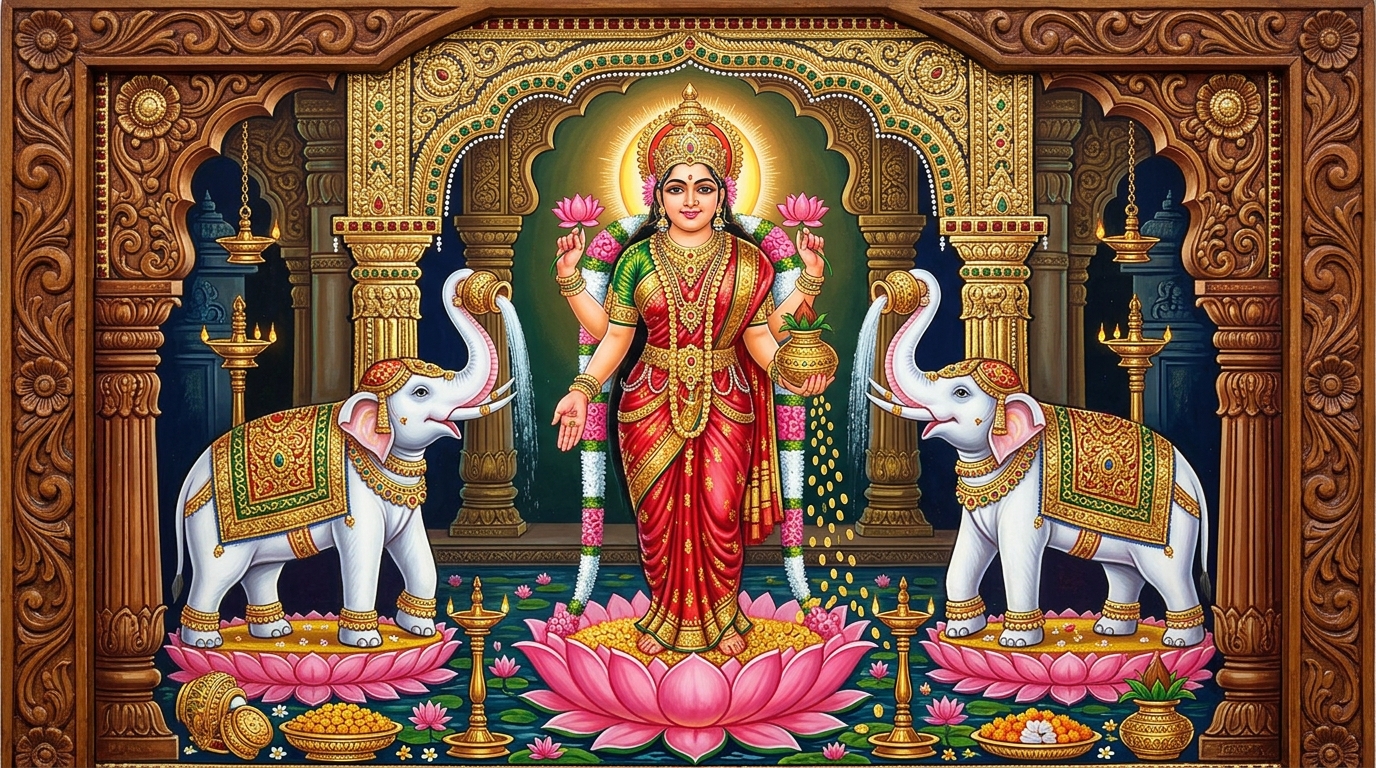
Deepavali & Lakshmi Puja (Festival of Lights & Divine Grace)
Deepavali (Diwali) is the radiant Festival of Lights celebrating the sovereign victory of spiritual light over inner ignorance, righteous truth over discord, and abundance over poverty. Anchored on the sacred moonless night of Kartika Amavasya, homes and hearts are illuminated with earthen lamps to welcome Goddess Mahalakshmi—the dispenser of divine grace, moral auspiciousness, and spiritual prosperity—alongside Lord Ganesha, the remover of inner obstacles.
About This Sacred Chalisa
Source ProvenanceDeepavali (Diwali) is the radiant Festival of Lights celebrating the sovereign victory of spiritual light over inner ignorance, righteous truth over discord, and abundance over poverty. Anchored on the sacred moonless night of Kartika Amavasya, homes and hearts are illuminated with earthen lamps to welcome Goddess Mahalakshmi—the dispenser of divine grace, moral auspiciousness, and spiritual prosperity—alongside Lord Ganesha, the remover of inner obstacles.
2026 Observance Date & Calculation
Medical, Fasting & Safety Directives
Sacred Preparation Items & Samagri Checklist
Spiritual Meaning & Philosophy of Deepavali
Scriptural Origins & Sacred Lore
1. **Appearance of Mahalakshmi (Samudra Manthan)**: According to the Vishnu Purana and Bhagavata Purana, Goddess Lakshmi manifested from the churning of the cosmic Milk Ocean (Kshirasagara) on Kartika Amavasya, showering the cosmos with grace, beauty, and vitality.
2. **Ayodhya’s Welcome of Shri Rama**: The Valmiki Ramayana traditions celebrate the return of Lord Rama, Mother Sita, and Lakshmana to Ayodhya after completing fourteen years of exile and defeating Ravana. The citizens illuminated the entire kingdom with earthen lamps to celebrate righteous dharma.
3. **Liberation of King Bali by Lord Vamana**: The Bhagavata Purana notes Lord Vamana granting devotion and benevolence to Mahabali on the preceding days.
4. **Swami Dayananda Saraswati & Mahavira Nirvana**: Deepavali also marks the Nirvana of Bhagavan Mahavira in Jain tradition and the ascension of Maharshi Dayananda Saraswati.
The Five-Day Sacred Festival Cycle (Panchotsav)
- **Day 1: Dhanteras (Dhanvantari Trayodashi)**: Dedicated to Lord Dhanvantari (the celestial healer and deity of Ayurveda) praying for holistic health, and Kubera for righteous sustenance. Purchasing brass/metal vessels or gold/silver symbolizes inviting prosperity.
- **Day 2: Naraka Chaturdashi (Chhoti Diwali / Roop Chaudas)**: Commemorates the defeat of Narakasura by Lord Krishna and Satyabhama. Devotees take an auspicious pre-dawn oil bath (Abhyanga Snan) to cleanse lethargy and negativity.
- **Day 3: Deepavali & Lakshmi-Ganesha Pujan**: The pinnacle night of Kartika Amavasya devoted to Lakshmi, Ganesha, and Kubera worship, lighting clay lamps in every room.
- **Day 4: Govardhan Puja & Annakoot (Bali Pratipada)**: Honoring Lord Krishna's lifting of Mount Govardhan to shield Vrindavan’s beings from torrential deluge, celebrated with heaps of grains and vegetables (Annakoot).
- **Day 5: Bhai Dooj (Yama Dwitiya)**: Celebrating the sacred bond between brothers and sisters, recalling Yamuna welcoming her brother Yama with love and prayer.
Step-by-Step Pradosh Kaal Lakshmi-Ganesh Pujan Vidhi
1. **Pavitrikarana & Achamana**: Sip sacred water thrice reciting Om Keshavaya Namah, Om Narayanaya Namah, Om Madhavaya Namah, sprinkling water to cleanse body and surroundings.
2. **Sankalpa**: Hold water, akshat, and a flower in the right palm, resolving to worship Goddess Lakshmi and Lord Ganesha for spiritual harmony, ethical prosperity, and family well-being.
3. **Ganesha Pujan**: Worship Lord Ganesha first with durva, red sandalwood, modak, and prayer, recognizing Him as the remover of obstacles.
4. **Kalash Sthapana & Varuna Pujan**: Revere the consecrated water pot representing the sacred cosmos and holy rivers.
5. **Mahalakshmi Avahana & Dhyana**: Meditate on Goddess Lakshmi seated upon a radiant lotus holding two lotuses in Her hands, offering Abhaya (fearlessness) and Varada (boons).
6. **Shodashopachara Offerings**: Offer Asana, Padya, Arghya, Snana (Gangajal and Panchamrita), Vastra (sacred cloth), Chandana, Kumkum, Akshat, Lotus and Marigold flowers, Dhoopa, Deepa, and Naivedya (kheel, batashe, sweets, seasonal fruits, betel nut).
7. **Kubera & Bahi-Khata (Chopda) Pujan**: Business ledgers or modern digital diaries and financial instruments are sanctified with swastika markings, praying that transactions remain truthful and beneficial.
8. **Stotra Patha & Maha Aarti**: Chant Sri Suktam or Kanakadhara Stotram; conclude with the ceremonial camphor Aarti of Mother Lakshmi and Lord Ganesha.
Lighting the Earthen Lamps (Deep Daan Vidhi)
1. **The Prime Akhand Diya**: First, light a large four-wick (Choumukha) clay lamp filled with pure cow ghee or sesame oil in front of the deities. This central flame remains lit throughout the festive night.
2. **Yama Deepa**: Traditionally, a flour or clay lamp with mustard oil is lit facing south at the main doorway during Naraka Chaturdashi / Trayodashi dusk to pray for protection against untimely harm.
3. **Consecration of Clay Diyas**: Soak unglazed earthen lamps in water beforehand so they do not absorb excessive oil. Fill with mustard oil or sesame oil and arrange cotton wicks.
4. **Order of Illumination**: Light lamps in the following sacred sequence:
- Altar of Goddess Lakshmi and Lord Ganesha
- Sacred Tulsi plant in the courtyard or balcony
- Water source / kitchen and granary
- Main entrance threshold (both sides)
- Rooftops, verandas, and perimeter walls
5. **Reverence for Clay**: Earthen lamps honor mother earth and local potters (Kumhars), affirming simplicity and natural harmony over synthetic plastics.
Ethical Guidelines, Fire Safety & Environmental Consciousness
1. **Fire Prevention**: Keep earthen lamps on elevated masonry, trays, or terracotta platters. Never place naked flames adjacent to synthetic curtains, dry flowers, paper rangolis, or gas cylinders. Keep sand buckets and water readily available.
2. **Air Quality & Pyrotechnic Hazards**: Loud, smoke-heavy chemical firecrackers damage respiratory health, cause severe distress to animals, birds, and senior citizens, and produce toxic residue. The akhara recommends gentle, smoke-free celebrations centered on light, music, and philanthropy.
3. **Rejection of Gambling**: Folk superstitions that link compulsive card gambling with 'good luck' on Diwali night are contrary to dharmic ethics. Gambling cultivates addiction and family distress, which repels the genuine spiritual grace of Goddess Lakshmi.
4. **Seva and Social Sharing**: The highest worship of Mahalakshmi is sharing food, clothing, sweets, and assistance with less privileged families, orphans, and workers in your community.
Cross-Referenced Canonical Stotras & Daily Chants
- **Sri Suktam (Rigvedic Khila)**: The primordial Vedic invocation of divine light, fortune, and purification.
- **Kanakadhara Stotram**: Adi Shankaracharya’s sublime hymn composed to invoke Goddess Lakshmi’s compassion for a destitute woman.
- **Mahalakshmi Ashtakam**: The ancient hymn from the Padma Purana honoring the eight cosmic attributes of the Divine Mother.
- **Ganesh Chalisa & Sankata Nashana Ganesha Stotram**: Traditional invocations to dispel all inner impediments prior to Lakshmi worship.
- **Om Jai Jagdish Hare & Lakshmi Aarti**: Beloved Sanatana household aartis chanted at the conclusion of worship.
Frequently Asked Questions & Clarifications
Q1. Why are Lord Ganesha and Goddess Lakshmi worshipped together on Deepavali?
Q2. What is Pradosh Kaal and why is it preferred for Lakshmi Puja?
Q3. Is fasting strictly mandatory on Deepavali day?
Q4. What is the significance of lighting 21, 51, or 101 earthen diyas?
Q5. Why are kheel (puffed paddy) and batashe (sugar cakes) offered on Diwali?
Q6. What should be done with old idols of Lakshmi and Ganesha after the new puja?
Q7. Can people living in flats or apartments observe traditional Diwali safely?
Q8. Does gambling during Deepavali night have any scriptural sanction?
Curated Devotional Study Recommendations
More texts from the same tradition.
Sharad Navratri & Durga Puja (Sacred Nine Nights of the Divine Mother)
Maha Shivaratri (The Great Night of Lord Shiva — Worship & Awakening)
Recitation Guidelines & Spiritual Merits
Authoritative Edition & Provenance Details
Related Vrat & Puja Guides
View All Collection →Verified Context & Sacred Entity Links